


Upgraded IoT Platform Mobius, Will Global Commercialization Expand?
 Published2017.07.21 07:35
Based on oneM2M Standard, Open Source with Source Code Disclosure
Where is the Internet of Things (IoT) heading in its evolution? Mobius 2.0, an upgraded version of the Internet of Things platform developed by the Electronics and Telecommunications Research Institute (KETI), has been unveiled. Mobius is a platform operated as open source with source code publicly disclosed, created based on oneM2M, a global IoT standard.
KETI held an event introducing Mobius 2.0 at Elltower in Yangjae on the 20th. Since first introducing Mobius 1.0 in 2015, the upgraded version was released based on developers' requirements.
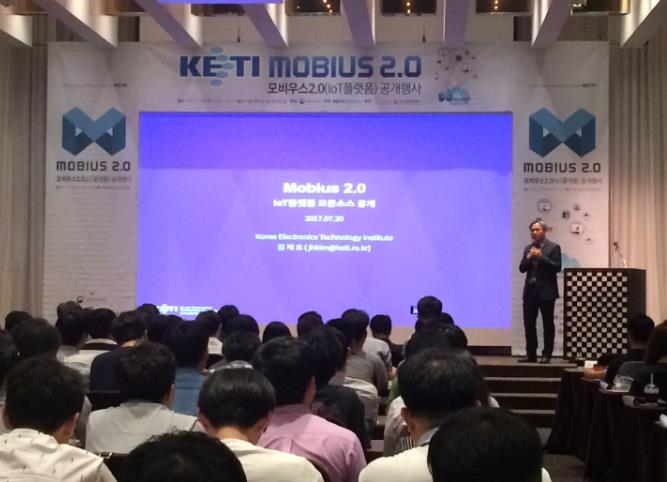
Park Chung-won, President of KETI, said, "We started from a time when IoT wasn't receiving much attention, and today we're unveiling the 2.0 version. As we move toward a hyper-connected society, interoperability between devices becomes important, and Mobius has technological competitiveness in that regard."
Since 2015, Mobius has been continuously updated through Ocean (www.iotocean.org), an open source community, and has transitioned to a state where anyone can participate directly. In addition to Mobius, 13 other open sources have been disclosed.
Kim Jae-ho, team leader at KETI who created Mobius, said, "In a market where platforms are fragmented, we created Mobius to solve that problem. It was a time when global standards were being formed, so we went with a standards platform." He added, "By selecting oneM2M, we're leading in global commercialization levels. We focused on interoperability, and we're also ahead in interworking standards and technology development. Since being disclosed on Ocean, 727 organizations are now utilizing it."
Mobius consists of a server, terminal, and gateway, supporting high reliability and real-time performance for service applications in industrial fields. Functions for searching, managing, and integrating numerous video streaming services have been added. It interoperates with OCF, another IoT standard in which Samsung, Intel, and Qualcomm participate, and LWM2M, an international standard for network devices.
Additionally, in addition to the existing support for open hardware such as Raspberry Pi, lightweight open hardware Arduino is also newly supported. The IoT platform and application software of the terminal can be remotely upgraded. Unlike the 1.0 version, in addition to open source disclosure, tools for development support such as a resource browser and conformance validation tool have been additionally disclosed.
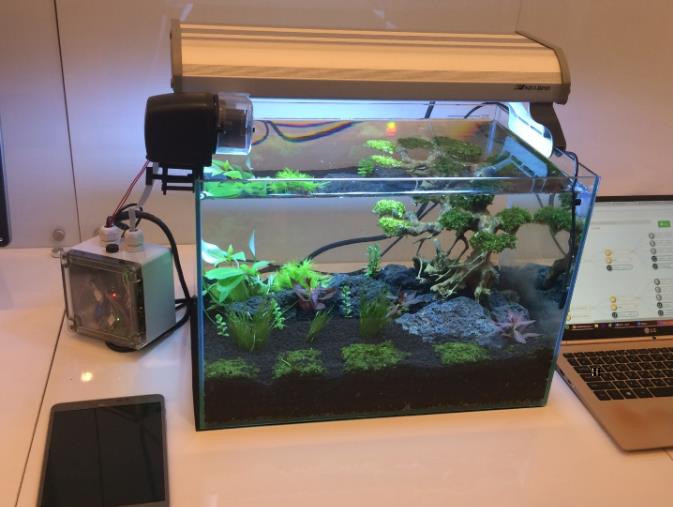
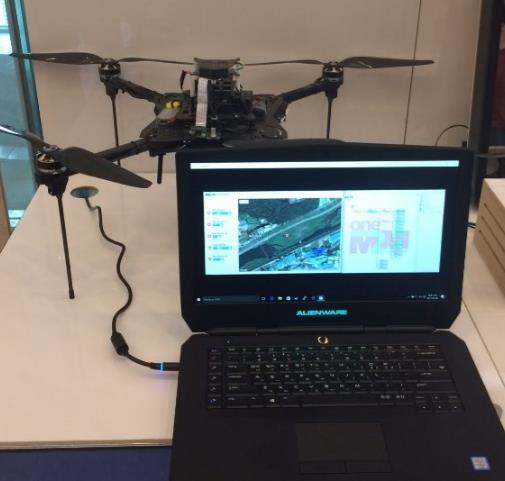
Since its initial unveiling, Mobius has been commercialized in Busan Smart City projects, Buyeo Smart Farm, SKT's ThingPlug, and SK C&C Smart Factory. Downloads of Mobius from Ocean total 34,000, showing the fastest adoption in domestic and international use cases.
Regarding the reason for choosing oneM2M, Chung Seung-myung, senior researcher at KETI, explained, "To resolve the issue of incompatibility due to different IoT technologies, multiple organizations globally creating various communication standards came together to create oneM2M. As a general-purpose platform that is not dependent on service domains, service expansion is easy, and app developers can focus on service logic."
In addition to the introduction of Mobius, the event also presented methods of utilizing open sources according to IoT service scenarios, service development using Arduino and Mobius, and construction methods.
KETI plans to conduct a Mobius-based Internet of Things Service Developer Competition through the end of September. IoT application service ideas will be solicited through early August, with Mobius training and expert coaching to implement actual services, and outstanding final works will be given exhibition opportunities during the Internet of Things Promotion Week.
Comments
Related news

KETI Takes the Lead in Revitalizing the DC Electrical and Electronic Industry
The Korea Electronics Technology Institute (KETI) has opened a DC Electrical and Electronics Industry Promotion Center in Gwangju Metropolitan City. The DC Electrical and Electronics Industry Promotion Center, which has been in preparation since 2014, is the only domestic infrastructure equipped with a one-stop support system for testing and commercialization related to DC electrical and electronics, including electromagnetic and environmental reliability. Direct current has over 40% lower transmission power loss compared to alternating current, and since there is no frequency, there are no electromagnetic interference issues during transmission. Additionally, power lines can be buried underground instead of using transmission towers for power transmission. However, since transformer technology for AC systems was developed first, the current power infrastructure is based on AC.
2017.06.16by 김지혜 기자
KETI Develops 2D Image-Based Light Scattering Signal Analysis Technology
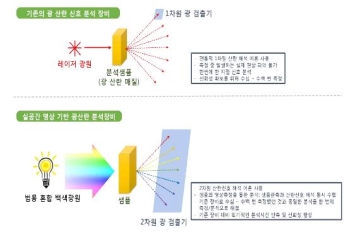
The Electronics and Telecommunications Research Institute (KETI) announced that it has developed a two-dimensional image-based light scattering signal analysis technology that can be utilized for nanoparticle analysis and other applications using universal light sources and digital cameras. Light scattering signal analysis technology is a core foundational technology capable of measuring nanoparticle size, optical material properties, display device inspection, and characteristics of cells and biomaterials by utilizing light scattering phenomena. Previously, point-by-point measurement methods were employed, where light scattering signals generated by laser irradiation were detected using one-dimensional photodetectors at specific angles. This was because physical interpretation of two-dimensional light scattering signals extracted in area units was difficult, and there were limitations in improving the signal-to-noise ratio (S/N ratio).
2017.07.06by 김지혜 기자
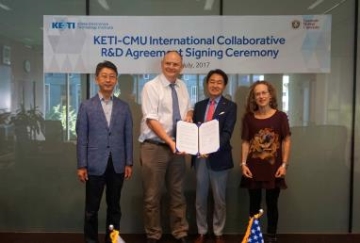
KETI to Develop Korean-Style AI with Carnegie Mellon University
The Electronics and Telecommunications Research Institute (KETI) has announced that it will jointly develop next-generation AI technology with Carnegie Mellon University (hereinafter CMU), the top-ranked university in the United States for computer science and artificial intelligence. A joint research agreement on socially cognitive-based AI technology was signed at CMU's campus in Pittsburgh, USA. The focus is on digital companion technology. Whereas Watson or robo-advisors are AI limited to specific domains, digital companion technology is lifestyle-integrated AI that provides necessary services to users in their daily lives. The core lies in technology that recognizes situations, context, and emotions through adaptive machine learning, grasps user intent, and autonomously provides situation-tailored interactions—a distinction from existing digital assistant technology that completes assigned tasks, such as playing specific music.
2017.07.14by 김지혜 기자

[Technical Contribution] Mouser: "AI Agents Help Accelerate and Standardize Industrial Field Maintenance Operations"
Abhishek Jadhav from Mouser Electronics discusses how to leverage agentic AI for predictive maintenance in industrial automation.
2026.10.23by 편집부
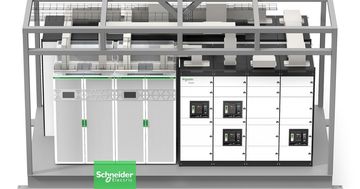
Schneider Electric Unveils Modular Power Solution for AI Data Centers
Schneider Electric has launched prefabricated power modules and power skids for AI data centers, jointly developed with NVIDIA. Based on the GB300 NVL72 reference design, the solution applies standardized design and factory pre-fabrication methods to build power infrastructure in as little as 6 months. Galaxy VXL UPS technology is integrated, with capacity options ranging from 2MW to 2.5MW.
2026.10.23by 배종인 기자











