



AI Utilization Guide for Doctors Released
 Published2017.08.08 14:18
Amidst growing interest in the medical community regarding the use of artificial intelligence, Gunja Publishing has released "Practical AI for Doctors," an introductory book that introduces the basics of AI and practical examples applicable in the medical field, tailored to the perspective of medical professionals.
This is a practical guide that covers the basics and overall aspects of artificial intelligence in medicine, including machine learning, and introduces techniques applicable to medical problems to medical professionals.
The author of the book is Dr. Cha Yu-jin, a resident in the Department of Radiation Oncology at the Korea Atomic Energy Research Institute. “The foundation of this book is a blend of knowledge learned in engineering school, clinical training experience, and research findings,” she said. “To enhance its practical value, I intended to cover many cases involving diagnostic and treatment strategy decisions encountered in primary care, as well as critical care.”
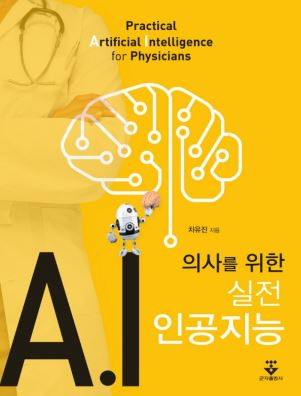
Composed of five parts and fifteen chapters, this book explains various artificial intelligence and machine learning techniques for solving medical challenges of different natures in each chapter. Chapter 1 outlines the future of medicine that will be transformed by artificial intelligence and explains why medical professionals need to understand AI. Starting from Chapter 2, it introduces specific AI and machine learning techniques from the basics, and in the latter part, it broadly covers deep learning, which has recently become a major topic of discussion.
Although designed as an introductory guide for medical professionals, this book also contains advanced topics that are not light. Gunja Publishing added that readers could design a system that machine-learns medical images through examples and predicts answers for new images, and could also implement a simple optimization system for medical managers to allocate medical resources most appropriately.
관련뉴스
인공지능 기술, 삶의 불편함 해소하는 방향으로 간다
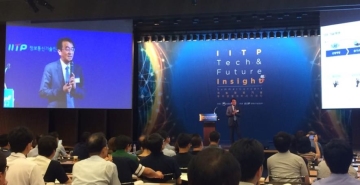
인공지능 기술은 과연 우리의 삶을 어떤 방향으로 바꾸게 될까. 생각보다 가깝게 다가와 있는 인공지능이 어떻게 활용 되고 있고, 어떤 식으로 생활을 변화시킬지 논의할 자리가 마련됐다. 정보통신기술진흥센터(IITP)의 주관으로 11일, 대한상공회의소 국제회의장에는 정부, 대학, 산업계 등 각 계 인사 900여명이 참석한 가운데 개최됐다. “마이크로소프트(MS)의 인공지능 철학은 지능의 민주화이다” 마이크로소프트의 이동범 아키텍트는 이와 같이 말하며 데이터 과학자만이 만드는 인공지능이 아니라 누구나 만드는 인공지능을 지향한다고 했다. 마이크로소프트는 AI 민주화를 위해 작년부터 리포트 조직을 통합하고 AI 과학자를 하나로 모아 조직 통합까지 했다고 밝혔다.
2017.07.11by 김지혜 기자

KT and Woori Bank to Launch AI-Based Financial Services
KT와 우리은행은 서울 종로구 KT 광화문 East 사옥에서 각 사의 전문영역인 ICT와 금융서비스를 기반으로 고객 편의성을 높이기 위한 ‘AI 기반 금융비서 서비스 제공을 포함한 포괄적 업무협약’을 체결한다고 밝혔다. 이번 협약을 통해 양사는 ▲ ‘기가지니 인공지능(AI) 금융서비스’ 제공 및 이를 이용하는 고객에게 다양한 금융 혜택 제공 ▲ 유무선 통신 빅데이터 기반의 신용평가 모델 활용, ▲ O2O 제휴 마케팅 등 금융과 ICT가 결합한 다양한 금융 플랫폼 서비스에 대하여 포괄적 협력을 추진할 예정이다. 특히, 양사가 선보일 ‘기가지니 인공지능(AI) 뱅킹 서비스’는 TV화면과 함께 서비스 되는 기가지니의 특장점을 활용해 은행 계좌 조회, 계좌간 이체, 공과금 납부, 환율 조회, 상품 안내가 가능한 서비스이다.
2017.07.17by 김지혜 기자
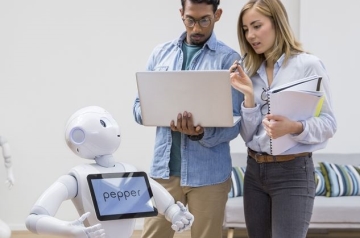
[Survey Results] When asked what it was like to have a robot boss in the era of the Fourth Industrial Revolution, the answer was
지능정보 기술로 촉진된 기술혁신, 디지털이 인간의 일상에 통합되는 것, 로봇과 인공지능(AI)을 통해 실재와 가상이 통합되고 사물을 지능적으로 제어할 수 있는 시대 등 4차 산업혁명을 두고 내리는 정의는 여러가지다. 그렇다면 4차 산업혁명의 실체는 무엇일까? 현재 국내 상황에서 4차 산업혁명은 시의적절하게 필요하다고 보는 반면 4차 산업혁명을 이끌어야 할 주체가 불명확하고 구체적인 실체가 없다는 우려를 나타내고 있는 것으로 보인다. 인공지능, 사물인터넷, 빅데이터 등을 중심으로 한 산업 구조 재편을 위해서(34.52%), 인터넷 정보 혁명에 이은 새로운 기술이 필요한 시점이 되었기 때문(20.24%)에 4차 산업혁명이라는 개념이 필요하다고 생각하는 것으로 나타났다.
2017.08.07by 김지혜 기자
ST Microelectronics and NUS Establish Joint Research Center 'HELIX' for Edge AI
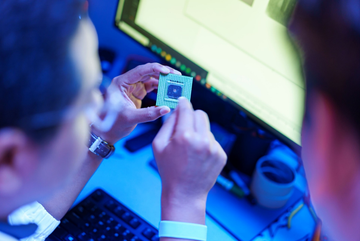
ST Microelectronics and the National University of Singapore have established the 'HELIX' joint research center aimed at implementing embedded AI in edge environments. Over a four-year period, the center will conduct research across the entire technology stack from algorithms to silicon, focusing on memory-centric architecture leveraging ST's 18nm FD-SOI technology and embedded PCM. The core objective is to implement intelligence directly in physical devices such as robots and drones while minimizing energy consumption.
2026.08.28by 배종인 기자
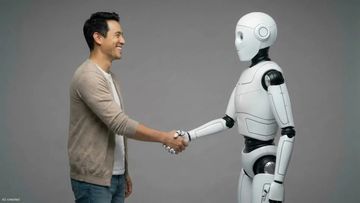
ams, 디지털 포토닉스로 휴머노이드 로봇 감각·소통 기능 지원
ams OSRAM이 디지털 포토닉스 기술을 활용해 휴머노이드 로봇의 감각·소통 기능을 강화하는 솔루션을 공개했다. dToF 센서, 광학식 힘 센서, 구조광 이미터 등으로 주변 환경 인식과 정밀 조작을 구현하며, EVIYOS·ALIYOS 플랫폼으로 LED 기반 비언어 소통을 지원한다. 시장조사에 따르면 휴머노이드 로봇 시장은 2025년 6억 달러에서 2035년 510억 달러로 성장할 전망이며, 로봇의 감각 능력 향상이 핵심 성장 동인으로 작용할 것으로 예상된다.
2026.08.27by 배종인 기자











