



Industry's First Model-Based Floating-Point DSP Performance Demonstration for FPGA
 Published2011.09.19 10:27
Altera Demonstrates Industry's First Model-Based Floating-Point DSP Performance for FPGA
Altera's New High-Efficiency Floating-Point Design Flow Validated by BDTI, the Industry's Most Trusted Independent DSP Technology Analysis Organization
Hong Kong, September 15, 2011 — Altera Corporation (NASDAQ: ALTR) today demonstrated its new floating-point DSP design flow through FPGA, the industry's first model-based floating-point design tool that enables implementation of complex floating-point DSP algorithms on DSP.
Berkeley Design Technology, Inc. (BDTI) through independent analysis has validated high performance, efficiency, and the high performance, efficiency, and ease of use in the implementation of floating-point DSP design on Altera's Stratix® and Arria® FPGA product families. Altera's floating-point DSP design flow includes Altera's floating-point DSP compiler integrated into DSP Builder Advanced Blockset, the Quartus® II RTL tool chain, the ModelSim simulator, as well as MathWorks' MATLAB and Simulink tools that simplify the process of implementing DSP algorithms on FPGA. The floating-point design flow integrates algorithm modeling and simulation, RTL generation, synthesis, place-and-route, and design verification stages. This integration enables rapid development and design space exploration at both the algorithm and FPGA levels, ultimately reducing overall design effort.

Vince Hu, Vice President of Product and Corporate Marketing at Altera, stated, "Using Altera's high-level DSP model-based flow, designers can implement and verify floating-point algorithms more efficiently and rapidly than what is possible through traditional HDL-based design. Once the algorithm is modeled and debugged at a high level, the design can be easily synthesized and applied to any Altera FPGA."
Altera's new design flow is well-suited for difficult linear algebra problems that typically require the dynamic range provided by floating-point. BDTI benchmarked a parameterizable floating-point matrix inverse design. Matrix inversion is a representative processing operation used in various DSP applications including radar systems, MIMO wireless systems, and medical imaging.
In evaluating Altera's floating-point design flow, independent technology analysis company BDTI stated, "Rather than building a datapath composed of basic floating-point operators, the floating-point compiler generates a fused datapath that integrates basic operators into single functions or datapaths. This eliminates unnecessary redundancies that appear in traditional floating-point FPGA designs." BDTI concluded, "Through the fused datapath methodology, complex floating-point datapaths can be implemented to provide higher performance and efficiency than was previously possible."
The full BDTI FPGA Floating-Point DSP Design Flow Analysis Report can be found at www.altera.com/floatingpoint.

관련뉴스
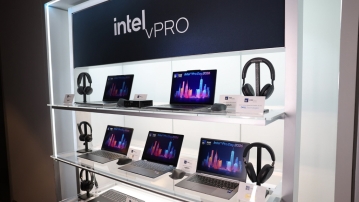
Intel Unveils Next-Generation 'Core Ultra Series 3' and vPro Platform for Enterprise PCs
Intel has officially unveiled the "Intel Core Ultra Series 3" for next-generation enterprise PCs and the latest vPro platform, addressing a wide range of demands from enterprise notebooks to high-performance workstations.
2026.03.26by 배종인 기자
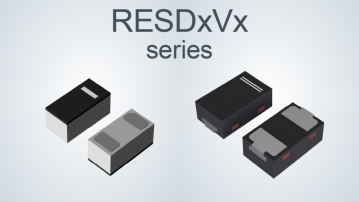
ROHM Launches ESD Protection Diode Compatible with High-Speed Interfaces of 10Gbps or Higher
Semiconductor specialist ROHM has developed the 'RESDxVx series' of ESD (electrostatic discharge) protection diodes capable of responding to next-generation high-speed data communication environments exceeding 10Gbps, simultaneously enhancing both signal quality maintenance required in high-speed interfaces and IC protection performance.
2026.03.26by 배종인 기자
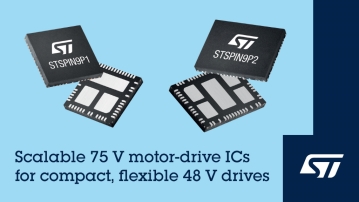
ST Launches 75V Drive IC Targeting 48V Industrial Motor Driving
ST Microelectronics has unveiled the 'STSPIN9P' series of 75V motor drive ICs tailored for 48V-class industrial drive system design. The new product family is characterized by half-bridge and full-bridge configurations that enable design scalability according to motor type and output conditions. Power supply circuits, protection functions, and current sensing circuits are integrated on-chip to simplify system configuration, and the devices are designed to support applications up to 500W maximum. The company plans to provide reference designs and demo boards to support development and evaluation in industrial automation, robotics, pumps, fans, lighting, and textile machinery.
2026.03.26by 배종인 기자

Nordic supports security updates for the entire lifecycle of IoT devices at a single fixed cost
Nordic Semiconductor, a global leader in low-power wireless connectivity solutions, has unveiled a single fixed-cost licensing model that delivers FOTA (Firmware Over-the-Air) and device management capabilities throughout the device lifecycle via nRF Cloud, and introduced a new firmware update solution to prepare for the enforcement of the European Union's Cyber Resilience Act (CRA).
2026.03.26by 배종인 기자

Practical Training in Low-Noise, Low-Power Circuit Design All in One Place… Training Fee Support
The "2026 Advanced Engineer Practical Masterclass" to strengthen competencies in high-sensitivity analog circuit and sensor-based system design will be held on April 16 at the e4ds Conference Center in Gasan-dong, Seoul. This program will be conducted as an offline paid hands-on training session, not online, and is targeted at engineers seeking on-site intensive learning. Texas Instruments will provide educational support for this training, allowing participation at 150,000 won, a 100,000 won discount from the original price of 250,000 won.
2026.03.26by 배종인 기자











