



[Interview] Complex Power Supply Design with Webench, 'Is It Really This Easy?'
 Published2017.09.07 18:40
Capable of designing not only power but also FPGA, LED, sensors, battery chargers, and more
Designing complex power supply devices in industrial, automotive, telecommunications equipment and various other fields is not an easy task even for experienced engineers.
Power devices are fundamentally applied to all systems and have extremely diverse applications. They are essential components in the operation of all systems including smartphones, telecommunications equipment, display devices, automobiles, and medical devices. Although used in many places, design is not easy because each application has different power requirements.
There is a tool to alleviate these concerns. It is the Webench Designer tool. Texas Instruments' (TI) Webench Designer is software that provides customized power, lighting, filtering, clocking, and sensing applications in just a few seconds. With this tool, you can design according to unique specifications and perform optimization and simulation. Before proceeding to production, it is possible to optimize the design according to footprint, cost, and efficiency at the system and supply chain levels.
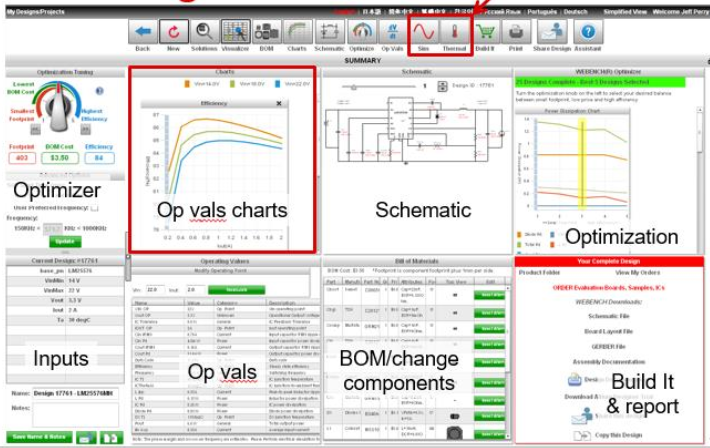
TI's Webench Power Designer can create customized power supply circuits according to requirements. It also provides end-to-end power supply design functionality that saves time during the design phase. If you know the specifications for input voltage, output voltage, and current, you can run electrical simulation to characterize the transient behavior of the design, and thermal simulation is also possible to identify and correct temperature issues. Schematics and PCB layout can be exported directly to CAD tools, saving time and reducing errors.
Webench is available free on the TI website. In addition to power, Webench Designer enables various designs including FPGA, LED, sensors, and battery chargers. The Webench tool suite is divided into tens of thousands of parts. Price and availability sections are updated regularly, and all external components needed for loop compensation are selected with the expected installation area shown in the schematic.
TI's three advanced Webench tools can conveniently export simulations to CAD (Computer-aided design) platforms such as Altium and Cadence Design Systems. In Webench Visualizer, the 'Advanced Options' feature makes it easy to specify complex design matters such as reconfiguration, component limitations, and control design. For the unstable control loop, which is the most difficult aspect of power supply design, the Webench Compensation Designer tool can predict errors in the control loop and automatically correct them. Using manual mode also allows for fine-tuning the control loop.
The Webench Simulation Export tool is a feature that allows users to export power supply circuit schematics to their preferred simulation environment. Without intermediate software, the entire design can be quickly exported to TINA-TI simulator or Altium Designer, Cadence OrCAD and PSpice tools.
Regarding the reliability between test results with Webench and actual testing, TI's Director Lee Myung-sik answered, "If we use electrical simulation as a standard, approximately 95% or more are accurate. Especially if EVB is the standard, they almost match."
Related news
[Interview] TI's Driver Assistance SoC Provides Everything You Need for ADAS Design
The 'Enforcement Decree and Rules of the Traffic Safety Act,' which was partially revised in April, will be implemented from the 18th of this month. It mandates the installation of a 'Lane Departure Warning System (LDWS)' on large commercial vehicles such as buses and cargo trucks, which alerts drivers when the vehicle deviates from its lane regardless of the driver's intent, such as due to drowsy driving. Recently, as collision accidents have occurred due to drowsy driving in large buses, calls for mandatory installation of Advanced Driver Assistance Systems (ADAS) have been growing louder. ADAS includes six systems in addition to LDWS: Forward Collision Warning System (FCWS), Intelligent Parking Steering Assist System (IPAS), Vehicle Autonomous Navigation System (CNS), Rear Parking Assist System (RPAS), and Pedestrian Recognition Warning System (PCWS). Since ADAS technology is based on cameras recognizing situations, there are performance differences among different products.
2017.07.17by 김지혜 기자

Using Self-Charging Electronic Lock System for Public Bicycles
Public bicycles have begun appearing in major cities over the past few years. Anyone can rent a bicycle from a docking station installed throughout the city and return it, with payment available via credit card or mobile phone. In London, bicycle users rent and return bicycles at docking station kiosks at designated locations as shown in Figure 1. While this method works well for bicycle tourists, it is inconvenient for commuters who do not have a nearby docking station. If a system were established where bicycles could be rented and returned anywhere, it would be efficient and convenient for commuters.
2017.08.08by 김지혜 기자
TI DLP technology applied to automotive HUDs expands commercial product offerings.
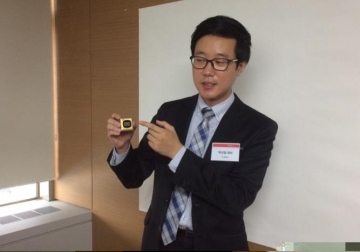
Texas Instruments (TI) has introduced DLP (Digital Light Processing) technology, which has expanded its application range from lighting control switches to automotive solutions through high resolution and brightness, fast implementation speed, compact size, and cost-effectiveness. DLP technology implements high-precision image display using a DMD (Digital Micromirror Device) chip. The chip features countless microscopic mirrors arranged on the surface of the display device, with each mirror corresponding to one pixel. Unlike conventional cathode ray tubes, liquid crystal, and plasma methods, the reflective approach eliminates color fringing and image distortion caused by magnetic effects, accurately reproducing the original image. TI first launched an ultra-portable projector using DLP technology in 1996 and introduced DLP Cinema technology to theaters in 2011. With the launch of a DLP development kit in 2012, the company expanded the market and has since broadened its application areas from display solutions including pico solutions and HUD to industrial, sensing, and automotive applications.
2017.08.22by 김지혜 기자
Intel Unveils Next-Generation 'Core Ultra Series 3' and vPro Platform for Enterprise PCs
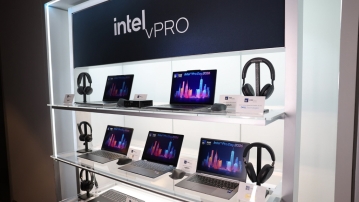
Intel has officially unveiled the "Intel Core Ultra Series 3" for next-generation enterprise PCs and the latest vPro platform, addressing a wide range of demands from enterprise notebooks to high-performance workstations.
2026.03.26by 배종인 기자
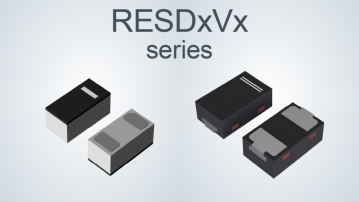
ROHM Launches ESD Protection Diode Compatible with High-Speed Interfaces of 10Gbps or Higher
Semiconductor specialist ROHM has developed the 'RESDxVx series' of ESD (electrostatic discharge) protection diodes capable of responding to next-generation high-speed data communication environments exceeding 10Gbps, simultaneously enhancing both signal quality maintenance required in high-speed interfaces and IC protection performance.
2026.03.26by 배종인 기자











