


Announcement of the latest QorIQ AMP series embedded multicore processors targeting the rapidly growing data center market
 Published2012.02.15 09:35
Freescale Achieves Industry-Highest CoreMark™ Performance Score with T4240 Multicore Processor; Announces New T4160 Processor
February 15, 2012, Seoul, Korea — As cloud computing provides processing capabilities for a multitude of services widely used by consumers and enterprises, public and private data centers around the world are rapidly evolving to keep pace with these demands. Advances in virtualization and other processing technologies have enabled data center servers to keep up with performance requirements, and to complement this, embedded multicore communication processors have come to play a major role in managing, classifying, and servicing massive amounts of data both between the cloud and internally.
Freescale, a global leader in communications processors, is supporting innovation in data centers worldwide with its T4240 and T4160 embedded multicore processors from the QorIQ AMP series. The previously announced T4240 processor, based on Freescale's dual-threaded e6500 Power Architecture® cores, provides 24 virtual cores and achieved the best CoreMark benchmark performance profile per watt and overall performance scores in the embedded processor sector. In addition, Freescale today announced the latest software and pin-compatible QorIQ AMP series T4160 processor, which delivers 1.8GHz of performance within a 25W power range with 16 virtual cores.
The T4240 and T4160 products feature an attractive combination of hardware acceleration, fabric-based interconnect technology, high-speed I/O, hardware-assisted virtualization, and next-generation 64-bit Power Architecture cores, making them suitable for data center applications as well as other networking and industrial sectors. Both products are manufactured using 28nm process technology.
The AMP series also uses cascade power management technology to reduce energy consumption using variable mode power switches to meet the strict power efficiency requirements of data centers, enabling customers to freely and precisely adjust the power of cores and other processing units.
The T4240 and T4160 processors incorporate various combinations of advanced technologies optimized for data center applications, as follows.
• Dual-threaded, 64-bit Power Architecture® e6500 core supporting 40-bit physical address memory and 1 TB (terabyte) of physical address memory
• 2nd generation hardware-based hypervisor technology designed to simplify development and enable secure and autonomous operation by allowing multiple individual operating systems to share system resources, including processor cores, accelerators, memory, interconnects, and other on-chip functions.
• 50Gbps packet analysis, classification, and distribution acceleration features
• Supports both 10G and 1G Ethernet, allowing for flexible configuration of multiple 10G and 1G Ethernet interfaces
• 20Gbps IPSEC forwarding performance including SEC (Cryptographic Acceleration Engine) providing 40Gbps performance in SSL and other security protocols
• New 20Gbps DCE (Data Compression Engine), application-aware regular expression pattern matching engine for data loss prevention
• New QoS (Quality of Service) support features, such as Data Center Bridging (DCB) and egress traffic shaping, designed to prevent losses due to queue overflow and enable efficient bandwidth allocation to links.
• Includes SR-IOV supporting high-speed peripheral expansionSupport for system interconnect technologies such as PCIe version 3.0
"Data center technology is evolving at an astonishing pace, and most customers are scrambling to add bandwidth while simultaneously trying to reduce latency through data center network flattening," said Brett Butler, Senior Vice President of Freescale's Networking Processor business unit. "Interestingly, future data centers are beginning to reflect the architecture of Freescale's embedded SoCs, which were developed under the same condition that they must provide the highest network and content processing performance at the lowest cost of ownership. The demands associated with this trend are precisely the traditional strengths of Freescale's communication processors."

관련뉴스
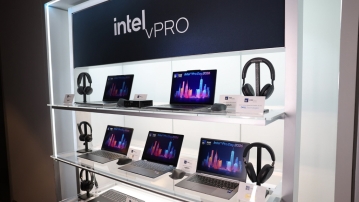
Intel Unveils Next-Generation 'Core Ultra Series 3' and vPro Platform for Enterprise PCs
인텔이 차세대 기업용 PC를 위한 ‘인텔 코어 Ultra 시리즈 3’와 최신 vPro 플랫폼을 공식 발표하며, 기업용 노트북부터 고성능 워크스테이션까지 폭넓은 수요 충족에 나섰다.
2026.03.26by 배종인 기자
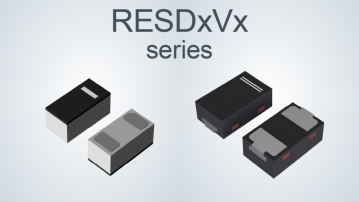
ROHM Launches ESD Protection Diode Compatible with High-Speed Interfaces of 10Gbps or Higher
반도체 전문 기업 로옴(ROHM)이 10Gbps를 넘어서는 차세대 고속 데이터 통신 환경에 대응할 수 있는 ESD(정전기 방전) 보호 다이오드 ‘RESDxVx 시리즈’를 개발하며, 고속 인터페이스에서 요구되는 신호 품질 유지와 IC 보호 성능을 동시에 끌어올렸다.
2026.03.26by 배종인 기자
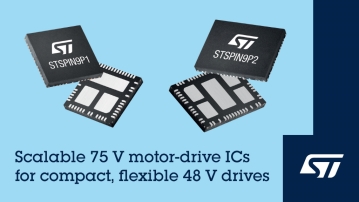
ST Launches 75V Drive IC Targeting 48V Industrial Motor Driving
ST마이크로일렉트로닉스가 48V급 산업용 구동 시스템 설계에 맞춘 75V 모터 드라이브 IC ‘STSPIN9P’ 시리즈를 공개했다. 새 제품군은 하프 브리지와 풀 브리지 구조로 구성돼 모터 종류와 출력 조건에 따라 설계를 확장할 수 있도록 한 것이 특징이다. 전원 회로와 보호 기능, 전류 감지 회로를 칩에 통합해 시스템 구성을 단순화했으며, 최대 500W급 애플리케이션까지 대응하도록 설계됐다. 회사는 레퍼런스 디자인과 데모 보드도 함께 제공해 산업 자동화, 로보틱스, 펌프, 팬, 조명, 섬유 기계 등에서 개발과 평가를 지원할 계획이다.
2026.03.26by 배종인 기자

Nordic supports security updates for the entire lifecycle of IoT devices at a single fixed cost
Nordic Semiconductor, a global leader in low-power wireless connectivity solutions, has unveiled a single fixed-cost licensing model that delivers FOTA (Firmware Over-the-Air) and device management capabilities throughout the device lifecycle via nRF Cloud, and introduced a new firmware update solution to prepare for the enforcement of the European Union's Cyber Resilience Act (CRA).
2026.03.26by 배종인 기자

Practical Training in Low-Noise, Low-Power Circuit Design All in One Place… Training Fee Support
고감도 아날로그 회로와 센서 기반 시스템 설계 역량을 강화할 수 있는 ‘2026 고급 엔지니어 실무 마스터 클래스’가 오는 4월16일 서울 가산동 e4ds 컨퍼런스 센터에서 열린다. 이번 과정은 온라인이 아닌 오프라인 유료 실습 교육으로 진행되며, 현장 중심의 심화 학습을 원하는 엔지니어를 대상으로 한다. 이번 교육은 텍사스 인스트루먼트(Texas Instruments)가 교육비를 지원해 정가 25만원에서 10만원 할인 된 15만원에 참가할 수 있다.
2026.03.26by 배종인 기자











