



[Discussion] "Korea is the only nation that issues public documents with fingerprints; we must turn crisis into opportunity"
 Published2017.09.15 17:39
"What matters in the Fourth Industrial Revolution era is soft power. A paradigm is coming in which ideas will dominate the economy"
As an economic strategy for the Fourth Industrial Revolution over the next decade, Yoon Jong-rok, president of the National IT Industry Promotion Agency (NIPA), stated: "What our country, which lacks natural resources and depends on imports for most necessities such as energy and food, must put forward as an economic strategy is the imagination to create things that did not exist before."
We face rapidly changing lives. Accordingly, a forum has been prepared to discuss with experts from each field on how to adapt and prepare at the national, individual, and business levels.
First, we examined what changes are taking place. Kim Jin-hyung, president of the Institute for Intelligent Information Technology, explained: "Semiconductor technology made computers smaller, and artificial intelligence that makes decisions like humans has emerged. Whereas previously the emphasis was on transferring knowledge that humans possess to machines, now we have entered an era where machines learn on their own. Rather than emphasizing the negative aspects of such technological development, this is the time to accept how it should be applied."
Professor Park Su-yong of Sogang University stated: "The economy is also transitioning from analog to digital. An era will come when physical currency disappears and digital currency becomes commonplace. With the emergence of blockchain technology based on trust, we will enter a sharing economy era where individuals can share automobiles, surplus energy, and labor directly without intermediaries."
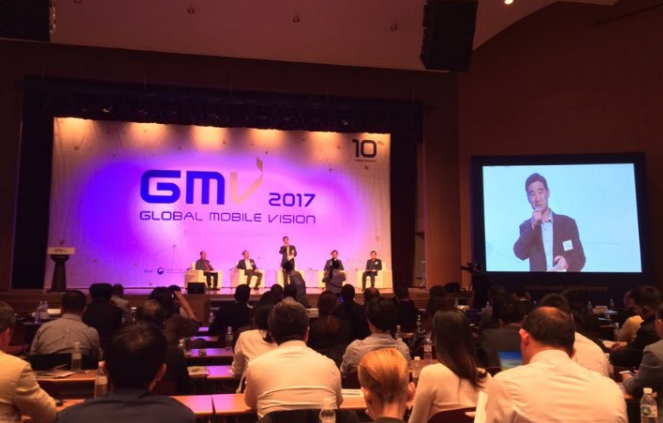
As an era approaches where competition cannot occur without robots and artificial intelligence, there have been calls for comprehensive innovation in the education system. In the security field, with autonomous vehicles and the sharing economy emerging, personal authentication has been emphasized as critical.
Opinions followed regarding crises and responses that will arise from changes by field. Ahn Jong-bae, president of the International Futures Studies Association, advised: "Our country, which was an IT powerhouse, has now been caught up by China. This means talented individuals capable of adapting to the times have not been cultivated. We must utilize the creativity and imagination we possess."
While the view that artificial intelligence will destroy jobs prevails, President Kim stated: "It is true that artificial intelligence will have significant economic ripple effects, and it is also true that jobs will disappear very rapidly. Polarization will occur between those who have artificial intelligence technology and those who do not. There must be discussion about creating a society with dynamism and fairness across the board."
Regarding policies to address crises, Choi Un-ho, head of security at Huawei, said: "Fingerprint recognition will be widely used as a means to authenticate individuals. Mastercard stated it would replace cards with fingerprint cards within five years. Korea is already the only nation that can issue public documents using fingerprints. If security against threats and hacking is strengthened, we can move ahead." He advised that it is necessary to strengthen the personal authentication field.
Artificial intelligence has become an inevitable element that must be faced even without the technology. Regarding this, President Kim pointed out: "We are behind technologically. We must prepare now. To catch up, regulatory innovation must not happen gradually but must occur revolutionarily."
Professor Park stated: "When preparing policies not only in the financial sector but in all sectors, one must understand that doing something earlier is more valuable than doing something better. Until now, we tried to do what was better even if it was late, but if we wait for others to do it, it becomes too late." He emphasized that the direction should be toward protecting and supporting newly launched startups and venture companies.
Related news
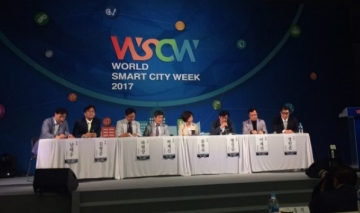
[Smart City] Smart City Completion: Not Just Technology but Administrative Functions as Well
"Smart cities should become the complete form of technological elements that are considered core to the Fourth Industrial Revolution, such as big data, artificial intelligence, and robotics." Speakers who participated in the 'Smart City Public Service Innovation Conference' held at KINTEX in Ilsan, Gyeonggi Province on the 7th emphasized that ultimately smart cities should become a future where smart people live and smart governance exists, stressing that administrative aspects must progress alongside technology. Professor Nam Tae-woo from Sungkyunkwan University cited Barcelona and Stockholm as successful overseas smart city adoption cases. Barcelona set its smart city goal as improving citizens' lives and communities by converging urban planning, ecosystems, and information technology. It is also a representative pilot city for smart cities applying low-carbon technology. Overall implementation is carried out by the city council, while the project management committee carries out detailed planning, execution, and cooperation duties as well as project performance supervision. Stockholm aims for sustainability across four dimensions: ecological, financial, social, and democratic. By leveraging big data, it controls signals prioritizing buses, pedestrians, and bicycles, and quickly notifies users of free parking spaces. There are service examples such as street lights where illumination is adjusted according to daylight hours and demand, and electric bicycles.
2017.09.07by 김지혜 기자
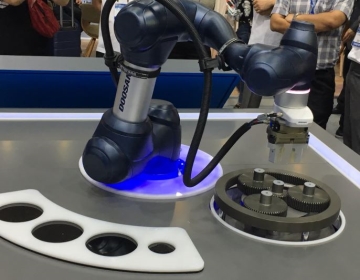
[RoboWorld 2017] "High Growth Potential Across All Robotics Sectors; Focus on SI Firms"
The 2017 RoboWorld, where you can see manufacturing robots and robot components, smart manufacturing, 3D printing, and service robots all in one place, will be held for four days starting September 13th at KINTEX in Ilsan. This event, with participation from 230 companies across 25 countries, is hosted by the Ministry of Trade, Industry and Energy and organized by the Korea Robotics Industry Association, Korea Robotics Industry Promotion Agency, and the Institute of Control, Robotics and Systems. This year's event theme is "Smart Industry, Smart Life!" and it will present directions for smart factories in the era of the Fourth Industrial Revolution. In particular, Hanwha Q Cells and Doosan Robotics participated in the manufacturing robot pavilion and each unveiled collaborative robots.
2017.09.13by 김자영 기자
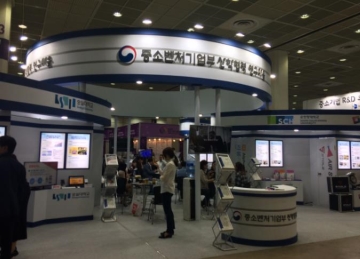
Intelligent digital technologies that will drive the Fourth Industrial Revolution can be led by small and medium-sized enterprises.
A venue has been established where small and medium-sized enterprises can showcase technologies and products they have developed and exchange information. The Ministry of SMEs and Startups held the '2017 Small and Medium Enterprise Technology Innovation Expo' at Samsung COEX Hall A from the 14th to the 16th to foster small and medium-sized enterprises with technological capabilities that will lead the Fourth Industrial Revolution. This year's event, marking its 18th edition, is held under the slogan 'Innovative Technologies Opening the Fourth Industrial Revolution, Technical Talents Leading the Future' and features various exhibitions and conferences including a Fourth Industrial Revolution Forum, Korea-Iran Cooperation Business Matching Conference, Technology/Skills Talent Competition, and SME Investment Briefings.
2017.09.14by 김지혜 기자
Nvidia invests $5 billion in Intel
NVIDIA and Intel, leaders in global AI computing technology, are now forging ahead in providing cutting-edge solutions through NVLink-based architecture integration. NVIDIA and Intel have officially announced a strategic partnership and stated that they will jointly develop customized data center and personal computing products to accelerate diverse applications and workloads ranging from hyperscale to enterprise and consumer markets, thereby laying the foundation for the next generation computing era.
2025.09.22by 배종인 기자
.jpg)
Applied Materials Launches Environmental Protection Campaign to Mark World Cleanup Day
Applied Materials Korea (CEO Park Kwang-seon) is carrying out environmental cleanup activities with employees and their families around the Dongtan Sinricheon area on the occasion of World Cleanup Day, evolving into a company that engages with the local community beyond technological innovation.
2025.09.22by 명세환 기자











