



[Foreign News Briefing] Artificial Muscle Made with 3D Printer, '3 Times Stronger Than Humans'
 Published2017.09.26 16:16
Intel announced it is testing artificial intelligence chips capable of video analysis and other tasks using 1/5000th the energy of conventional chips. This can make automobiles, cameras, robots and other devices smarter without internet connectivity. Michael Mayberry, the research director, stated through Wired that "we plan to develop a production version with 130,000 neurons the size of a thumbnail in November, but commercialization is estimated to take over two years." IBM also developed such neuron chips, 'spiking neurons,' in 2014. However, it failed to commercialize as it could not demonstrate capabilities comparable to machine learning software operating on existing chips.
Step-Measurable GPS, Into Smartphones by Next Year?
GPS capable of measuring distances in step-level units will arrive in smartphones as early as next year. IEEE Spectrum reported that Broadcom, a U.S. communications integrated circuit manufacturer, has begun mass production of GPS chips that can achieve location accuracy of less than 30 centimeters. Current GPS performance can measure up to 3-5 meters. In particular, the new GPS chip maintains high accuracy even in densely built urban areas with tall buildings. Broadcom stated through IEEE Spectrum that the new chip will be installed in certain smartphones next year. However, Qualcomm, which supplies major mobile phone modems for Samsung and LG, announced that it has no plans to launch the GPS chip.
Uber's London Operations Banned
Uber, which had been operating well in various places around the world, may no longer be able to operate in London. London Transport announced on September 30th that Uber would not be granted a private hire operator's license. London Transport determined that Uber's policies regarding driver criminal background checks and responses to medical and safety concerns were inadequate. Business Insider reported that London Transport plans to appeal Uber's classification of registered drivers as workers rather than self-employed individuals. The term 'workers' means they are entitled to receive minimum wage. This was reported as a factor that could reduce Uber's revenue. Uber stated it will contest the decision.
Artificial Muscle of Robots Manufactured with 3D Printer
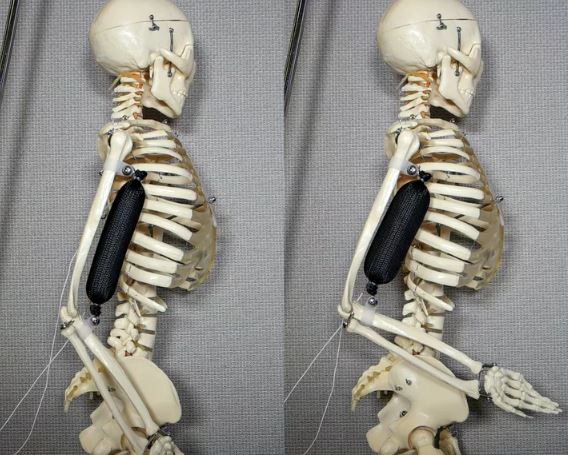
(Photo source: Columbia University, see video below)
Comments
Related news
[Foreign Press Briefing] IFA Eye-Catching Items and Aquarium Cleaning Robots, and More
Facebook's Method to Combat Misinformation Facebook announced that accounts repeatedly posting inaccurate news articles will be unable to advertise. Following criticism last year for facilitating the spread of false news, the company has implemented several measures to combat this issue. The advertising ban is part of the same initiative. TechCrunch reported that the change in advertising policy could make it more difficult for these accounts to attract customers. However, a Facebook spokesperson stated that the advertising ban is not a permanent measure and that accounts can resume advertising once they stop sharing inaccurate articles.
2017.09.04by 김자영 기자
[Foreign News Briefing] New iPhone Weaponry and MIT Creates Flood Tracking Program
Startup Researching Artificial Intelligence to Improve Ride Comfort In San Francisco, artificial intelligence research for convenient user environments during autonomous driving is underway. Lyft, which provides ride-sharing services, is collaborating with Drive.ai following Disney, Amtrak, and Jaguar Land Rover to research autonomous vehicles. NewAtlas reported that Drive.ai is expected to improve the aspect where Lyft falls short in understanding driver intent, resulting in poor ride comfort. Subsequently, Drive.ai's CEO stated, "When drivers use autonomous vehicles, the factors they need to consider are not just one or two, ranging from safety to convenience. Convenience is also an important factor." Additionally, the CEO revealed that once the technology completes testing, the company plans to launch a product that can "implant a brain into older vehicles to enable autonomous driving."
2017.09.11by 김자영 기자
[Foreign Press Briefing] Songs Created Just by Thought, New iPhone Face Recognition Performance, and More
An Electrode Cap That Creates Songs Through Thought Alone A system has been developed that allows music creation through thought alone. An electrode cap typically used for text input selects letters to form words and sentences, and this same system is now being used to create music. It's the 'Brain Composer,' developed by researchers at Graz University of Technology (TU Graz). The experiment was first conducted by inputting brain waves from individuals with knowledge of music composition. Tone and pitch can also be defined. The research team reported through the PLOS ONE journal that "all 18 test subjects successfully demonstrated the prototype, and after completing short-term training, they were able to record melodies."
2017.09.18by 김자영 기자

OpenAI Holds Developer Event 'DevDay Exchange' in Seoul
OpenAI held the 'DevDay Exchange' event in Seoul on the 22nd, with over 600 domestic developers in attendance. Korea currently ranks 3rd globally in weekly active users of dots and 5th in ChatGPT Pro usage, with discussions focused on agent-based work automation and enterprise AI transformation strategies. AWS and LG CNS shared phased implementation cases ranging from AI model adoption to integration with existing systems and establishment of security and governance frameworks.
2026.10.23by 배종인 기자

ST Launches RHFLVDS42 QML-V Certified Quad LVDS Receiver for Aerospace
STMicroelectronics has launched the RHFLVDS42, a QML-V certified quad LVDS receiver for aerospace applications. The device supports maximum 600Mbps data transmission, demonstrates radiation and ESD tolerance, and meets 300krad(Si) TID requirements, while satisfying EAR99 regulations for immediate deployment across global supply chains. It is manufactured using a validated 130nm CMOS process in France and is available in Flat-16 package and bare die form.
2026.10.23by 배종인 기자











