


“Artificial Intelligence Being Introduced Across All Sectors of Life, Uncertainty Remains as a Challenge”
 Published2017.09.27 15:21
Machine learning, which enables artificial intelligence, has already become deeply integrated into our daily lives. In particular, it has been used in internet advertising for a long time.
"The information on the internet, once called a sea of information, has turned entirely into data," said Jung Soo-dong, CTO of Wider Planet, a company that manages online data and provides advertising. On Tuesday, the 26th, discussions on AI industry business took place at the Westin Chosun Hotel.
The 'AI digital advertising' revealed by CTO Jeong has proven its effectiveness compared to conventional advertising. Unlike machine learning, advertising learns people. The more data available, the higher the accuracy of the data. However, as interfering factors also increase, engineers end up using algorithms with lower accuracy to increase efficiency.
It recommends advertisements likely to generate good revenue based on click responses. Machine learning is being applied in almost every field, from ad requests to the exposure stage.
CTO Jeong stated that while 'feature engineering,' which involves selecting, refining, and curating training data, is particularly important, there are limitations to the areas where computers can perform this task, thus requiring more talent.
Lee Jin-woo, Head of Hyundai Motor’s Intelligent Safety Technology Center, explained why artificial intelligence is utilized for the safety of autonomous driving.
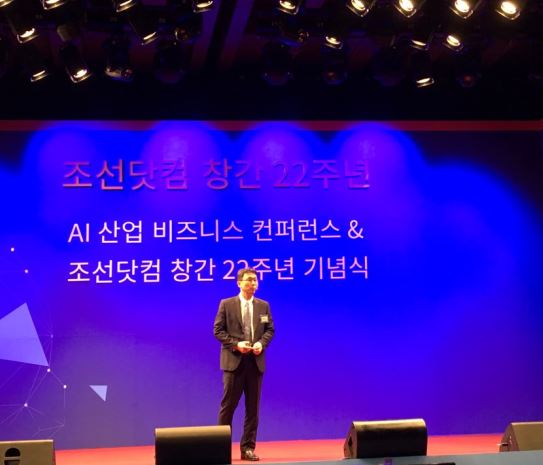
Lee Jin-woo, Head of Hyundai Motor’s Intelligent Safety Technology Center
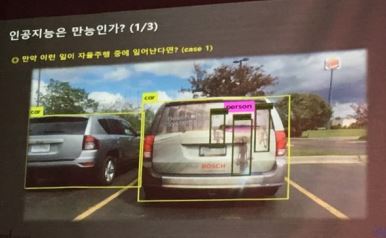
Regarding the autonomous driving technology levels announced by SAE, which have been controversial depending on the perspectives of those in the domestic industry, it was stated that ▲ Level 3 enables precise predictive diagnosis by realizing perception and judgment functions in the vehicle system, and ▲ Level 4 is a stage where accident response is possible through dual devices within the vehicle.
There are many questions about the technical difficulty of Level 3 and Level 4. Level 3 requires understanding numerous scenarios, which involves telling the driver to prepare for problems (if time permits). This is where artificial intelligence is needed. Level 4 is a problem for manufacturers to design the space for installing in-vehicle devices.
Citing the results of a 2016 survey conducted by the American Automobile Association (AAA), he stated that human trust in autonomous driving remains low. “While artificial intelligence is an indispensable element in moving toward the stage of fully autonomous driving, it carries uncertainty. There are still challenges remaining to resolve that 1% of uncertainty.”
관련뉴스
[Planning - Autonomous Vehicles⑧] Cybersecurity is the key to preventing autonomous vehicles from becoming "running weapons."
Security technology is garnering attention for realizing autonomous driving technology at level 4 or higher, where vehicle control is transferred from the driver to the vehicle. This is because drivers must be assured that autonomous vehicles remain safe even when exposed to threat factors such as vehicle system errors or hacker intrusions. Automotive semiconductor companies such as Renesas, Infineon, NXP, and Maxim have been applying Hardware Security Modules (HSM). The HSM supports key management functions by centrally storing keys and transmitting them in encrypted form.
2017.07.17by 김자영 기자
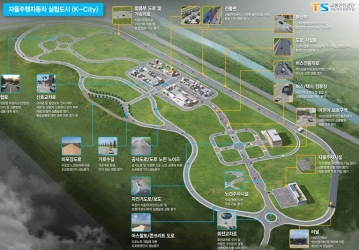
K-City, a self-driving car testing facility, breaks ground, aiming for completion in 2018.
The Ministry of Land, Infrastructure and Transport will establish 'K-City', a test facility for autonomous vehicles. On August 30, the Ministry of Land, Infrastructure and Transport will hold a groundbreaking ceremony for 'K-City', an autonomous vehicle test track, at the Korea Transportation Safety Authority's Automotive Safety Research Institute located in Hwaseong-si, Gyeonggi-do. A test bed where experiments can be conducted in environments similar to real-world conditions is essential for autonomous vehicle technology development. Accordingly, the Ministry of Land, Infrastructure and Transport will invest approximately 11 billion won to construct 'K-City', a virtual city for autonomous vehicle testing, within the driving test track of the Korea Transportation Safety Authority's Automotive Safety Research Institute on a scale of 320,000 m² (110,000 pyeong).
2017.08.29by 김지혜 기자
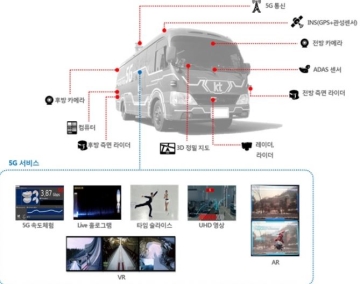
KT Receives Approval to Operate Self-Driving Buses
KT는 국내 최초로 국토교통부의 자율주행버스 운행 허가를 받았다고 22일 밝혔다. KT의 자율주행버스는 이달부터 일반 도로에서의 시험주행을 할 수 있게 되었다. 현재까지 국토교통부 인증을 획득한 자율주행차량은 수 십대에 이르나, 버스는 승용차와는 다르게 자율주행 기능 개발이 어려워 버스로 자율주행 허가를 받은 것은 KT가 유일하다. 버스는 승용차와는 달리 핸들, 브레이크 등 차량 주요 부품에 전자식 제어기능이 구현되어 있지 않고, 센서부착 위치가 높아 차량 주변의 사물을 정확히 인지하기가 어렵다. 또한, 차체가 길고 무거워 자율주행을 위한 차량 제어가 어려운 점이 있다. 이 때문에 자율주행버스는 벤츠, SCANIA 등 세계 최고 기술력을 자랑하는 몇 개의 자동차 제조사에서만 기술 개발이 이루어지고 있다.
2017.09.22by 김자영 기자
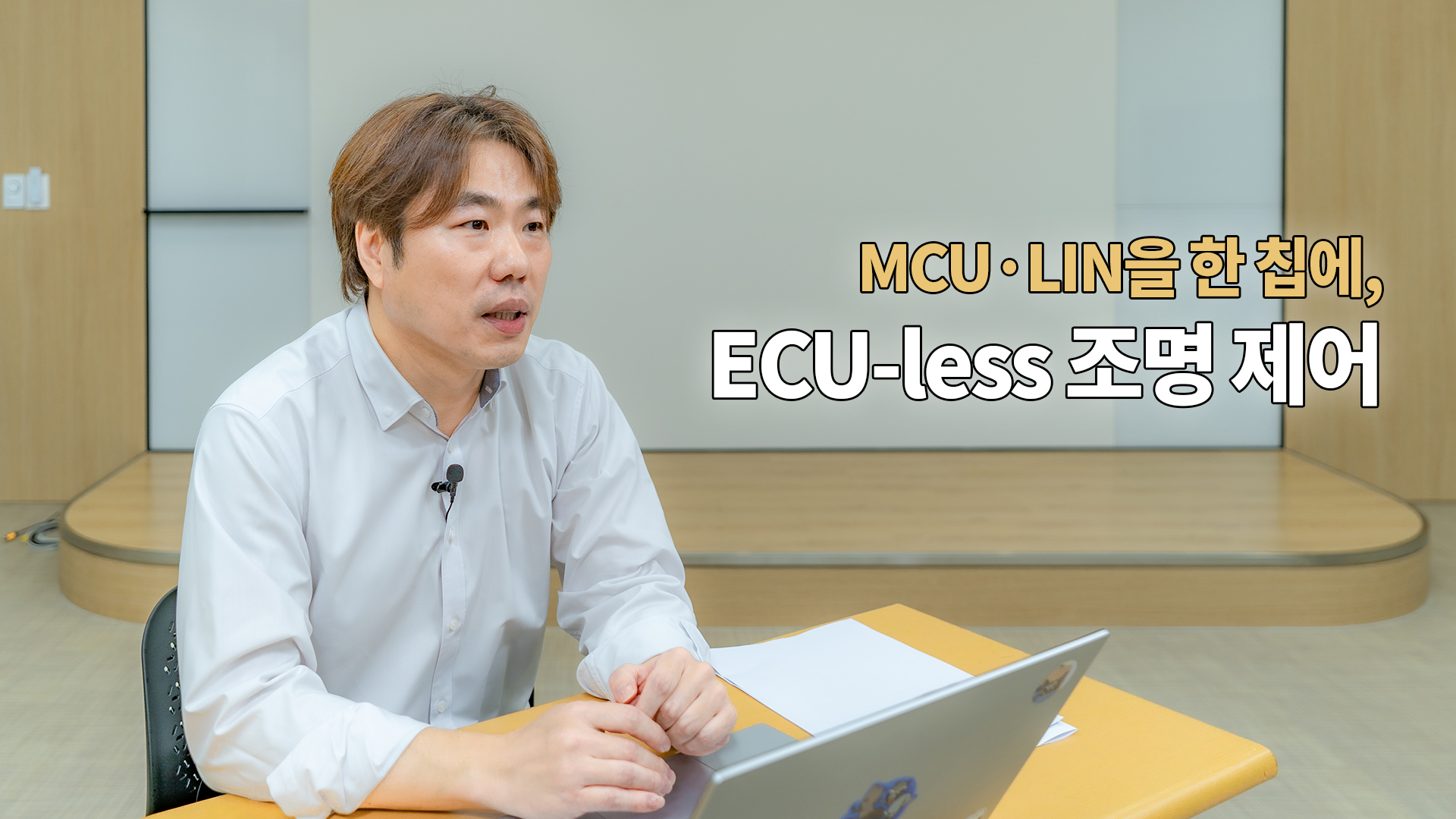
A single misaligned light means 'defect'… Vehicle interior lighting now guarded by semiconductors and software
Automotive interior lighting is moving beyond its role as 'auxiliary lighting.' As it becomes a core element of user experience (UX) that expresses brand identity through color and animation while reflecting driver preferences, the LED interior ambient lighting market is growing rapidly. In connection with this, we met in advance with Choi Young-jae, Research Director at Dabo Corporation, who will present a technical webinar session on "Intelligent LED Interior Lighting Solutions Illuminating Future Vehicles," to hear about market trends and changes in design requirements.
2026.08.28by 명세환 기자
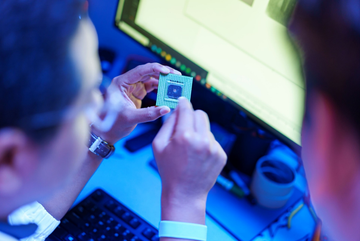
ST Microelectronics and NUS Establish Joint Research Center 'HELIX' for Edge AI
ST Microelectronics and the National University of Singapore have established the 'HELIX' joint research center aimed at implementing embedded AI in edge environments. Over a four-year period, the center will conduct research across the entire technology stack from algorithms to silicon, focusing on memory-centric architecture leveraging ST's 18nm FD-SOI technology and embedded PCM. The core objective is to implement intelligence directly in physical devices such as robots and drones while minimizing energy consumption.
2026.08.28by 배종인 기자











