



Nvidia Demonstrates Deep Learning Application That Transforms Any Drawing Into Artwork
 Published2017.10.17 15:45
Nvidia held a public demonstration of "Vincent AI," a deep learning-based application developed by Cambridge Consultants, at the GTC Europe event held in Munich, Germany.
The Vincent application allows users to complete simple sketches drawn with a stylus in real-time as artwork in seven different styles, including oil paintings by J.M.W. Turner, a 19th-century English landscape painter, and neon-colored pop art.
The public demonstration, which took place during Nvidia founder and CEO Jensen Huang's keynote address, drew gasps of amazement from over 3,000 attendees. CEO Jensen Huang came down from the stage during the keynote and personally drew the Nvidia logo and a human face with a stylus. When the sketch was transformed in real-time into a Picasso-style painting, the audience burst into applause.
Behind the remarkable performance of Vincent AI lies a GAN (Generative Adversarial Network) that has undergone precise tuning. This application, created by sampling 8,000 artworks and undergoing 14 hours of training on Nvidia's DGX system, transforms information input by humans into fantastic works of art.
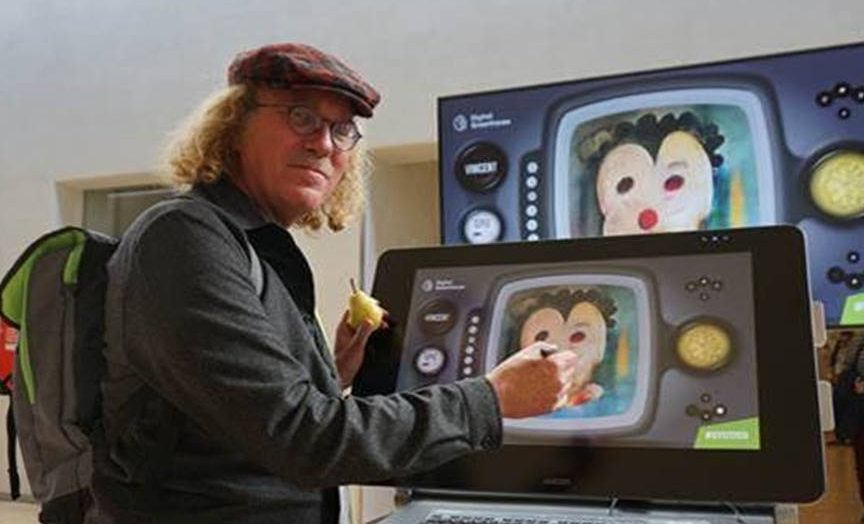
Based on research conducted over thousands of hours by Cambridge Consultants' AI research lab, the Digital Greenhouse, a team of five was able to build the Vincent demo in just two months. The software can be installed on a PC or notebook equipped with an Nvidia GPU and used with a Wacom tablet.
Following CEO Jensen Huang's keynote address, GTC participants were also given the opportunity to pick up a stylus themselves, choose one of seven styles, and try drawing portraits, landscapes, cats and other subjects to experience the application.
This demonstration represents a fundamentally different technology from two deep learning demos that have captured global attention in recent years. For example, Google's QuickDraw tends to misidentify simple sketches as stethoscopes or bags. Another type, style transfer, applies a specific painter's style to photographs or videos. In contrast, Vincent AI enables the possibility of having humans set high-level directions during new product design processes while allowing the machine to fill in the remaining details.
Through this Vincent AI demonstration, the computing power of DGX and the remarkable performance of GAN have also been proven. While conventional deep learning algorithms achieved impressive results by processing vast amounts of data, GAN enables the creation of applications with far fewer samples than before by training one neural network to mimic input data and another neural network to identify fabricated portions.
Monty Barlow, Director of Machine Learning at Cambridge Consultants, stated that this achievement can be applied to solving real-world problems. He noted that companies can leverage it even when sample sizes number only in the hundreds rather than hundreds of thousands. This is generating considerable expectations among companies seeking Cambridge Consultants' consulting services to solve challenging problems.
Director Barlow stated, "Surprisingly, many artists have shown considerable interest in this application," and added, "Using Vincent AI will allow you to understand what art is and how well-versed you are in knowledge about art."
Related news
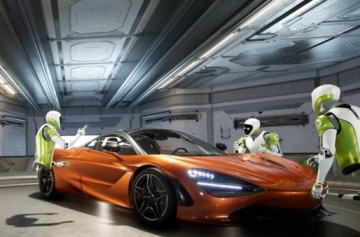
NVIDIA: "Vivid collaboration anytime, anywhere in VR."
NVIDIA announced that it will provide early access to NVIDIA Holodeck, an intelligent virtual reality (VR) platform, to select designers and developers at 'GTC Europe' taking place from the 10th to 12th in Munich (local time). NVIDIA Holodeck is a platform that facilitates collaboration among designers, developers, and customers from anywhere in the world. Customers can view, build, and review creative works together in a VR environment where physical simulation takes place.
2017.10.12by 김자영 기자
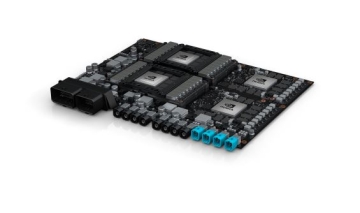
NVIDIA AI Computer 'Supports Level 5 Driverless Autonomous Vehicles'
Nvidia unveiled the world's first artificial intelligence computer designed for the development of fully autonomous robot taxis at 'GTC Europe' held in Munich from the 10th to 12th (local time). This new system, which has been assigned the code name Pegasus, is an extended version of the NVIDIA DRIVE PX AI computing platform for processing Level 5 autonomous vehicles, capable of performing 320 trillion operations per second, delivering performance over 10 times superior to the previous version, NVIDIA DRIVE PX 2. Accordingly, NVIDIA DRIVE PX Pegasus does not require a driver to be on board. There is no steering wheel, pedals, or mirrors for the driver. Additionally, as it arrives at the destination according to the passenger's request, it can be used by everyone, including the elderly and people with disabilities.
2017.10.12by 김자영 기자

NVIDIA Hosts 'Deep Learning Day 2017' for AI Developers and Industry Professionals
Nvidia announced that it will hold 'Deep Learning Day 2017,' showcasing the latest artificial intelligence technology, for a total of three days from October 31st to November 2nd at InterContinental Seoul COEX. Deep Learning Day 2017 is part of the 'GPU Technology Conference (GTC) 2017,' which is being held in major cities worldwide this year. The event is composed of conference sessions where the most important technological developments and cases in the AI field today will be presented, and the Deep Learning Institute, which provides practical hands-on sessions.
2017.10.13by 김자영 기자
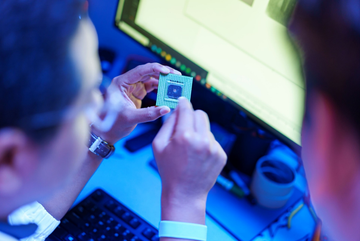
ST Microelectronics and NUS Establish Joint Research Center 'HELIX' for Edge AI
ST Microelectronics and the National University of Singapore have established the 'HELIX' joint research center aimed at implementing embedded AI in edge environments. Over a four-year period, the center will conduct research across the entire technology stack from algorithms to silicon, focusing on memory-centric architecture leveraging ST's 18nm FD-SOI technology and embedded PCM. The core objective is to implement intelligence directly in physical devices such as robots and drones while minimizing energy consumption.
2026.08.28by 배종인 기자
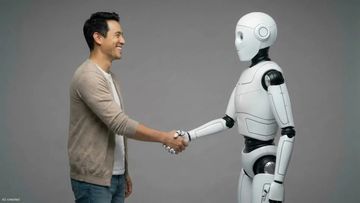
ams, Enhancing Humanoid Robot Sensing and Communication with Digital Photonics
ams OSRAM has unveiled solutions that leverage digital photonics technology to enhance the sensing and communication capabilities of humanoid robots. The company implements environmental awareness and precision manipulation through dToF sensors, optical force sensors, and structured light emitters, while supporting LED-based non-verbal communication through the EVIYOS and ALIYOS platforms. According to market research, the humanoid robot market is projected to grow from $600 million in 2025 to $51 billion in 2035, with improvements in robot sensing capabilities expected to serve as a key growth driver.
2026.08.27by 배종인 기자











