



Expansion of the cost-effective STM32 product family
 Published2012.03.13 22:21
March 13, 2012, Seoul — STMicroelectronics (NYSE:STM), a global semiconductor company in various electronic device applications and a leader in the microcontroller sector, announced that it has expanded its market-leading and proven STM32® portfolio to more than 300 products. The STM32 F0 is an all-new family that combines enhanced capabilities with ultra-low-power ARM® Cortex™-M0 embedded processors for price-sensitive applications. The new microcontroller family supports advanced features while lowering end product costs, helping to facilitate the transition from 8-bit and 16-bit device applications to 32-bit.
The ARM Cortex-M processor series has revolutionized electronic design by redefining conflicting design requirements such as performance, cost, power consumption, convenience, and scalability. ST developed the STM32 and redefined its product DNA to include exceptional real-time performance, industry-leading low-power efficiency, and a valuable ecosystem of diverse advanced peripherals and development tools. With this, ST has completed the industry's most diverse and successful family of microcontrollers based on the Cortex-M processor series, and has also included microcontrollers based on the world's highest-performing Cortex-M4 processor in its portfolio. The latest STM32 F0 family, unveiled today, utilizes powerful Cortex-M0 cores running at 48 MHz to build upon this DNA and provide additional high-value features not found in other products.
Michel Buffa, General Manager of ST’s Microcontroller Business Unit, stated, “The STM32 F0 family extends the strengths of ST’s Cortex-M processor series portfolio platform, allowing customers to enjoy STM32 DNA at an affordable price. By combining best-in-class communication and control peripherals with the M0 core, the STM32 F0 series enables developers to implement new solutions by providing features typically found at much higher price points.”
Keith Clarke, Vice President of Embedded Processors at ARM, stated, “ST is one of the leading partners for the Cortex-M3 processor, ARM’s first Cortex-M series processor. ST has also strengthened the ARM ecosystem with high-value products that leverage the intellectual property of numerous development tool vendors, including ARM and ST. The Cortex-M0 processor offers the perfect opportunity for 8-bit and 16-bit MCU developers to enjoy the performance benefits of 32-bit MCUs without sacrificing power or space. Furthermore, it includes features that allow for a seamless transition to higher-performance Cortex processors in the future.”
The STM32 F0 is an extension of the STM32 portfolio that fully benefits from the STM32 DNA, along with complete product configuration, dedicated production lines, and low costs, while also supporting applications previously run on 8-bit MCUs. One of the enhanced features of the STM32 F0 family is up to seven timers suitable for controlling heaters or motors, which allows multiple elements of an induction cooker to be controlled by a single device.
The STM32 F0 family also includes hardware that supports Consumer Electronics Control (CEC) with an HDMI interface. As the design of many home multimedia devices is simplified and supports connectivity based on the latest industry standard protocols, the microcontroller's CPU, memory, and peripherals have spare capacity to handle other tasks. The CEC kernel can be measured independently using a low-speed 32kHz external clock or an 8MHz internal clock, which contributes to system cost reduction. Additionally, the STM32 F0's 12MHz I/O toggle speed enables developers to build sophisticated control applications with low power consumption at a low cost.
The STM32 F0 microcontroller is currently being sampled and is priced at $0.95 for orders of 1,000 units. Full-scale production is scheduled for the second quarter of 2012, and customers can choose from 32-pin UFQFPN32, 48-pin LQFP48, and 64-pin LQFP64 packages. 20-pin and 100-pin expansion models are also expected to be released soon.
Additional information regarding STM32 F0
One of the added on-chip features is an analog block consisting of a 12-bit 1 Msample/s analog-to-digital converter (ADC), a 12-bit digital-to-analog converter (DAC), and two user-configurable analog comparators paired closely with the DAC. This provides superior analog performance compared to other M0-based devices from competing manufacturers, while enabling developers to use low-cost processors for applications requiring precision, high-speed sensors and control for multiple channels.
With four power-saving modes, including a 5.3µA stop mode and a 2.8µA standby mode, while the real-time clock operates normally, the energy-efficient STM32 F0 family simplifies design and extends battery life in applications such as remote control, sensor networks, and smart meters. The devices included in this product family are also suitable for industrial control, building automation, computer printers and white goods, game consoles, DVD/Blu-ray players and audio/video receivers, etc.
The PWM 16-bit and 32-bit timers embedded in the chip provide numerous functions, including 17 capture and compare input/output terminals mapped to up to 28 pins, making it suitable for motor control applications. Additionally, there are two timers with infrared transmission control capabilities, simplifying the implementation of infrared communication protocols.
High-performance communication features include a Serial Peripheral Interface (SPI) that supports user-configurable data frames up to 16-bit and baud rates up to 18 Mbit/s, as well as an I2C port that supports Fast mode+ communication up to 1 Mbit/s. Additionally, the I2C port can wake the MCU from sleep mode via address matching and reduce the burden of configuration for simple communication tasks, such as setting the communication clock. User-configurable analog and digital noise filtering enhances communication quality. It also includes a 6 Mbit/s USART that operates independently of the main processor clock frequency and supports multiple clock input options.
Additional explanation of the ARM Cortex-M processor series and its advantages
The ARM Cortex-M processor series family provides microcontroller manufacturers with a variety of industry-standard cores through licensing, freeing designers from proprietary processor architectures and the constraints associated with them. This family currently consists of the ultra-low-power, low-cost 32-bit M0 processor, the fully featured 32-bit M3 processor that supports a wide range of applications from cost-sensitive to high-performance, and the M4 processor, which combines a standard 32-bit processor with a Digital Signal Processing (DSP) core.
System vendors who had no choice but to use older 8-bit or 16-bit product families due to familiarity and costs already invested in tools and software can now switch to microcontrollers based on ARM Cortex-M series processors and benefit from a high-performance 32-bit architecture capable of supporting additional features and sophisticated applications.
The advantages of transitioning to ARM Cortex processor-based microcontrollers include price competitiveness compared to older 8-bit and 16-bit product families due to the modern Cortex design, as well as enhanced compatibility, flexibility, and scalability across pins, software, and peripherals through diverse microcontroller product families such as ST’s STM32 family. Features of ARM Cortex-M series processor-based microcontrollers include low power consumption, high on-chip flash and RAM density, low cost, and a wide range of packages, from styles with small pin counts to fine-pitch and BGA packages that provide multiple I/O terminals.

관련뉴스
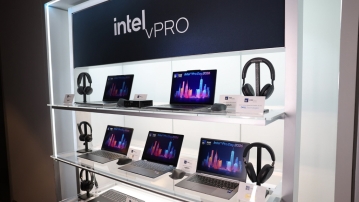
Intel Unveils Next-Generation 'Core Ultra Series 3' and vPro Platform for Enterprise PCs
인텔이 차세대 기업용 PC를 위한 ‘인텔 코어 Ultra 시리즈 3’와 최신 vPro 플랫폼을 공식 발표하며, 기업용 노트북부터 고성능 워크스테이션까지 폭넓은 수요 충족에 나섰다.
2026.03.26by 배종인 기자
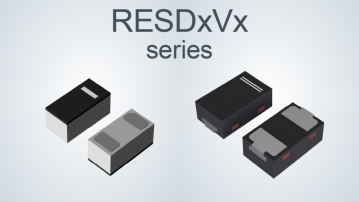
ROHM Launches ESD Protection Diode Compatible with High-Speed Interfaces of 10Gbps or Higher
반도체 전문 기업 로옴(ROHM)이 10Gbps를 넘어서는 차세대 고속 데이터 통신 환경에 대응할 수 있는 ESD(정전기 방전) 보호 다이오드 ‘RESDxVx 시리즈’를 개발하며, 고속 인터페이스에서 요구되는 신호 품질 유지와 IC 보호 성능을 동시에 끌어올렸다.
2026.03.26by 배종인 기자
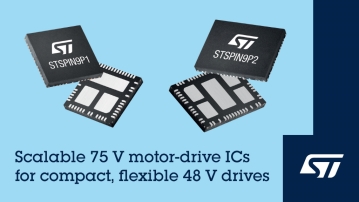
ST Launches 75V Drive IC Targeting 48V Industrial Motor Driving
ST마이크로일렉트로닉스가 48V급 산업용 구동 시스템 설계에 맞춘 75V 모터 드라이브 IC ‘STSPIN9P’ 시리즈를 공개했다. 새 제품군은 하프 브리지와 풀 브리지 구조로 구성돼 모터 종류와 출력 조건에 따라 설계를 확장할 수 있도록 한 것이 특징이다. 전원 회로와 보호 기능, 전류 감지 회로를 칩에 통합해 시스템 구성을 단순화했으며, 최대 500W급 애플리케이션까지 대응하도록 설계됐다. 회사는 레퍼런스 디자인과 데모 보드도 함께 제공해 산업 자동화, 로보틱스, 펌프, 팬, 조명, 섬유 기계 등에서 개발과 평가를 지원할 계획이다.
2026.03.26by 배종인 기자

Nordic supports security updates for the entire lifecycle of IoT devices at a single fixed cost
Nordic Semiconductor, a global leader in low-power wireless connectivity solutions, has unveiled a single fixed-cost licensing model that delivers FOTA (Firmware Over-the-Air) and device management capabilities throughout the device lifecycle via nRF Cloud, and introduced a new firmware update solution to prepare for the enforcement of the European Union's Cyber Resilience Act (CRA).
2026.03.26by 배종인 기자
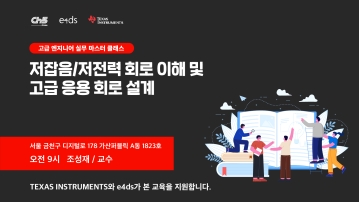
Practical Training in Low-Noise, Low-Power Circuit Design All in One Place… Training Fee Support
고감도 아날로그 회로와 센서 기반 시스템 설계 역량을 강화할 수 있는 ‘2026 고급 엔지니어 실무 마스터 클래스’가 오는 4월16일 서울 가산동 e4ds 컨퍼런스 센터에서 열린다. 이번 과정은 온라인이 아닌 오프라인 유료 실습 교육으로 진행되며, 현장 중심의 심화 학습을 원하는 엔지니어를 대상으로 한다. 이번 교육은 텍사스 인스트루먼트(Texas Instruments)가 교육비를 지원해 정가 25만원에서 10만원 할인 된 15만원에 참가할 수 있다.
2026.03.26by 배종인 기자











