



Atheris Jointly Develops IP Solution to Reduce Mobile Phone Memory Costs
 Published2012.03.14 22:47
March 14, 2012 – Synopsys, Inc., a global developer of software and IP for electronic components and systems design, verification, and manufacturing, and Arteris, Inc. (Country Manager: Yeon Myeong-heum), a leading provider of Network-on-Chip (NoC) interconnect IP solutions, announced today a joint analog and digital IP solution that implements the MIPI–LLI (Low Latency Interface) 1.0 specification. This joint solution is characterized by interoperability with the MIPI standard as well as providing low power and high performance in a compact silicon footprint. By developing a joint solution faithful to the LLI standard, Arteris and Synopsys provide pre-tested and optimized analog and digital MIPI-based IP, enabling SoC designers to lower design costs and accelerate time-to-market.
The MIPI-LLI specification enables high-bandwidth low-latency inter-chip (LLI) communication between two chips using a minimum number of SoC pins. LLI utilizes the MIPI M-PHY physical layer and supports five other protocols, including USB SSIC, JEDEC UFS, MIPI CSI-3, DSI-2, and DigRF v4. The round-trip latency of LLI interchip connections is fast enough for mobile phone modems to share application memory while maintaining sufficient throughput and low latency for cache refills. Consequently, mobile phone manufacturers can eliminate the modem's dedicated RAM chip from the phone's Bill of Materials (BoM). MIPI’s LLI subcommittee stated that this can save printed circuit board space and about $2 per mobile phone, allowing for the addition of features or the manufacture of smaller and slimmer devices.
"As active MIPI members, Arteris and Synopsys are helping to expand MIPI M-PHY and MIPI LLI," said Joel Huloux, Chairman of the MIPI Board of Directors. "Integrating and using Arteris and Synopsys solutions early on helps companies adopting MIPI LLI shorten their time to market."
The joint solution introduced this time consists of Arteris’ FlexLLI™ MIPI LLI digital controller IP and Synopsys’ DesignWare® MIPI M-PHY IP. Engineering teams from Arteris and Synopsys, formed to facilitate the verification and testing of the joint solution, have completed verification of the solution’s functionality and compatibility.
Charlie Janac, President and CEO of Arteris, said, “The Arteris and Synopsys joint MIPI LLI solution is the easiest and most risk-reducing path to adopting MIPI LLI,” adding, “Arteris and Synopsys have collaborated to provide a highly integrated LLI solution to our joint customers that enables rapid time-to-market and minimizes design risks.”
John Koeter, Vice President of IP and System Marketing at Synopsys, said, “This MIPI LLI solution from Atheris and Synopsys facilitates the adoption of innovative Chip-to-Chip (C2C) interfaces by providing high-quality IP that has been jointly validated by both companies and is ready for customers to rapidly integrate into their SoCs. With the increasing demand for displays, cameras, and broadband mobile connectivity in consumer devices, SoC designers must use validated IP that has proven compatibility with MIPI standards such as DSI, CSI-2, D-PHY, DigRF 3G/v4, and M-PHY.”
Product supply
The joint MIPI LLI IP solution from Arteris and Synopsys is being supplied to select early support customers for use in their designs. System hardware incorporating this solution is also scheduled to be introduced in the second half of 2012.
More information about Arteris' FlexLLI MIPI LLI digital controller IP can be found at www.arteris.com/lli .
For more details on the features, performance, and availability of Synopsys' DesignWare M-PHY, please contact Synopsys. For more details on DesignWare MIPI IP, please visit http://www.synopsys.com/IP/InterfaceIP/MIPI/Pages/default.aspx .

관련뉴스

Intel Unveils Next-Generation 'Core Ultra Series 3' and vPro Platform for Enterprise PCs
인텔이 차세대 기업용 PC를 위한 ‘인텔 코어 Ultra 시리즈 3’와 최신 vPro 플랫폼을 공식 발표하며, 기업용 노트북부터 고성능 워크스테이션까지 폭넓은 수요 충족에 나섰다.
2026.03.26by 배종인 기자

ROHM Launches ESD Protection Diode Compatible with High-Speed Interfaces of 10Gbps or Higher
반도체 전문 기업 로옴(ROHM)이 10Gbps를 넘어서는 차세대 고속 데이터 통신 환경에 대응할 수 있는 ESD(정전기 방전) 보호 다이오드 ‘RESDxVx 시리즈’를 개발하며, 고속 인터페이스에서 요구되는 신호 품질 유지와 IC 보호 성능을 동시에 끌어올렸다.
2026.03.26by 배종인 기자
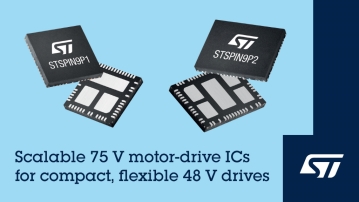
ST Launches 75V Drive IC Targeting 48V Industrial Motor Driving
ST마이크로일렉트로닉스가 48V급 산업용 구동 시스템 설계에 맞춘 75V 모터 드라이브 IC ‘STSPIN9P’ 시리즈를 공개했다. 새 제품군은 하프 브리지와 풀 브리지 구조로 구성돼 모터 종류와 출력 조건에 따라 설계를 확장할 수 있도록 한 것이 특징이다. 전원 회로와 보호 기능, 전류 감지 회로를 칩에 통합해 시스템 구성을 단순화했으며, 최대 500W급 애플리케이션까지 대응하도록 설계됐다. 회사는 레퍼런스 디자인과 데모 보드도 함께 제공해 산업 자동화, 로보틱스, 펌프, 팬, 조명, 섬유 기계 등에서 개발과 평가를 지원할 계획이다.
2026.03.26by 배종인 기자

Nordic supports security updates for the entire lifecycle of IoT devices at a single fixed cost
Nordic Semiconductor, a global leader in low-power wireless connectivity solutions, has unveiled a single fixed-cost licensing model that delivers FOTA (Firmware Over-the-Air) and device management capabilities throughout the device lifecycle via nRF Cloud, and introduced a new firmware update solution to prepare for the enforcement of the European Union's Cyber Resilience Act (CRA).
2026.03.26by 배종인 기자

Practical Training in Low-Noise, Low-Power Circuit Design All in One Place… Training Fee Support
고감도 아날로그 회로와 센서 기반 시스템 설계 역량을 강화할 수 있는 ‘2026 고급 엔지니어 실무 마스터 클래스’가 오는 4월16일 서울 가산동 e4ds 컨퍼런스 센터에서 열린다. 이번 과정은 온라인이 아닌 오프라인 유료 실습 교육으로 진행되며, 현장 중심의 심화 학습을 원하는 엔지니어를 대상으로 한다. 이번 교육은 텍사스 인스트루먼트(Texas Instruments)가 교육비를 지원해 정가 25만원에서 10만원 할인 된 15만원에 참가할 수 있다.
2026.03.26by 배종인 기자











