



To find a 2018 business model, technology and strategy must be matched
 Published2017.12.07 18:50
"The era of viewing each individual technology separately just because it is called a technology trend has passed. Now the perspective of matching strategy and technology is important in finding a business model."
This year, technologies from various fields became issues, including IoT-based smart home technology, virtual reality (VR), augmented reality (AR), machine learning and deep learning, big data, physical-digital integration, blockchain and cryptocurrency. What technology will be suitable for business models going forward?
Kim Jin-young, CEO of ROA Invention Lab, predicted that "the technologies that came out this year will evolve and deepen next year," and "the areas that will become visible from a service perspective are IoT and smart home technology, automation technology based on machine learning and deep learning, and physical-digital integration will be fully launched."

The most notable among smart home technologies is the artificial intelligence (AI) speaker. Amazon's Echo, launched in November 2014, sold a cumulative 14.1 million units as of the second quarter of 2017. Google Home has also recorded 11 million cumulative units since its November 2016 launch. Of these, 4.7 million units were purchased by customers who bought both Echo and Home. In Korea as well, various products have been successively launched, including SK Telecom Nugu, KT Giga Genie, Naver Wave and Friends, and Kakao Mini.
Apple is also preparing for the launch of artificial intelligence speaker HomePod next year, and competition is expected to accelerate. HomePod has differentiated itself in high-performance speakers by utilizing seven Twitter speakers and one woofer speaker, with six microphones to receive sound from all directions equally. It is integrated with Siri and Apple Music and has home assistant functionality to control home devices by voice.
Kim said, "From a B2B perspective, AI speakers are a medium to transform organizations and business models, and from a B2C perspective, based on accumulated data, they can connect to e-commerce and create new services, making it difficult to predict how far they will evolve."
The application of omnichannel using machine learning and deep learning algorithms is an area where services will become visible. Stitchfix, a U.S. fashion e-commerce company, has no clothing photos on its shopping site. When accessing the site, customers check body measurements, style preferences, and lifestyle. Based on customer profiling data, artificial intelligence recommends clothing, and professional stylists select five of them for delivery. Customers pay only for clothes they like and return the rest. Artificial intelligence learns customer preferences and reasons for returns through their social accounts to apply to next recommendations. 80% of customers make repeat purchases within 90 days of their first purchase.
The application of artificial intelligence technology is expanding beyond fashion and clothing to cosmetics and accessories. The higher the information asymmetry and search costs, the greater the expansion potential.

As technology competition between physical and digital retailers intensifies, attention is focused on physical-digital integration. Amazon Go, an offline grocery convenience store operated by Amazon, is a market without checkout counters. Using an app to select items, automatic payment is made. This is possible through 'Just Walk-Out Technology' that integrates artificial intelligence such as computer vision, recognition sensors, and deep learning technology.
Kim said, "Computer vision technology, deep learning algorithms, and sensor fusion are three key technologies applied to autonomous vehicles," adding "Amazon has applied autonomous driving technology to commerce. Changes in how work is done, service product development, and processes are inevitable."
He emphasized, "It is important to transition to platform-based thinking from a corporate strategic perspective in response to technological change and to pursue open innovation. In the past environment, there was a fixed market, specific customers, and a certain value chain. Now only companies that create completely new customer value based on digital capabilities can survive."
Hyundai Motor has established open innovation centers in Israel and Silicon Valley, and KB Kookmin Card is running the FutureNine program to cultivate startups. Hite Jinro has also stepped up efforts to discover startups. Along with efforts to secure digital capabilities internally, attempts are being made to achieve mutual growth by securing 'human resources' that understand mechanisms for new technologies.
Kim emphasized, "It is more important to innovate through technology adoption than simply reading technology trends," and "we must change existing preconceptions and view technology itself as a medium for creating new business models."
Comments
Related news
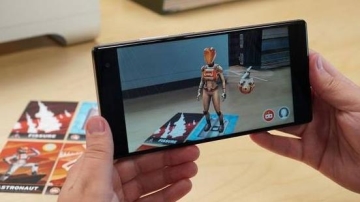
Why AR, Expected to Surpass the VR Market, Is Attracting Attention in Terms of Commercialization
Among the technologies showcased in Apple's new iPhone X, released in its 10th anniversary, the standout technology is 'facial recognition'. This technology is implemented through the TrueDepth camera system, a 3D camera based on a 3D sensing module. There is another technology made possible by a 3D camera that measures depth. That is 'augmented reality (AR)'. In June, Apple unveiled 'ARKit', an augmented reality platform, at its developer conference 'WWDC 2017'. Subsequently, it announced that it was developing an app utilizing AR technology through collaboration with IKEA. The iPhone X is equipped with an OLED display and a 3D depth camera for AR implementation. Market research firm Counterpoint Research predicted that the AR market would reach 60 billion dollars by 2021 in next-generation technology competition, growing faster than VR. Why is AR garnering attention from a business perspective?
2017.10.11by 김지혜 기자

Samsung SDS Makes Full-Scale Entry into Home IoT Market
Samsung SDS is rolling out smart wall pads and door locks that serve as hub devices in home networks by applying IoT (Internet of Things) technology. Samsung SDS, which recently unveiled successive artificial intelligence platforms including data analytics AI and conversational AI, is now taking active steps in the IoT sector, another key axis of the fourth industrial revolution. The company is pursuing commercialization based on Brightics IoT, its proprietary IoT platform that systematically collects, stores, and manages data generated from numerous sensors and devices.
2017.11.02by 김지혜 기자
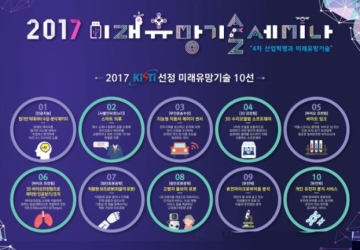
10 Things Small and Medium-Sized Enterprises Should Commercialize in the Fourth Industrial Revolution
There are many technologies leading the Fourth Industrial Revolution, including big data, autonomous vehicles, IoT, and artificial intelligence. While voices calling for preparation for the Fourth Industrial Revolution are loud, it remains unclear which specific items are suitable for commercialization. In response, the Korea Institute of Science and Technology Information (KISTI) has presented commercialization items that small and medium-sized enterprises (SMEs) should focus on to respond to the Fourth Industrial Revolution. Based on venture capital investment data, market data, and technology trends, KISTI selected 50 technologies across 11 sectors by analyzing suitability for SMEs, market viability, feasibility of technology development, and ripple effects on the market. Below are 10 promising commercialization items from this selection.
2017.11.24by 김지혜 기자
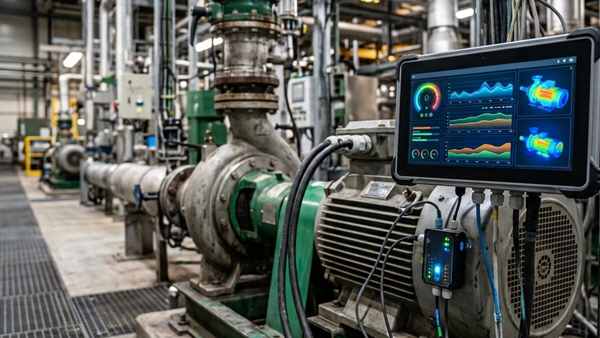
[Technical Contribution] Mouser: "AI Agents Help Accelerate and Standardize Industrial Field Maintenance Operations"
Abhishek Jadhav from Mouser Electronics discusses how to leverage agentic AI for predictive maintenance in industrial automation.
2026.10.23by 편집부
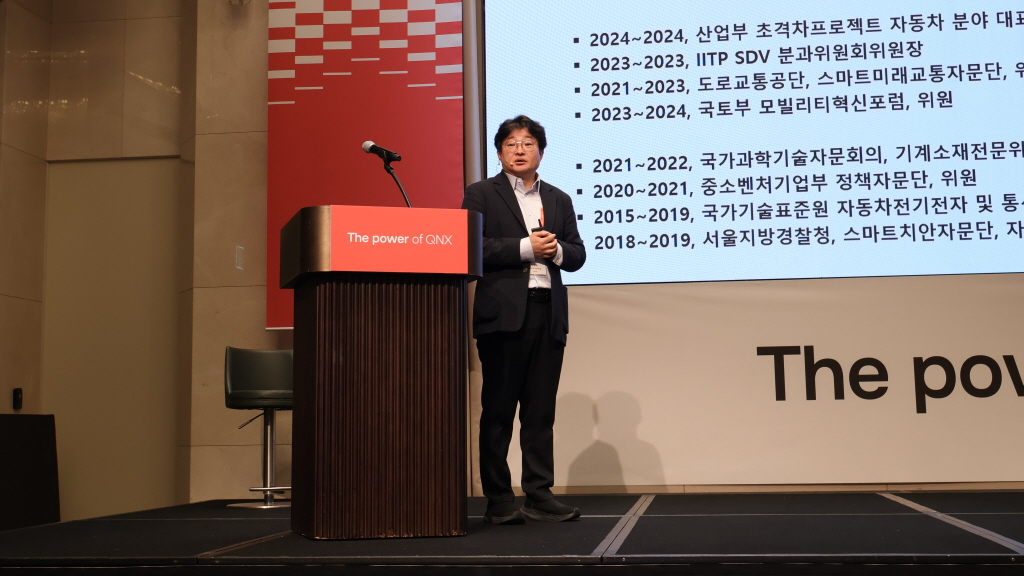
Professor Jeong Gu-min from Kookmin University, "QNX RTOS will become an important foundational technology in the physical AI era"
As software-defined vehicles (SDV) establish themselves as a new standard in the automotive industry, forecasts indicate that future competitiveness will be determined not by vehicle hardware but by software platforms and AI utilization capabilities. With the automotive industry rapidly transitioning to centralized architecture and AI-based development systems, an analysis suggests that how effectively vehicle platforms can be simplified and operated cost-efficiently will become core competitiveness for next-generation SDV and AI-defined vehicles. Professor Jeong Gu-min from Kookmin University emphasized at QNX TechForum Korea 2026 that "the automotive industry is now shifting from hardware competition to software ecosystem competition," highlighting that API-centric platforms and AI utilization will determine success or failure in the future automotive industry.
2026.10.23by 배종인 기자











