


Samsung Receives FDA Approval for X-ray Radiation Reduction Technology
 Published2017.12.13 12:02
Samsung Electronics has received U.S. Food and Drug Administration (FDA) approval for its premium digital X-ray GC85A, featuring "S-Vue," an image processing technology that reduces radiation dose by half while producing chest images of comparable quality to conventional X-ray machines. This FDA approval is significant because it acknowledges efforts to reduce radiation dose.
In the research results of Professor Jeong Se-min of Chung-Ang University Hospital, the image quality was evaluated as the same even when the radiation input was reduced by half when shooting with GC85A.
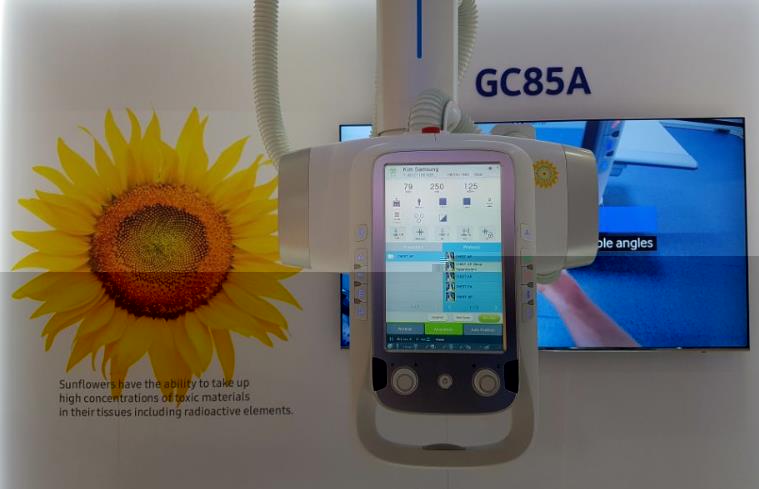
A single chest scan with the Samsung Digital X-ray GC85A exposes patients to an effective dose of 8 microsieverts (μSv) on average.
This is significantly lower than the annual effective dose of 1 millisievert (mSv), which is comparable to the radiation dose from eating about 80 bananas. It's also comparable to the effective dose absorbed by the body during a three-hour flight from New York to Chicago.
“We are pleased to have received FDA approval for our low-dose technology as interest in managing cumulative radiation exposure is growing in each country,” said Song In-sook, Executive Director of Medical Device Product Strategy at Samsung Electronics. “We will continue our efforts to reduce X-ray radiation dose not only for the chest but also for other body parts such as the abdomen, limbs, and even for infants and toddlers.”
관련뉴스
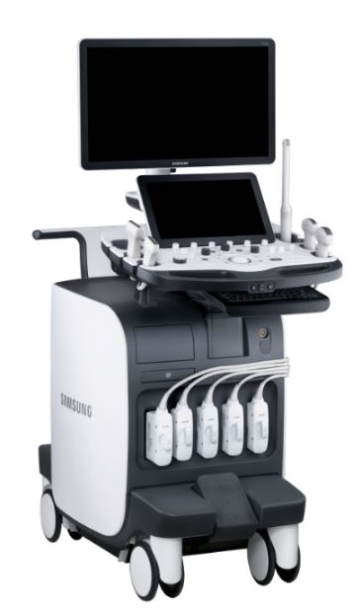
Samsung Medison Launches Ultrasound Diagnostic Device for Radiology with Improved Convenience
Samsung Medison is launching the RS85, a premium ultrasound diagnostic device for radiology that significantly enhances imaging performance and ease of use. The RS85 is a product with strengthened research capabilities designed to actively target major hospitals worldwide, incorporating newly applied MV-Flow and S-Shearwave Imaging features. MV-Flow visualizes blood flow in microvasculature tissue that could not be measured with conventional Doppler ultrasound imaging, thereby assisting in lesion identification.
2017.11.20by 김지혜 기자
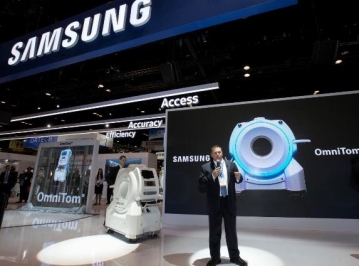
Samsung Medison "We will build our own market with innovative medical devices"
Samsung Medison will unveil its advanced diagnostic imaging device product lineup at the Radiological Society of North America (RSNA) 2017, which begins on the 26th (local time) in Chicago, USA. This marks the first time the company is presenting its entire range of diagnostic imaging equipment—including ultrasound, digital X-ray, CT (Computed Tomography), and MRI (Magnetic Resonance Imaging)—all in a single venue.
2017.11.27by 김지혜 기자
Ecolab and K-water Discuss Innovation Collaboration in Advanced Industry Water Management
Ecolab and the Korea Water Resources Corporation jointly discussed cooperation directions for maximizing water use efficiency in advanced industries such as semiconductors and data centers and establishing sustainable water circulation. The two companies agreed to gradually develop a long-term cooperation model that combines water resource infrastructure and water management technology to promote water efficiency optimization, water reuse, and carbon reduction.
2026.08.28by 명세환 기자
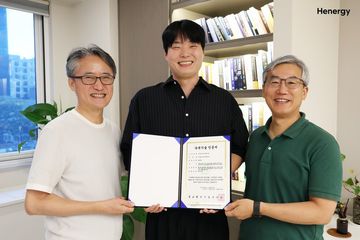
에이치에너지, 녹색기술인증 획득…솔라온케어 가동률 99.82%
에이지에너지가 태양광 발전예측 및 I-V커브 이상진단 기술로 중소벤처기업부 녹색기술인증을 획득했다. AI 기반 자산관리 플랫폼 솔라온케어는 전국 3,000개 이상 발전소에 적용되어 99.82%의 시스템 가동률과 3.7% 발전성능 개선을 달성했다. 실시간 데이터 분석을 통해 모듈 노화와 부분 음영 등 미세한 손실을 조기에 감지하고 관리함으로써 발전 수익을 보호한다.
2026.08.25by 명세환 기자
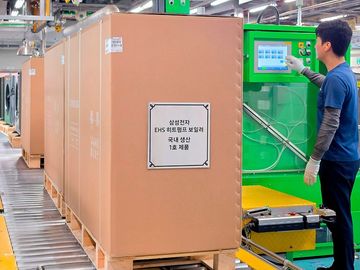
삼성전자, EHS 히트펌프 보일러 광주서 국내 생산…연 10만 대 규모
삼성전자가 난방 전기화 추진에 맞춰 광주사업장에서 EHS 히트펌프 보일러 국내 생산 체제를 구축한다. 2,132㎡ 규모 전용라인에서 이달 시험생산을 시작해 9월 말 본격 양산에 돌입할 예정이며, 연간 10만 대 이상 생산 능력을 갖춘다. 투입 전력 대비 약 5배 열을 생성하는 이 제품은 계절성능계수 4.9를 기록하며 화석연료 기반 보일러 대비 에너지 효율이 높고 탄소 배출을 줄인다.
2026.08.24by 명세환 기자











