


To reduce I/O switch connections in the body control module
 Published2017.12.21 09:06
The number of electronic devices entering vehicles is increasing. Accordingly, they perform various roles including safety, driver assistance, and information provision. The body control module (BCM) controls various functions within the vehicle through signals.
This module manages various vehicle functions including door locks, chime control, interior/exterior lighting, security functions, wipers, turn signals, and power management. Connected to the vehicle's electronic architecture, the BCM reduces multiple plug-in contacts and cable harnesses while providing maximum reliability and cost-effectiveness.
As demand for diverse BCM functions grows, the amount of cable harness is also increasing. According to Kiyotsugu Oba's "Wiring Harness for Next-Generation Vehicles," the total weight of wiring harnesses using general electronic wires in compact vehicles today reaches approximately 30 kg, whereas in the 1970s it was only a few kilograms. The BCM reduces the amount of wiring in vehicles by providing an interface for bus systems, significantly lowering costs. Approximately 80% of the product budget is determined at the BOM stage, that is, in the early development phase.
The BCM market trend is centralization. This is because centralized architecture supports many functions with fewer modules than distributed architecture. The advantages of centralized architecture are simplified networking, high cost efficiency, and optimization of the complete control unit (ECU) that reduces harness weight. Weight reduction not only lowers manufacturing costs but also improves fuel efficiency, benefiting both manufacturers and consumers.
Meanwhile, centralized architecture is causing microcontrollers (MCUs) to suffer from insufficient input/output (I/O) for connecting switches and sensors within the vehicle. For complex design architectures, 60 to 120 switch connections are required to the central BCM. One method to solve this problem is to add discrete components to provide I/O. However, in this case, more components are needed in board design, and the cost savings from reduced wiring are offset by electronic device costs.
Using integrated MSDI solutions such as TI's TIC12400-Q1 or TIC10024-Q1 detects the opening and closing of 24 to 56 switch contacts as shown in Figure 1.
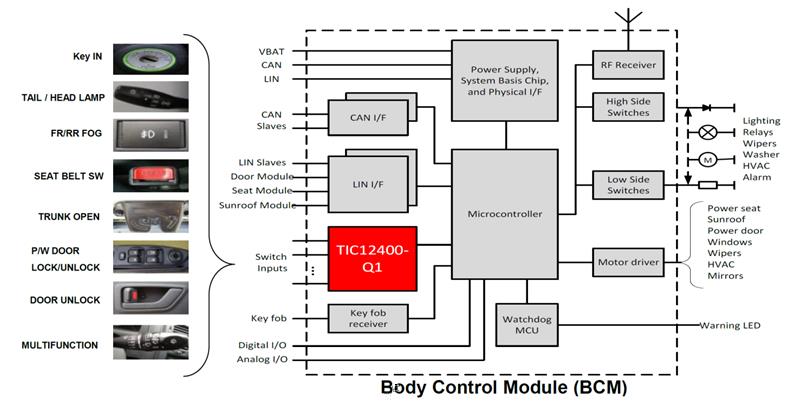
MSDI devices use integrated analog-to-digital converter (ADC) / comparators to detect external switch status and report it to the MCU. The main difference between TIC10024-Q1 and TIC12400-Q1 is that TIC12400-Q1 has switch matrix polling capability and integrated ADC, capable of handling analog and multiple threshold values.
Devices such as TIC10024-Q1 and TIC12400-Q1 can eliminate up to 120 components
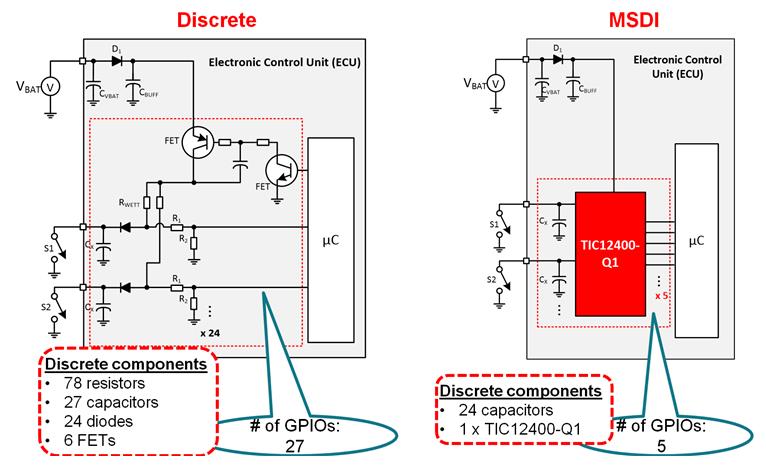
TIC10024-Q1 and TIC12400-Q1 also include electrostatic discharge (ESD) protection (±8kV), reverse battery protection, and transient pulse protection functions. Since external protection components are unnecessary, BOM costs and board size are reduced. Additionally, by reducing hardware and software complexity, reliability is enhanced while scalability enables use in low-end, mid-tier, and high-end platforms.
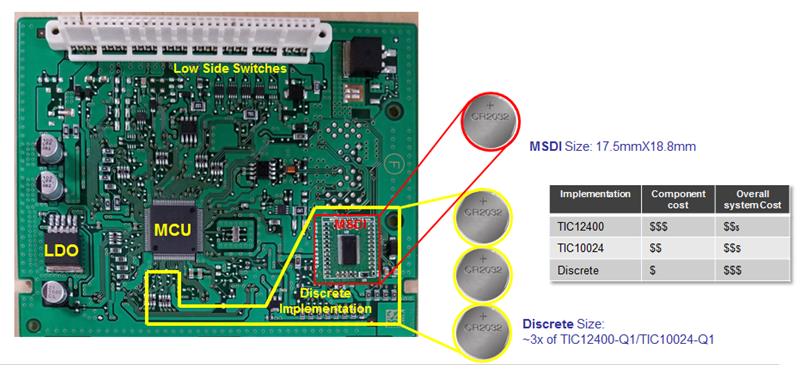
MSDI devices integrate intelligent functions that perfectly meet BCM trends, enabling integration of comfort electronics without significant cost.
1 Comments:
관련뉴스
Easy way to turn wired sensors into wireless ones
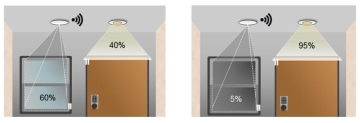
For building automation, attention must be paid to changes in surrounding environmental factors. Sensors are used to collect environmental data, but adding sensors creates a problem: extensive cables and wiring are required to provide power and communication. Internet of Things (IoT) devices equipped with wireless sensors can solve this wiring problem. Some applications still require wiring, such as ambient light sensors and door and window sensors. Implementing existing wired applications wirelessly is not as difficult as one might think. Ambient light sensors used in commercial buildings detect the intensity of light in a specific space and maintain balance of the overall ambient light in a given work area. Typically, light sensors are connected by wire to lighting controlled by the sensor. To implement a wireless solution, connect the lighting to a smart controller through wireless connectivity and install a wireless light sensor near the window. Additionally, wireless sensing nodes make it easier to build smarter systems.
2017.07.19by 김지혜 기자
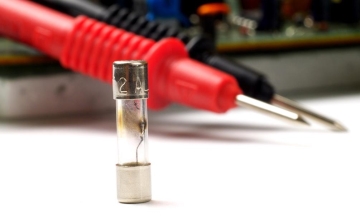
Electronic fuses provide complete protection of downstream circuits
When purchasing a TV, the brand of the product is one of the important selection factors. Brand reliability has an impact on product dependability. Since various manufacturers maintain different quality standards, there are inevitably brands that experience relatively frequent failures. When a product malfunctions, the manufacturer must also spend time and cost on repairs. Identifying and replacing the faulty component in the TV and documenting the root cause of the failure involves considerable time, as well as incurring replacement costs and labor expenses for restoration.
2017.07.27by 김지혜 기자

공용 자전거에 자체 충전하는 전자 잠금 방식 사용하기
몇 년전부터 대도시에 '공용 자전거'가 생겨나기 시작했다. 누구나 도시 전역에 설치된 도킹 스테이션에서 자전거를 빌렸다가 반납할 수 있으며, 신용카드나 휴대폰 결제로 이용 가능하다. 런던에서는 자전거 사용자가 그림 1과 같이 지정된 장소인 도킹 스테이션(docking station) 키오스크(KIOSK)에서 자전거를 빌렸다가 반납한다. 이러한 방식은 자전거 여행자들에게는 좋지만 근처에 도킹 스테이션이 없는 직장인들은 불편하다. 어디에서나 자전거를 빌리고 반납하는 시스템이 구축된다면, 직장인들에게 효율적이고 편리할 것이다.
2017.08.08by 김지혜 기자
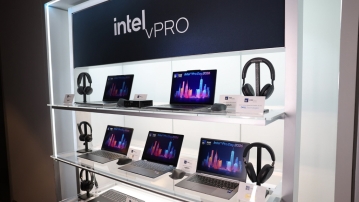
Intel Unveils Next-Generation 'Core Ultra Series 3' and vPro Platform for Enterprise PCs
Intel has officially unveiled the "Intel Core Ultra Series 3" for next-generation enterprise PCs and the latest vPro platform, addressing a wide range of demands from enterprise notebooks to high-performance workstations.
2026.03.26by 배종인 기자
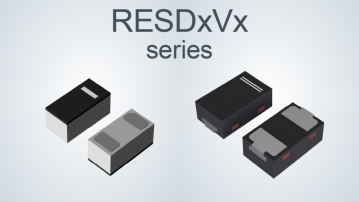
ROHM Launches ESD Protection Diode Compatible with High-Speed Interfaces of 10Gbps or Higher
Semiconductor specialist ROHM has developed the 'RESDxVx series' of ESD (electrostatic discharge) protection diodes capable of responding to next-generation high-speed data communication environments exceeding 10Gbps, simultaneously enhancing both signal quality maintenance required in high-speed interfaces and IC protection performance.
2026.03.26by 배종인 기자












가격이 관건이겠네요