


Seoul City Opens the Era of 10,000 Electric Vehicles This Year
 Published2018.02.12 10:45
Seoul City announced plans to invest 2 trillion won by 2022 as part of fine dust reduction measures and to promote the distribution of a total of 150,000 eco-friendly vehicles, including electric vehicles, by 2025.
From 2009 to the present, Seoul City has completed the distribution of a total of 6,358 electric vehicles (5,504 passenger cars, 35 buses and trucks, 60 taxis, and 759 two-wheelers), and this year is expected to break through 10,000 electric vehicles by additionally distributing 4,030 units (3,400 passenger cars, 30 buses, 100 taxis, and 500 two-wheelers). A total of 68.2 billion won will be invested this year.
Last year, Seoul City declared the "Seoul Electric Vehicle Era" with five organizations including the Ministry of Environment, Seoul Metropolitan Council, the EU Delegation to Korea, Woori Bank, and the Green Seoul Citizens Committee. As a follow-up measure, Seoul City established and announced a mid-to-long-term plan titled "Seoul 2025: A City Where Electric Vehicles Are Convenient," with key components including expansion of charging infrastructure, promotion of electric vehicle distribution, and acceleration of commercial vehicle (buses, taxis, delivery services, etc.) conversion to electric vehicles.
Seoul City will provide purchase subsidies for 4,030 electric vehicles, this year's distribution target. As the number of electric vehicles increases, charging infrastructure will be expanded to enhance convenience for citizens. Following the installation of 380 public electric vehicle charging stations (250 fast-charging, 130 slow-charging) by last year, Seoul City will additionally install 284 charging stations (134 fast-charging, 150 slow-charging) this year to expand the total to 664 stations.
In relation to this, Seoul City will begin accepting applications from the 12th for the "2018 Private Distribution Project for Electric and Hydrogen Vehicles, 1st Call for Proposals." The application scale is a total of 2,257 vehicles (2,254 electric vehicles, 3 hydrogen vehicles), and the target includes individuals, companies, corporations, organizations, and public institutions hoping to purchase electric vehicles.
.jpg)
Applicants must be individuals aged 18 and older with an address in Seoul, corporations and companies with places of business in Seoul, public institutions, and local public enterprises. Upon execution of a purchase contract with a vehicle manufacturer or dealer, an application for purchase subsidy support for vehicles that can be delivered within 2 months by the manufacturer or dealer must be submitted to the city, and the city will grant purchase application qualification to qualified applicants.
Purchase subsidies are paid on a differentiated basis ranging from 12.06 million won to a maximum of 17 million won per electric passenger vehicle based on vehicle performance and environmental improvement effects.
Eligible vehicle types for purchase subsidy support are vehicles that have completed environmental evaluation by the Ministry of Environment and are posted as distribution vehicles on the Ministry of Environment's integrated portal. Among vehicles granted purchase application qualification in the preliminary review by Seoul City for subsidy support targets, subsidies are paid to manufacturers and dealers in the order of delivery and registration.
Meanwhile, electric vehicles come with various benefits including purchase subsidies and up to 5.9 million won in tax exemptions, 50% discount on public parking fees, 100% exemption from South Mountain Tunnel congestion tolls, and discounted charging fees, making them economical with lower fuel costs.
When purchasing an electric vehicle, tax benefits of up to 5.9 million won can be received, including 3 million won in individual consumption tax, 900,000 won in education tax, and 2 million won in acquisition tax. Vehicle tax also applies uniformly at only 130,000 won per year for non-business individual owners, effectively providing tax reductions.
In addition, public parking fees are reduced by 50% (Seoul City public parking lots exempt 1 hour of fast-charging parking fees), South Mountain Tunnel congestion tolls are 100% exempted (for vehicles registered in Seoul with low-emission electronic tags "Clean Seoul" attached), and expressway tolls are reduced by 50%.
Furthermore, to ease the charging cost burden on electric vehicle users, the basic charge for electricity usage is exempted and electricity rates are discounted. For fast-charging, users can charge at 173.8 won per kWh (compared to the previous 313.1 won/kWh, approximately 44% reduction), and users can receive up to an additional 50% discount when using specific cards.
Hwang Bo-yeon, Head of Seoul City's Climate and Environment Division, stated, "As citizens' interest in fine dust has increased recently, demand and inquiries regarding electric vehicles have also increased significantly. We will open the full-fledged era of electric vehicles starting this year with the goal of distributing more than 150,000 electric vehicles by 2025," he added.
Comments
Related news
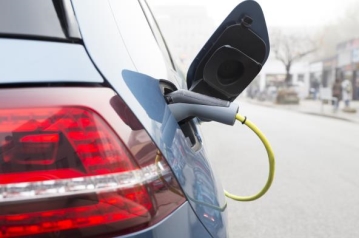
To shorten the charging time of electric vehicle batteries
The greatest concern for electric vehicles is whether they can operate without running out of "fuel" and travel long distances. The fuel for electric vehicles is, of course, electricity. The fuel issue is related to battery capacity and electric charging stations. Electric vehicles have existed since the 1800s in somewhat different form, and they faced problems that are essentially similar to those we encounter today. In fact, in the early 1900s in the United States, one quarter of produced vehicles were electric vehicles. The reason demand decreased was that the supply and distribution of gasoline was easier than electricity. It took 60 years before the necessity of electric vehicles began to emerge due to environmental concerns. Problems that electric vehicles have not yet resolved include improvements in battery capacity, high-efficiency motors, and public awareness regarding environmental pollution. The issue of easy access to public charging stations and the ability to charge quickly remains significant. To meet market needs, charging stations including DC fast chargers must become as ubiquitous as ordinary gas stations. Additionally, all electric vehicles must be compatible at electric vehicle charging stations.
2017.06.02by 김지혜 기자
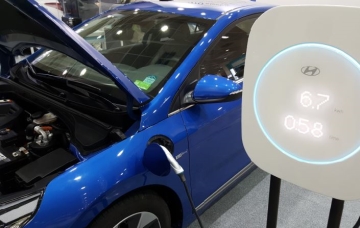
Is the policy to expand eco-friendly vehicles effective? Electric vehicles increase 35 times in 5 years
The Ministry of Land, Infrastructure and Transport (Minister Kim Hyun-mi) announced that as of the end of June 2017, the number of registered vehicles in Korea has surpassed 22 million units, with eco-friendly electric vehicles showing explosive growth, increasing 35-fold in just five years. As of the end of June, the number of registered vehicles increased by 385,000 units compared to the end of 2016, reaching 22,188,565 units, with a population-to-vehicle ratio of 2.332 persons per vehicle. Among all registered vehicles, the ratio of imported vehicles to domestic vehicles is 92:8 (20.41 million units : 1.77 million units), and the proportion of imported vehicles continues to show sustained growth.
2017.07.13by 신윤오 기자

LG Innotek to Participate in EV Charging Standardization
LG Innotek has joined CharIN (Charging Interface Initiative e.V.), an international electric vehicle charging association that leads the standardization of EV charging methods. The company is expected to gain momentum in expanding its electric vehicle components business. CharIN is a global organization that develops the Combined Charging System (CCS) as a standard, which is expanding in Korea, North America, and Europe. Over 100 companies are active as member organizations, ranging from major automakers such as BMW, Daimler, GM, and Volkswagen to component suppliers including Bosch and Continental. LG Innotek has been actively proposed by CharIN member companies to participate as a key member in charging standard development. This is in recognition of the company's electric vehicle charging control communication technology and competitive advantages in vehicle components.
2017.10.20by 김지혜 기자
[Technical Contribution] Caltera: "Evolution of Precision Sensing, UWB Infrastructure Enhances Parking Safety"
Discussing new possibilities in parking assistance and precision sensing with UWB, Lee Sang-min, Korea Branch Manager at Caltera.
2026.10.23by 편집부
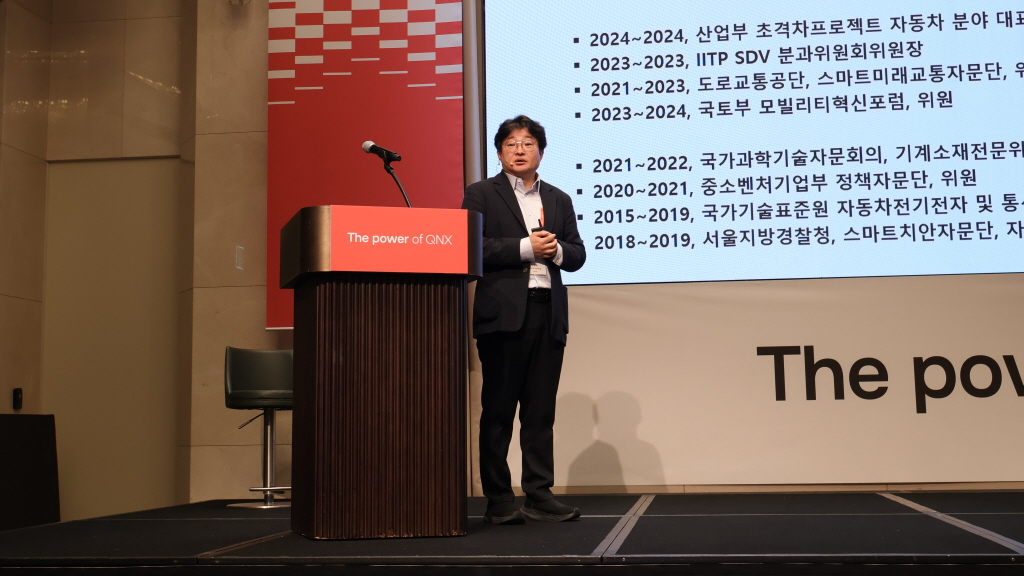
Professor Jeong Gu-min from Kookmin University, "QNX RTOS will become an important foundational technology in the physical AI era"
As software-defined vehicles (SDV) establish themselves as a new standard in the automotive industry, forecasts indicate that future competitiveness will be determined not by vehicle hardware but by software platforms and AI utilization capabilities. With the automotive industry rapidly transitioning to centralized architecture and AI-based development systems, an analysis suggests that how effectively vehicle platforms can be simplified and operated cost-efficiently will become core competitiveness for next-generation SDV and AI-defined vehicles. Professor Jeong Gu-min from Kookmin University emphasized at QNX TechForum Korea 2026 that "the automotive industry is now shifting from hardware competition to software ecosystem competition," highlighting that API-centric platforms and AI utilization will determine success or failure in the future automotive industry.
2026.10.23by 배종인 기자











