



CEVA Unveils TeakLite-4, a Powerful Low-Power 32-Bit DSP Architecture Framework for Advanced Audio and Voice Applications
 Published2012.04.17 14:59
April 17, 2012 – CEVA (NASDAQ: CEVA, CLOSED: CVA), a leading licensing company for Silicon Intellectual Property (SIP) platform solutions and DSP cores, today unveiled CEVA TeakLite-4, a powerful low-power 32-bit DSP architecture framework for advanced audio and voice applications.
CEVA TeakLite-4 is custom-designed to meet the complex voice preprocessing requirements, audio postprocessing algorithms, and multi-channel audio codecs needed for the recently increasing number of smartphones, mobile computing devices, and digital home devices.
Built upon the proven performance of the diverse CEVA TeakLite product family, the CEVA TeakLite-4 features innovative smart power management technology and user-centric scalability. Consequently, it enables a highly flexible architecture and can be utilized in various fields, including designs sensitive to power consumption and die area.
As proof of this, CEVA TeakLite-4 can reduce die area by up to 25% and save up to 30% of power compared to the previous generation CEVA-TeakLite-III DSP for MP3 decoding capable of Dolby Mobile 3+ post-processing.
Increase in audio and speech complexity
The 32-bit CEVA TeakLite-4 DSP architecture directly addresses the challenges the semiconductor industry has recently faced in order to realize high-quality audio and voice performance in all kinds of devices.
For example, to deliver clearer speech even in noisy environments, computationally intensive algorithms are required to utilize advanced preprocessing techniques to reduce ambient noise and improve speech clarity.
Similarly, the transition to wideband voice codecs for VoLTE and VoIP applications requires significantly more DSP performance than the narrowband voice codecs currently in use. Furthermore, for mobile and home entertainment devices, audio post-processing functions provide an enhanced user experience, such as virtual surround sound, speaker calibration, and bass extension effects. Processing that delivers this level of performance is far more complex than can be achieved with the currently utilized 16-bit and 24-bit DSPs. Consequently, 32-bit audio processing has recently gained prominence.
“With the CEVA TeakLite-4 architecture, we have improved the power efficiency and performance of the new architecture based on the vast knowledge and experience gained over the past five years from our first-generation 32-bit audio processors,” said Eran Briman, Vice President of Marketing at CEVA. “As a result, the CEVA TeakLite-4 architecture is able to address the specific requirements of advanced audio and voice that enable SoCs through a common instruction set architecture, an ecosystem including software partners, and a selection of scalable and flexible DSPs that share various development tool sets.”
He stated, “In addition, our second-generation smart power management technology, PSU 2.0, enables low power consumption for each respective application through the CEVA TeakLite-4 architecture.”
The CEVA TeakLite-4 architecture is available in a series of four compatible DSP cores and offers a range of alternatives for specific application costs and performance to meet the requirements of designers.
The CEVA-TL410 and CEVA-TL411 DSPs provide single and dual 32 x 32-bit multipliers, respectively, for voice and audio codecs and hubs, while the CEVA-TL420 and CEVA-TL421 DSPs additionally provide a complete cache memory subsystem and AXI system interface for application processors and home audio SoCs. Thanks to a variable 10-stage pipeline, the CEVA TeakLite-4 architecture enables area optimization of less than 100,000 gates and delivers ultra-low power consumption performance and operating performance of up to 1.5 GHz using a 28 nm process for high-end SoCs.
All CEVA TeakLite-4 DSPs support CEVA's 2nd Generation Power Scaling Unit (PSU 2.0), which dynamically supports clock and voltage scaling within processor, memory, bus, and system resources within a fine range.
"To remain competitive, OEMs must continuously improve the user experience for voice and audio in handsets, consumer electronics, and automotive applications," said Linley Gwennap, Senior Analyst at Linley Group. "All multimedia devices, from future smartphones to smart TVs and car entertainment, are expected to provide high-quality audio capabilities and noise-free voice in any environment."
"In addition, [CEVA] TeakLite-4 addresses a variety of applications using a single architecture that is energy-efficient and possesses state-of-the-art audio and voice processing capabilities," [he/she] added. "For example, the architecture supports up to four 32-bit and 16-bit MACs with a data memory bandwidth of up to 128 bits. This is a greater range than any audio solution currently in use and provides a wide range of options to meet customer needs."
Following the industry-proven CEVA-TeakLite-III DSP, CEVA-TeakLite-4 is a second-generation 32-bit DSP and, overall, a fourth-generation DSP that shares the entire foundation of the CEVA-TeakLite DSP architecture. CEVA-TeakLite has recorded over 2 billion chip shipments and is recognized as the most successful licensed DSP family in the history of the semiconductor industry, with over 100 licensees, 25 ecosystem partners, and over 100 audio and voice codecs available.
CEVA-TeakLite-4 is compatible with all previous generations of the CEVA-TeakLite product family, enabling the entire family of voice and audio codecs optimized for CEVA-TeakLite to run more efficiently. By leveraging the benefits of an integrated development environment consisting of code-compatible cores—optimized libraries and toolchains—customers can significantly reduce development costs while increasing the return on software investment for future products.
Streamlined software development
CEVA TeakLite-4 DSPs support CEVA-Toolbox™, a software development environment that enables C-level development of all architectures. The integrated simulator provides accurate and efficient verification for all systems, including memory subsystems.
In addition, CEVA-Toolbox includes libraries, a graphical debugger, and the CEVA Application Optimizer, a fully optimized toolchain. The Application Optimizer enables automatic and manual optimization of C source code. For more detailed information, please visit www.ceva-dsp.com/CEVA-TeakLite-4.html .
Availability
The first product family of CEVA TeakLite-4 DSPs will be generally available after licensing in the second and third quarters of this year. For more information, please contact sales@ceva-dsp.com .

관련뉴스
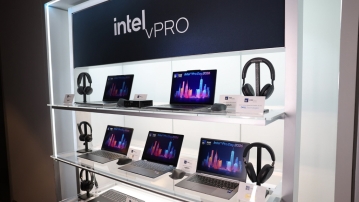
Intel Unveils Next-Generation 'Core Ultra Series 3' and vPro Platform for Enterprise PCs
Intel has officially unveiled the "Intel Core Ultra Series 3" for next-generation enterprise PCs and the latest vPro platform, addressing a wide range of demands from enterprise notebooks to high-performance workstations.
2026.03.26by 배종인 기자
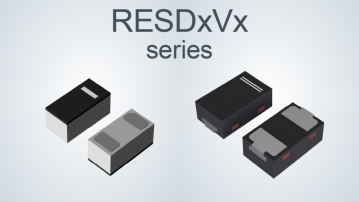
ROHM Launches ESD Protection Diode Compatible with High-Speed Interfaces of 10Gbps or Higher
반도체 전문 기업 로옴(ROHM)이 10Gbps를 넘어서는 차세대 고속 데이터 통신 환경에 대응할 수 있는 ESD(정전기 방전) 보호 다이오드 ‘RESDxVx 시리즈’를 개발하며, 고속 인터페이스에서 요구되는 신호 품질 유지와 IC 보호 성능을 동시에 끌어올렸다.
2026.03.26by 배종인 기자
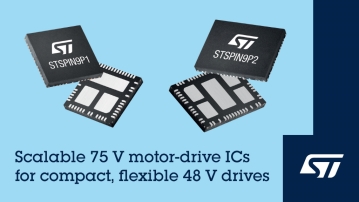
ST Launches 75V Drive IC Targeting 48V Industrial Motor Driving
ST마이크로일렉트로닉스가 48V급 산업용 구동 시스템 설계에 맞춘 75V 모터 드라이브 IC ‘STSPIN9P’ 시리즈를 공개했다. 새 제품군은 하프 브리지와 풀 브리지 구조로 구성돼 모터 종류와 출력 조건에 따라 설계를 확장할 수 있도록 한 것이 특징이다. 전원 회로와 보호 기능, 전류 감지 회로를 칩에 통합해 시스템 구성을 단순화했으며, 최대 500W급 애플리케이션까지 대응하도록 설계됐다. 회사는 레퍼런스 디자인과 데모 보드도 함께 제공해 산업 자동화, 로보틱스, 펌프, 팬, 조명, 섬유 기계 등에서 개발과 평가를 지원할 계획이다.
2026.03.26by 배종인 기자

Nordic supports security updates for the entire lifecycle of IoT devices at a single fixed cost
Nordic Semiconductor, a global leader in low-power wireless connectivity solutions, has unveiled a single fixed-cost licensing model that delivers FOTA (Firmware Over-the-Air) and device management capabilities throughout the device lifecycle via nRF Cloud, and introduced a new firmware update solution to prepare for the enforcement of the European Union's Cyber Resilience Act (CRA).
2026.03.26by 배종인 기자

Practical Training in Low-Noise, Low-Power Circuit Design All in One Place… Training Fee Support
고감도 아날로그 회로와 센서 기반 시스템 설계 역량을 강화할 수 있는 ‘2026 고급 엔지니어 실무 마스터 클래스’가 오는 4월16일 서울 가산동 e4ds 컨퍼런스 센터에서 열린다. 이번 과정은 온라인이 아닌 오프라인 유료 실습 교육으로 진행되며, 현장 중심의 심화 학습을 원하는 엔지니어를 대상으로 한다. 이번 교육은 텍사스 인스트루먼트(Texas Instruments)가 교육비를 지원해 정가 25만원에서 10만원 할인 된 15만원에 참가할 수 있다.
2026.03.26by 배종인 기자











