


Can you enter China's rapidly growing smart home market?
 Published2018.03.05 17:05
As China's Internet of Things market grows at an annual rate of over 30%, the smart home market is also growing rapidly.
Last year, the Chinese smart home market was worth 60 billion yuan (10.2 trillion won), and it is expected to grow by about 80% annually to reach about 235 billion yuan (40 trillion won) in 2020.
Lee Byeong-in, director of the Korea-China System IC Cooperation Research Institute, explained that the limited market centered on security products, valued at 10 billion yuan (1.7 trillion won) in 2013, has rapidly grown in 2017, primarily driven by home and complex-level intelligence. This growth is driven by five key factors: policy, economy, population, environment, and social change.
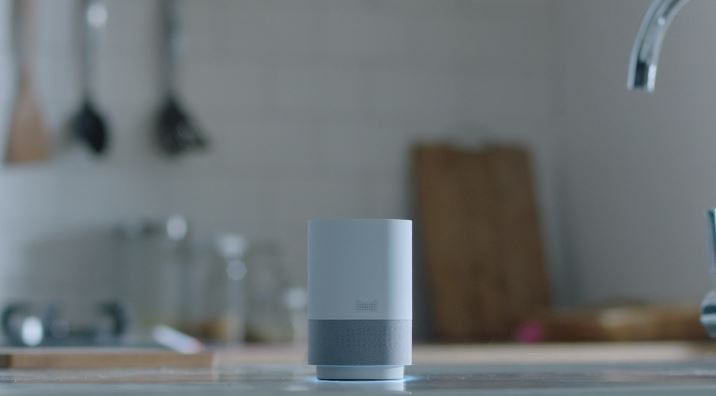
While the smart home industry is still developing around device supply, it is expected that ‘platforms’ will drive device growth starting in 2019. The director predicted, “After the system that controls each unit and each house is introduced, the market for profit through operation will be larger than the market for IoT devices used in smart homes,” and “The inflection point when the size of the service market overturns the size of the device market will be in 2019-2020.”
In particular, the structure of China's smart home industry is structured into five layers, each organically linked to platforms, cloud, devices, and connectivity application services. Therefore, rather than a single company dominating the entire sector, each company is pursuing a partnership strategy, leveraging its respective strengths.
The industry has evolved under the leadership of companies across various sectors, including home appliances, platforms, telecommunications, and terminals, such as Haier, Midea, Baidu, Xiaomi, Huawei, and Alibaba. When a major player takes the lead, numerous service and manufacturing companies follow suit. Currently, Huawei, with its dominant fixed-line network, is leading the way. However, after 2019, the influence of service platforms is expected to strengthen, making Baidu, Alibaba, and Tencent worthy of attention.
As the smart home market grows, shipments of connectivity modules and gateway products required for construction are also continuously increasing. He explained that connectivity is dominated by Wi-Fi, 5GHz usage is still low, and many home 2.4GHz/433MHz dual-band modules that can be used locally without the Wi-Fi protocol are being used.
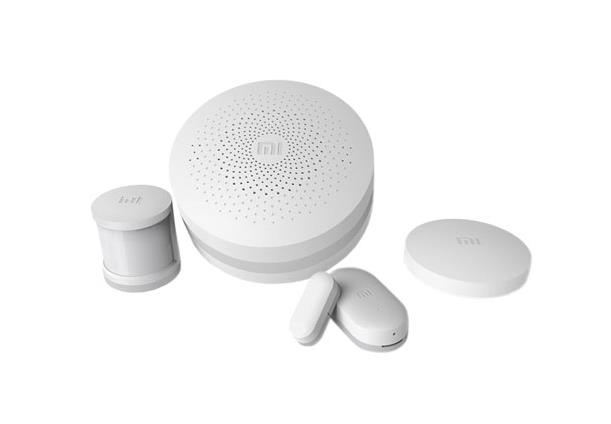
Smart home interconnectivity and UI/UX are expected to be centered around AI speakers. Although most of the products of the five domestic companies are manufactured in China and major service providers are pursuing expansion strategies centered on the Chinese market, domestic sales growth is still in its early stages, reaching around 1 million units in 2017.
Although China's smart home appliance sector has yet to reach the level of global leaders, a variety of applications are emerging in the areas of lifestyle IoT products such as lighting, intelligent metering, and healthcare, as well as home security, such as IP cameras and smart door locks.
A strategy is needed to enter the Chinese smart home market.
The director pointed out that several strategies are necessary for Korean companies to enter the Chinese smart home market. "First, with the increasing intelligence of cities and rising average incomes, we need to diversify our product offerings to suit different income levels," he emphasized. Furthermore, he predicted opportunities for businesses combining biotechnology and IT, as education and health become more important and modernized collective housing increases.
He explained that with the widespread adoption of Wi-Fi, low-power Bluetooth, and ZigBee, the commercialization of NB-LTE and 5G, and the expansion of sensor applications, fabless companies and module businesses are experiencing opportunities. He also mentioned that with platform companies leading the way in services and integrating with government-led smart cities, it's crucial to consider the Chinese ecosystem and platform companies in seeking business opportunities. Finally, he emphasized that cost competition will inevitably arise due to China's semiconductor boom, and that attention should be paid to low-capacity, low-power products.
Comments
Related news
I asked my home appliance "What should I eat today?" and the IoT kitchen answered back.
"Kitchen appliances have many analog aspects, so simply embedding IoT doesn't make them IoT appliances. There are limitations in providing convenience as a standalone product. Customers also show negative reactions regarding the benefits when connected via WiFi." Park Mi-jeong, part manager at Coochen, who attended the System-Semiconductor Forum breakfast seminar held in Yangjae on the 20th, said this. With the boom in artificial intelligence and IoT, "smart appliances" are increasing among home appliances. As the growth of the domestic smart home market is anticipated, large companies such as Samsung and LG Electronics are focusing on "smart homes." LG Smart Home connects a hub robot or SmartThinQ Hub 2.0 with appliances such as refrigerators, washing machines, robot vacuums, and air purifiers via WiFi, enabling users to use and control functions.
2017.09.21by 김지혜 기자
Smart Home Made Intelligent with Cloud 'Connectivity', It's Easy to Do
When you visit electronics exhibitions and electronics stores, you can encounter 'smart homes' filled with home appliances. From rice cookers to gas ranges, refrigerators, and TVs, most home appliances are equipped with IoT services. The day is not far off when users can, if they wish, furnish all home appliances in their homes with products capable of IoT services. At the center of such smart homes is an artificial intelligence speaker that acts as a 'hub'. The speaker listens to the user's commands, retrieves data from the cloud, and transmits commands to the corresponding device. This is because IoT devices have limited space to store data, and using the cloud is more efficient due to security concerns and other factors.
2017.10.20by 김자영 기자

LG Uplus and Naver Launch AI Smart Home Construction
LG Uplus has announced that it will join forces with Naver to construct an AI smart home and usher in an era of leadership in the home media service sector. LG Uplus held a meeting at its Seoul Yongsan headquarters attended by Vice Chairman Kwon Young-soo and Naver CEO Han Seong-sook, among other key executives, and announced that it will jointly establish a state-of-the-art AI smart home by converging IPTV and IoT, core home services, with AI speakers based on Naver's AI platform 'Clova'. LG Uplus Vice Chairman Kwon Young-soo stated, "Through the business cooperation between the two companies, LG Uplus has strengthened its competitive advantage in IPTV and IoT businesses, while Naver has secured a foothold to expand its user base and enhance platform competitiveness in a short period," and emphasized, "We will emerge as a strong player in the home media market together with Naver, which possesses the best technology in the artificial intelligence field."
2017.12.18by 김지혜 기자
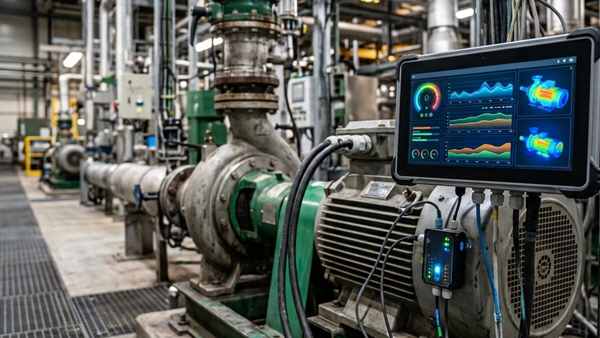
[Technical Contribution] Mouser: "AI Agents Help Accelerate and Standardize Industrial Field Maintenance Operations"
Abhishek Jadhav from Mouser Electronics discusses how to leverage agentic AI for predictive maintenance in industrial automation.
2026.10.23by 편집부
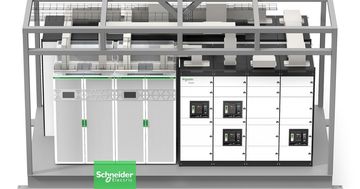
Schneider Electric Unveils Modular Power Solution for AI Data Centers
Schneider Electric has launched prefabricated power modules and power skids for AI data centers, jointly developed with NVIDIA. Based on the GB300 NVL72 reference design, the solution applies standardized design and factory pre-fabrication methods to build power infrastructure in as little as 6 months. Galaxy VXL UPS technology is integrated, with capacity options ranging from 2MW to 2.5MW.
2026.10.23by 배종인 기자











