


SAS Korea Enhances Analytics Capabilities Utilizing the Latest AI, Including Machine Learning and Natural Language Processing
 Published2018.03.06 09:41
SAS Korea announced the launch of its latest offering, which enhances advanced analytics capabilities such as machine learning, deep learning, text analysis, and prediction, as well as new features of 'SAS Viya®'.
Companies can more easily perform AI-powered enterprise analytics by utilizing the new SAS Platform offering, SAS Visual Text Analytics, and the upgraded SAS Visual Data Mining and Machine Learning (SAS VDMML).
Enhanced enterprise analytics through AI capabilities and web interfaces
The SAS Visual Text Analytics solution, newly added to the SAS platform, maximizes the value of unstructured data by leveraging machine learning, natural language processing (NLP), and more. Enterprises can address business challenges such as managing and interpreting text notes, assessing risks and fraud, and early detecting issues using customer feedback.
Furthermore, it implements text mining, context extraction, categorization, sentiment analysis, and search functions within a flexible, modern framework. Users can prepare data, explore it visually, build text models, and deploy them into existing systems or business processes. It is possible to rapidly analyze large amounts of text data using predefined templates and integrate machine learning and prediction techniques into the text analysis results.
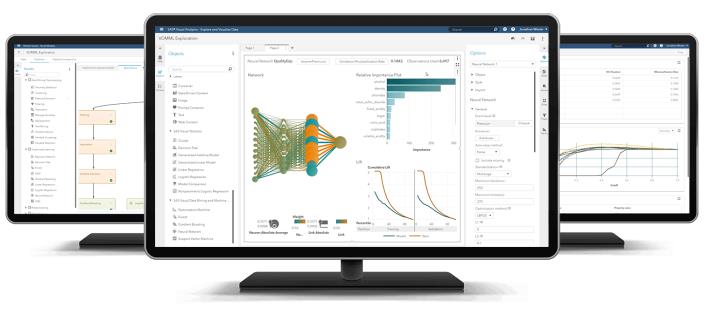
The enhanced SAS Visual Data Mining and Machine Learning provides an end-to-end visual environment that visualizes the entire process of machine learning and deep learning, from data access and wrangling to building and deploying sophisticated models. Enterprises can utilize key personnel and data resources more efficiently by rapidly solving complex business problems based on in-memory and distributed processing. Additionally, this solution supports programming in popular open-source languages such as Python and R.
In particular, the web interface, a distinguishing feature of the latest SAS platform product, integrates the entire analytics lifecycle to support collaboration across all departments. Users can handle all tasks—from data preparation and visual data exploration to model creation and business application—within a single visual interface. Furthermore, within this integrated environment, users can rapidly develop the latest machine learning algorithms to build profitable customer relationships, prevent fraud more effectively, and manage risks.
"Dan Vesset, Vice President of the Analytics and Information Management Research Group at IDC, said, 'Users can easily manage the entire analytics process using SAS's single platform, which integrates advanced analytics, model deployment, data preparation, and visualization capabilities without the need for multiple software.' He added, 'SAS will continue to maintain its position as a leader not only in the analytics sector but also in the cognitive/artificial intelligence platform sector with the SAS platform, which integrates statistical, machine learning, deep learning, and text analysis algorithms and supports open source.'"
Comments
Related news
SAS Supplies Smart Factory Analytics Solution to Kolon Benit
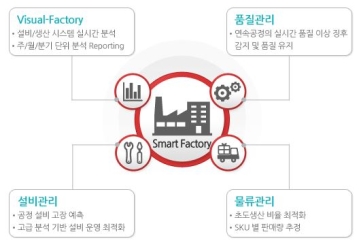
SAS Korea is supplying the SAS Smart Factory Analytics Solution to Kolon Benite, an IT service specialist company, and is promoting the establishment of an integrated big data analytics platform for Kolon that can support Industry 4.0. The SAS Smart Factory Analytics Solution consists of ▲SAS Event Stream Processing, which converts and analyzes millions of sensor data points per second in real time to detect patterns of interest before data is stored ▲SAS Visual Analytics, a visualization solution that visually analyzes big data ▲SAS Quality Analytics Suite, which analyzes and monitors data using various analytical techniques. Through this, IoT and sensor data can be collected and real-time streaming data can be processed. Additionally, predictive and optimization models applying machine learning as well as text analysis are possible. When failures or manufacturing defects occur in production equipment, they can be predicted to enable rapid action. It supports processes from real-time collection, processing, analysis, visualization, and reporting based on data analysis. Kolon Benite has been conducting process digitalization work centered on Kolon's manufacturing division since 2015. The company has accumulated data through connectivity across different industry sectors within the group, and it is now at a stage where it needs to establish an analytics platform for creating new business value through data analysis in the manufacturing field, such as improving quality issues, optimizing equipment operation efficiency, and enhancing yield. Meanwhile, SAS is implementing smart factories in the manufacturing sector through IoT analytics. A global oil company is processing and analyzing massive data of 3 trillion per minute from 2.1 million sensors in real time, achieving over 3 million dollars in implementation benefits. Domestically, a proof of concept (PoC) was recently conducted targeting global manufacturers, demonstrating a defect reduction effect of over 90%. SAS Korea Executive Vice President Lee Kwang-yeol stated, "The SAS Smart Factory Analytics Solution provided this time supports broad value creation through integrated data analysis across the entire business value chain from marketing, development, procurement, production, quality, logistics, to sales," and added, "The SAS Smart Factory Analytics Solution provides an opportunity to realize manufacturing innovation centered on data analysis and explore new business growth drivers."
2017.04.18by 김자영 기자
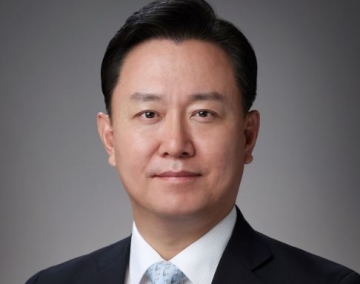
SAS Korea appoints Oh Byung-jun, a former Oracle Korea employee, as its new CEO.
SAS Korea announced on August 16 that it has appointed Oh Byung-jun as its new chief executive officer. The newly appointed CEO Oh Byung-jun will oversee SAS Korea's overall business operations and will focus on strengthening leadership as an analytics specialist company and driving new growth. CEO Oh Byung-jun is an IT specialist with over 27 years of experience at global IT companies, where he has built expertise across various fields including data management, advanced analytics, data warehouses, and cloud technologies. He has been recognized for delivering outstanding business results.
2017.08.14by 신윤오 기자
SAS Announces AI-Powered Enterprise Analytics Platform
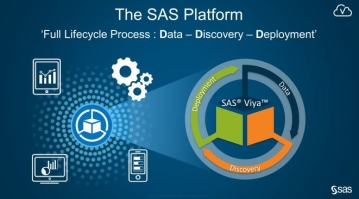
SAS Korea announced on the 13th "The SAS Platform" strategy, which integrates and optimizes the entire analytics lifecycle, and "SAS Viya," an AI-powered enterprise analytics platform that serves as its core engine. SAS announced "The SAS Platform," which integrates and optimizes all analytical elements and technologies of enterprises across the entire analytics lifecycle, and presented standardization of analytics software required in the analytics economy era. The SAS Platform, which includes both "SAS Viya" and "SAS 9.4," provides a foundation that rapidly derives insights from data regardless of computing environment and supports all stages of the analytics lifecycle (data-analysis-deployment). In particular, with enhanced artificial intelligence analytics capabilities, IT infrastructure can be flexibly applied regardless of data scale and velocity, problem complexity, or deployment strategy. Enterprises can efficiently manage not only SAS but all analytical assets and activities coded in other programming languages through the SAS Platform.
2017.09.13by 김자영 기자
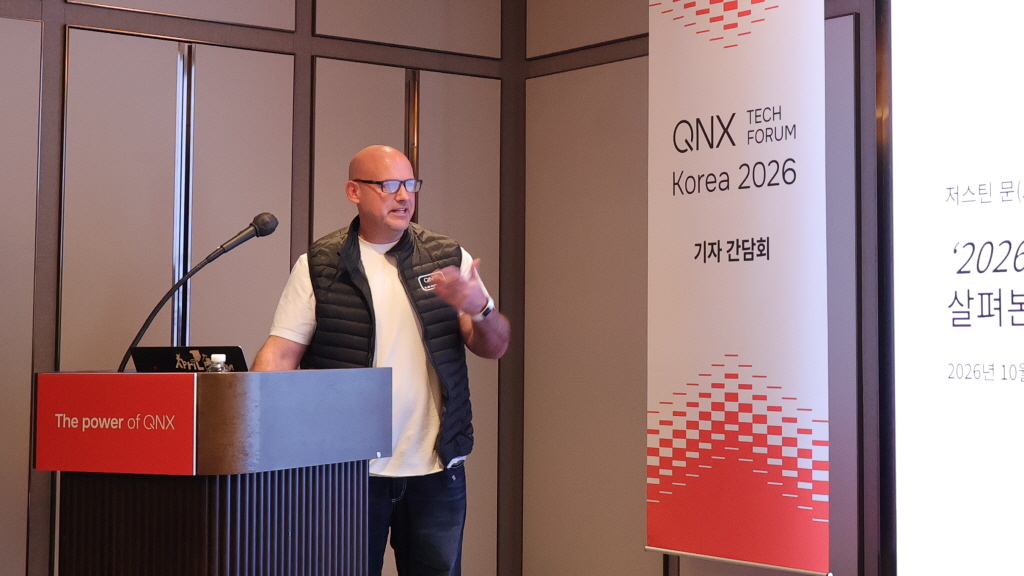
QNX, "SDV Development Complexity Reaches Limit, AI is a Tool to Enhance Developer Capabilities, Not Replace Them"
QNX has diagnosed that software-defined vehicle (SDV) development has reached a critical level of complexity due to increased vehicle software, strengthened security and safety regulations. AI is not intended to replace developers but rather to enhance productivity by supporting repetitive tasks such as documentation, requirements management, and verification, the company emphasized. Additionally, QNX stressed that a "Human in the Loop" structure where humans make final judgments is essential even when utilizing artificial intelligence. QNX Vice President Justin Moon explained that the company will expand its business beyond automobiles into physical AI fields including robotics, smart factories, and defense. QNX plans to leverage open-source ecosystems such as Eclipse SDV, position microkernel-based security and safety certification capabilities as key strengths, and expand industry-academia cooperation in the Korean market
2026.10.22by 배종인 기자

Mouser to Demonstrate Humanoid Robot at Electronica 2026
Mouser Electronics will demonstrate the biped humanoid robot RoboTUM at the Electronica 2026 exhibition held in Munich, Germany in November. This robot, a student-led project from Munich University of Technology, is a high-performance robotics platform that integrates advanced electronic components and embedded technologies such as microcontrollers, NVIDIA Jetson, IMU, and EtherCAT, allowing exhibition visitors to directly experience real-world applications of cutting-edge technology.
2026.10.22by 배종인 기자











