

.png)

A famous feast has plenty to eat when returning to South Korea's 5G through MWC
 Published2018.03.06 14:33
According to Cisco's Mobile Visual Networking Index published in 2017, four years later in 2021, the number of global mobile users is expected to reach 5.5 billion, exceeding the number of bank accounts worldwide (5.4 billion), tap water users (5.3 billion), and landline telephones (2.9 billion). This represents approximately 71% of the estimated global population of 7.8 billion in 2021.
Even in 2016, the term "traffic" was unfamiliar to the general public. Now, even just mobile network connection speeds are said to become more than three times faster at 20.4 Mbps by 2021 compared to now. But that's not all. South Korean telecom carriers KT, SKT, and LGU are vying to commercialize 5G, which operates through frequencies from 3GHz (3 billion oscillations per second) to 28GHz (28 billion oscillations per second), potentially creating infinite traffic capacity like Moore's Law heard only in semiconductors.
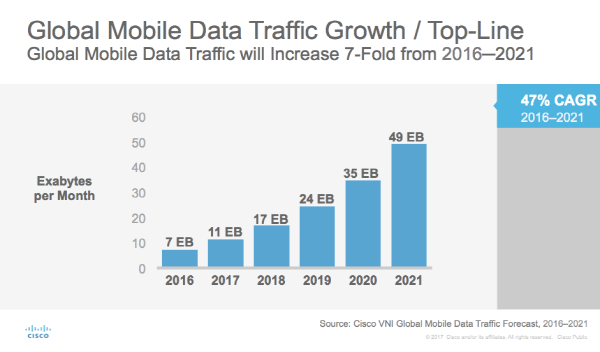
CISCO VNI 2017 Data Traffic Growth Chart
In fact, based on 2017, the monthly data traffic projection graph is expected to grow 47% from 7EB (7.34 million TB) to 49EB (51.38 million TB) in 2021.
"Making money with 5G won't seem easy, but..." – LGU Vice Chairman Kwon Young-soo
Since the boom in smartphones, the world's IT technology has always sought new businesses. The question of what comes next has always been asked, and this has served as a catalyst for rapid technological advancement. 5G technology is already within sight. The problem is simply that the cultural, legal, and political foundations to support this rapidly approaching 5G technology have not yet been established.
My wife, who knows nothing about IT devices, asks this way: "What changes when it becomes 5G? If the picture quality improves on this small phone, doesn't that just raise costs?"
Ultra-high frequency communications in the 28GHz band with frequency oscillations of 28 billion times per second for fast communication, combined with wide bandwidth usage, could completely free us from data lag stress, which someone once said is one of the four major stresses of modern people.
However, such 5G usage will require bearing the gradual decline in profitability of 4G, the unclear revenue model of 5G, and massive infrastructure construction costs, which is one of the challenges that domestic and foreign mobile carriers must overcome.
For now, domestic carriers are expected to begin commercialization in 4.5G services such as LTE-B utilizing existing base stations, starting with eMBB (Enhanced Mobile BroadBand) services in low-frequency bands and mMTC (massive Machine Type Communication) services in sensor networks and monitoring for machine-to-machine communication fields.
Considering that the R16 Standard for actual 5G SA (Standalone) mode begins in June 2019, it seems that 28GHz band 5G services would not be possible before 2020.
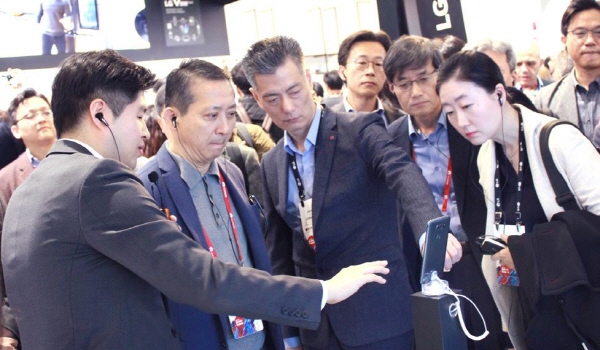
Vice Chairman Kwon Young-soo, who participated in MWC 2018, is touring the LG Electronics booth
"Making money with 5G won't seem easy, but we have prepared for commercialization." Although MWC 2018 stirred up the world, for Vice Chairman Kwon Young-soo, who has deep experience in the telecom market, it is likely because of these circumstances that a truly perfect 5G service is not visible.
There was a time when who first occupied technology was important. However, for telecom carriers of similar scale, technological superiority shows little difference. Only how well one executes the back-end work for a successful business will determine the winner.
To satisfy everyone and capture both domestic and export markets,
both 3.6GHz and 28GHz bands must be secured!
KT announced on February 6 that it successfully demonstrated data roaming between the PyeongChang 5G test network and Japan's NTT Docomo's commercial LTE (4G) network. The '5G-LTE interworking technology' used in the demonstration is based on the '5G NSA (Non-Standalone, 5G-4G compatible standard)' defined as a standard by 3GPP.
KT did not disclose the exact method, but commonly called LTE-B, it bundles nine 20MHz wideband frequencies to achieve download speeds of approximately 1Gbps, also called 4.5G. This is one of the methods for utilizing the domestic 4G network, and support specifications were completed in December 2017.
.jpg)
KT is data roaming its PyeongChang 5G test network to Japan's NTT Docomo's commercial LTE network
In June this year, the allocation of 3.5GHz and 28GHz in the 5G frequency band will be finalized. Mobile carriers will prefer the use of 3.6GHz, which allows reuse of existing base stations. However, on the other hand, the 28GHz market, accounting for 22% globally, cannot be abandoned. A roadmap is needed to capture both the completed 28GHz band 5G technology and the 3.6GHz band that can reduce infrastructure costs.
Starting with 4.5G in the 3.6GHz band using 4G base stations, if practical mobile business models for 5G are developed by 2019 when the 5G R16 Standard is completed, followed by autonomous vehicles, real-time remote operation in industrial sites, robot control, and other businesses anticipated by various industries, a positive revenue cycle can be created, and continuous 5G infrastructure investment is expected to proceed.
Why is Samsung so fixated on 28GHz?
Japan and China's MIIT (Ministry of Industries and Information Technology), which use existing 4G LTE networks, are focusing on minimizing infrastructure construction costs by using existing frequencies in the 3.3-3.6GHz and 4.8-5.0GHz bands.
In comparison, Samsung, South Korea's representative telecom equipment company, has a distinctive obsession with 28GHz communication equipment. Among 103 mobile carriers in 49 countries worldwide, 22% of experimental operators use the 28GHz band, the highest proportion, and the revenue that a company can gain by exporting to larger markets cannot be ignored.
According to the 5G Forum Issue Report published in 2017, America's Verizon secured two frequency spectrums of 28GHz and 39GHz in May 2017. AT&T also conducted mobile/fixed 5G trials in the 28GHz/39GHz band based on 3GPP NR (New Radio) specifications.
The U.S. telecom trends also show that the FCC and major carriers are quite proactive in adopting 5G, with AT&T and Verizon pursuing broadband services in ultra-high frequencies, while T-Mobile pursues IoT services requiring massive connectivity in low-frequency bands. Japan also announced that it will actively pursue a cost reduction strategy through reuse of existing 4G LTE networks targeting 2019, while continuing gradual investment in the 28GHz band.
I would like to applaud Samsung's forward-looking approach to 5G. However, the industry opinion that only China's Huawei has equipment for 5G commercial deployment in the 3.6GHz band makes us wonder if we are missing something.
This morning, an exclusive report in C Media stated that a domestic telecom carrier requested development of Huawei's 5G repeater. While I noted that the relationship with China is likely the most important reason, ultimately it comes down to price.
5G could perhaps be a clue for our country to reclaim the lost decade in the electronics industry. Because the fourth industrial revolution, autonomous vehicles, AI, big data are all connected to 5G in some way.
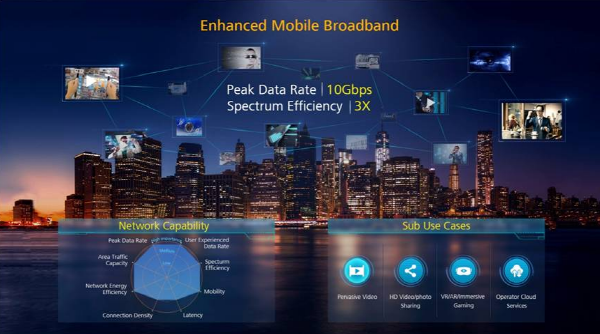
Huawei's 5G Operation Diagram
For a famous feast to have plenty to eat, first the host's feast must have a clear reason. And that reason requires explanation that people can understand.
5G is an important technology field we must continue to lead. Clear understanding must be established between users and operators, the government's expectations must be clear, and everyone must look toward the same roadmap.
To avoid comments like my wife's "Doesn't 5G just raise prices?" and to prevent voices saying we must import foreign equipment to commercialize immediately available business models, shouldn't we create a long-term and rational roadmap involving enterprises, users, and government?

Related news
ZTE Leads Commercialization of 5G Solutions Based on 3GPP Release 15
ZTE, a mobile internet communications company, unveiled new terminal products, 5G commercialization, 5G connectivity, and cloud and IoT application services at the Barcelona Mobile World Congress 2018. Committed to early 5G commercialization, ZTE began various 5G field tests in early 2017, followed by the launch of diverse Pre-5G solutions for high-frequency and low-frequency bands. Currently, ZTE plans to implement feasible Pre-5G solutions by the end of 2018, and add 5G product network infrastructure in the first half of 2019.
2018.03.01by 명세환 기자
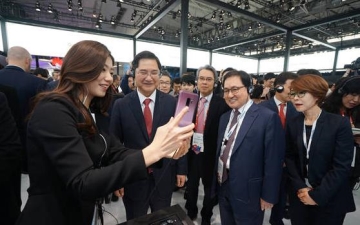
Minister Yoo Young-min requests Qualcomm to 'early release 5G chipset'
Minister You Young-min attended 'MWC 2018' and visited exhibition booths of major companies including Samsung Electronics, Huawei, Ericsson, Nokia, and Qualcomm. The main focus of this MWC was 5G, with multiple global companies emphasizing 5G implementation plans and service commercialization. Minister You Young-min visited the Qualcomm booth and stated, "I understand that Qualcomm chips were originally scheduled to be released at the end of 2018, and I request your cooperation to expedite the release by the 3rd or 4th quarter of 2018 for early commercialization in the 5G market."
2018.03.02by 김지혜 기자
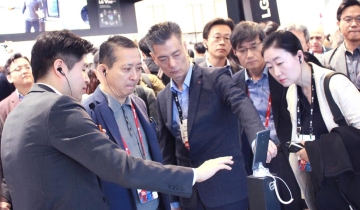
Vice Chairman Kwon Young-soo: "When 5G changes, it's an opportunity for us in third place"
"Making money from 5G won't be easy"
2018.03.02by 김지혜 기자
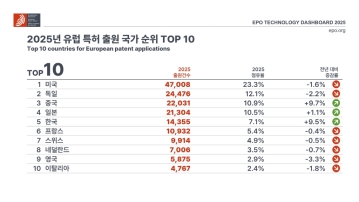
European Patent Applications Surpass 200,000 for the First Time… South Korea Maintains 5th Place, Led by Batteries and Telecommunications
According to the European Patent Office (EPO)'s 'Technology Dashboard 2025', European patent applications last year reached 201,974, surpassing 200,000 for the first time. Korean companies and inventors filed 14,355 applications, representing a 9.5% increase from the previous year and maintaining 5th place by country. Battery, digital communication, and semiconductor technologies led the growth, with Samsung ranking as the top EPO applicant for the second consecutive year and LG reaching 3rd place. The presence of major domestic cities such as Seoul, Suwon, and Yongin was also confirmed. It was also revealed that Korea's European patent strategy is expanding beyond individual technologies to span the entire industry.
2026.03.24by 명세환 기자
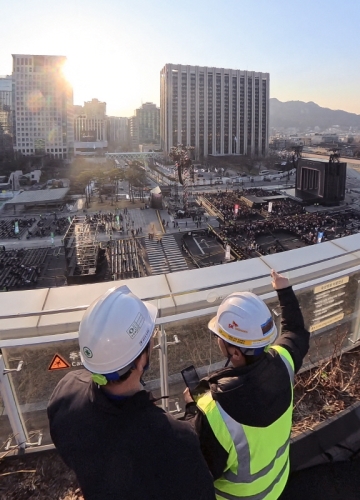
SK Telecom First Applies AI-Based Network Operations at Gwanghwamun K-Pop Concert
SK Telecom announced that it applied an AI-based network operation system for the first time at a large-scale K-pop concert held in the Gwanghwamun area of Seoul on March 21st, managing communication quality throughout the event. Mobile data usage during the three hours before and after the concert reached 12.15TB, approximately doubling compared to the same time slot the previous weekend. SK Telecom monitored traffic using the AI system 'A-One' in five-minute and 50-meter units to respond to potential overload situations, while also operating temporary communication facilities and on-site personnel in parallel. This case is interpreted as confirmation of the practical applicability of AI-based autonomous network operation in an environment where demand from dense events and foreign users increases simultaneously.
2026.03.23by 명세환 기자











