



The number of Chinese mobile games released domestically increased by 19% in 2017.
 Published2018.04.03 10:39
The result of reducing Chinese influences and conducting large-scale marketing through Korean publishers.
IGA Works, a full-stack mobile adtech company, has released its "2017 Domestic Chinese Mobile Game Performance Report." The number of Chinese mobile games released on Google Play Korea in 2017 increased by approximately 19% year-on-year, solidifying their position as highly successful foreign games in the Korean market.
A total of 136 Chinese mobile games were released on Google Play in Korea in 2017. Based on Google Play genre classification, RPGs and strategy games accounted for 78% of the total, similar to the previous year. However, there were changes in the proportion of these two genres. RPGs increased from 46% to 65%, while strategy games decreased from 27% to 13%. The largest increase in RPGs among released games is interpreted as a learning effect from the fact that this genre has been performing the best among Chinese games released in Korea. Although RPGs are a highly competitive market, they are currently the most frequently released genre in China. This trend is expected to continue in 2018.
.jpg)
According to IGAWorks' mobile app intelligence platform 'Mobile Index', the number of Chinese games that entered the top 20 of the Korean Google Play sales rankings in 2017 increased from 11 in 2016 to 16 in 2017, and the total annual sales of these games increased by 74%. This shift is the result of a 292% year-over-year surge in annual revenue for mid-tier Chinese games ranked 6th to 10th among the top 20 grossing games. Furthermore, the average annual revenue for each Chinese game in the top 20 increased by 20% year-over-year.
IGAWorks identified two key characteristics and changes in Chinese games that were popular in Korea in 2017. First, Chinese games shed their Chinese aesthetic. Previously, Chinese games released in Korea generally had a distinctly Chinese feel. Examples include Chinese-inspired characters, game settings, and storylines. This overall visual quality significantly influences Korean users' game selection.
Chinese-style games have both advantages and disadvantages. The advantage is that users have distinct preferences for Chinese-style games, allowing them to focus on attracting and acquiring users who prefer them. On the other hand, the limited ability to expand the user base is a barrier. Even with advertising budgets, it's difficult to attract users who don't prefer Chinese-style games.
In particular, among the Chinese games that performed impressively in the Korean market last year, games that eliminated Chinese characteristics also had high sales. Among the Chinese games that entered the top 20 of Google Play sales rankings in 2017, 'Girls' Frontline' ranked first in annual sales and is a representative Chinese game that has garnered the hottest response with its Japanese animation-style graphics and high level of game completion.
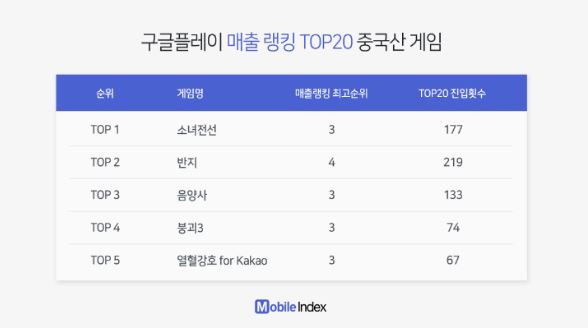
"Girls' Frontline" emphasized that the various characters were not just for promotional purposes but were actually playable characters for users in the game, and this message directly influenced domestic users' expectations for the game's completeness. XD Global, which was in charge of publishing, emerged as the Chinese game company with the largest presence in the Korean mobile game market in 2017 with the success of "Girls' Frontline" and "Honkai Impact 3rd." This change is not limited to "Girls' Frontline." Of the top 20 Chinese games that entered the Google Play sales rankings in 2017, all four games, excluding "Ring," were games with less of a Chinese feel.
A second key to the success of Chinese games is collaboration with domestic experts. Compared to the previous year, the proportion of Chinese game publishers released in Korea in 2017 has steadily increased. The same trend also applies to Chinese games that made it into the top 20 of Google Play's revenue rankings in 2017, with a high proportion of Korean publishers.
This is because, in order to perform well in the maturing domestic market, in addition to the inherent competitiveness of high-quality games, a large marketing budget and appropriate marketing strategies are important. Collaboration with Korean publishers with a deep understanding of the local market is expected to continue to be a key factor in helping Chinese games enter the Korean market.
Another notable change is the increasing sophistication and popularity of Chinese games. Improved performance of Chinese smartphones has made it possible to enjoy mobile games requiring high-performance hardware, naturally leading to an improvement in the quality of Chinese games. This shift in market conditions has led to the full-scale release of high-quality Chinese games and their establishment in the Korean market.
Hong Seong-min, head of IGA Works' China business division, explained, "As Chinese games shed their Chinese aesthetic, we will see an increasing number of positive performances in Asian markets outside of China. However, in the already mature Korean market, games alone are not sufficient for competitiveness. Therefore, data-driven market analysis and localized marketing strategies are essential."
Meanwhile, IGAWorks offers a variety of services to support overseas game companies seeking to enter the Korean market with localized marketing strategies. Leveraging the mobile app intelligence platform "Mobile Index," IGAWorks can understand the Korean market's dynamics and set specific goals before launching a game. After launch, IGAWorks leverages the mobile app attribution tool "Adbricks" to analyze data by marketing channel and user behavior. Based on this data, IGAWorks can implement integrated data marketing strategies across global media platforms like Facebook and Google, as well as its own platforms, TradingWorks DSP and TradingWorks NCPI.
관련뉴스
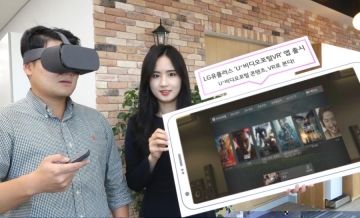
LG Uplus Launches Google VR-Exclusive OTT Service App
LG유플러스는 구글 VR전용 플랫폼인 구글 데이드림을 통해 모바일 인터넷 동영상(OTT) 서비스인 'U+비디오포털VR' 앱을 출시했다고 밝혔다. ‘U+비디오포털VR’ 앱은 가상 공간에서 모바일TV인 U+비디오포털에서 제공 중인 무료VOD 및 360도 영상, 실시간 채널 등을 무료로 제공하는 서비스이다. 구글플레이스토어에서 구글 데이드림 앱 설치 후 데이드림 뷰를 착용하면 이용이 가능하다. 데이드림 뷰는 구글 최신 가상현실(VR) 기기로, 휴대하면서 안경처럼 쓰고 영상물을 대형화면으로 즐길 수 있다.
2017.11.16by 김지혜 기자
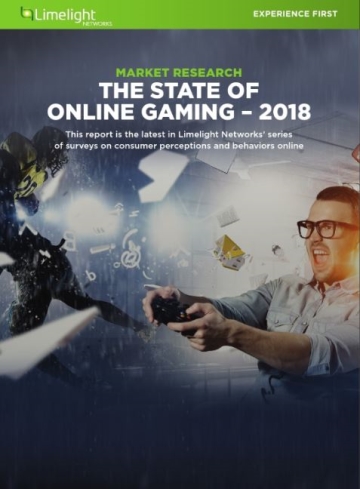
Limelight Releases '2018 Global Online Gaming Status' Report
‘2018 온라인 게임 현황 보고서’의 주요 내용 비디오 게임 및 e스포츠 웹사이트가 증가하면서 다른 이들의 비디오 게임 플레이를 시청하는 비율도 증가하고 있다. 전 세계의 젊은 18~25세 게임 사용자들은 타인의 게임 경기를 매주 평균 3시간 25분 시청하고 있다. 이는 전통적인 스포츠 경기를 보는데 사용되는 2시간 33분보다 약 1시간 많은 시간이다. 한국의 게임 사용자들은 거의 절반(48%) 가량이 매주 2시간 이상을 다른 이들의 비디오 게임 플레이를 보는데 사용하고 있으며 이는 세계적으로 가장 높은 비율이다. 전 세계 게임 사용자들은 ‘신속한 로드 시간’과 ‘빠른 성능’을 게임 플레이에서 가장 중요한 요소로 꼽았으나 비디오 게임을 다운받는 과정에서 불만을 보고한 비율이 3/4(77%)을 넘었다. 또한, 게임 사용자의 절반 이상(57%)이 이전에 보안 침해 사고를 당한 게임 사이트에서 온라인 게임이나 구매를 하지 않겠다고 답변한 만큼 보안은 중요한 고려 사항으로 꼽히고 있다. 특히 한국과 프랑스에서 보안에 대한 우려가 컸는데 보안 문제가 발생한 게임 사이트를 방문하지 않겠다고 응답한 비율은 한국이 71.2%로 가장 높았고 프랑스가 68%로 그 뒤를 이었다.
2018.04.02by 김학준 기자
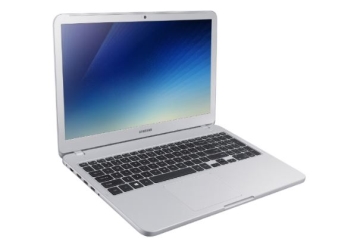
Samsung Launches 'Samsung Notebook 5 Metal' Featuring Metal Solidity and Premium Premium Quality
삼성전자가 ‘삼성 노트북5 Metal’과 ‘삼성 노트북5’를 각각 4월 2일과 16일 국내에 출시한다. 라이트 티탄 색상이 적용된 ‘삼성 노트북 5 Metal’은 노트북을 접었을 때 보이는 상판과 하판을 모두 알루미늄으로 제작해 메탈의 단단함과 프리미엄을 전달한다. 또한, ’삼성 노트북5 Metal'은 엔비디아 지포스 MX150 그래픽카드를 탑재해 사진이나 동영상 편집 등 다양한 그래픽 작업과 게임도 부드럽게 실행할 수 있다. ‘삼성 노트북 5’는 나이트 차콜, 퓨어 화이트 2종의 모던하고 감각적인 색상, 19 mm대 두께에 나사가 보이지 않도록 설계된 외관 디자인을 갖췄다. 특히, 노트북 하판의 업그레이드 도어는 나사가 없어 누구나 직접 용량을 확대할 수 있다.
2018.04.02by 김학준 기자
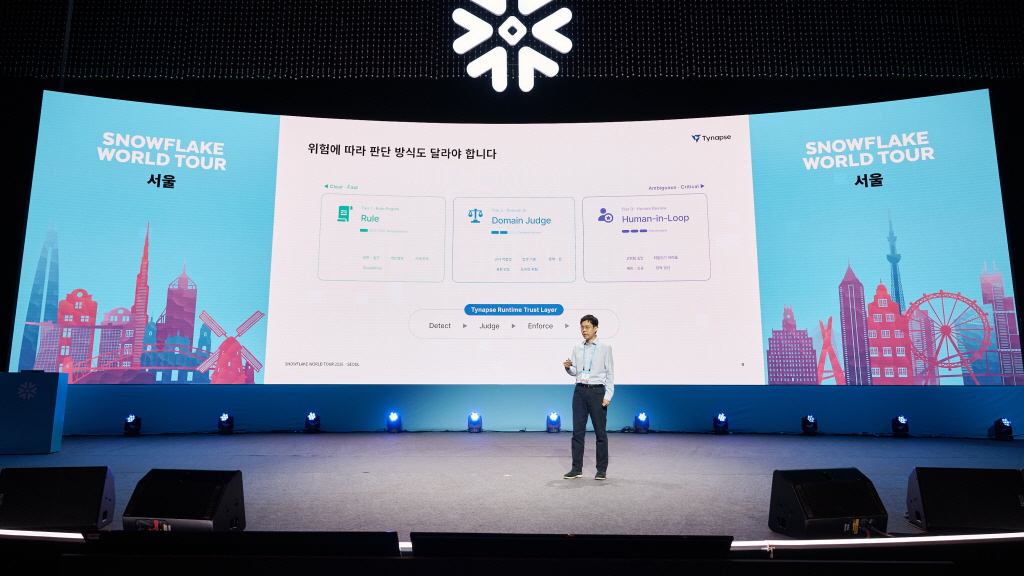
The Problem with AI is Not Performance, but Trust
CEO Kang Min-seung emphasized at Snowflake's World Tour Seoul that generative AI has entered a phase where "trust" rather than accuracy becomes the key competitive advantage. As AI is applied to various tasks including consultation, risk management, and operational automation, incorrect data, erroneous responses, and bias are creating actual business risks. He pointed out that enterprises must build a trust layer above AI. To achieve this, accurate data management, semantic structuring, governance, and prompt security are essential. He explained that AI is not merely an automation tool but a technology that reorganizes the entire organization's workflows and decision-making systems. Snowflake provides a platform that supports this trust-based AI operation, emphasizing that enterprises should build "trustworthy AI" rather than "intelligent AI."
2026.08.28by 배종인 기자
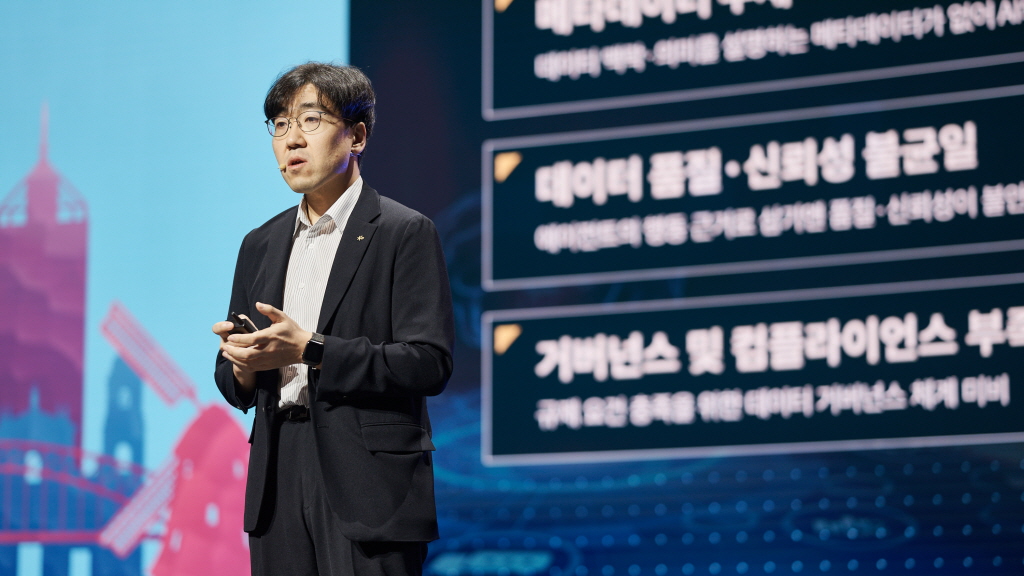
The Decisive Factor for AI Agents in Finance: "Trustworthy Data Infrastructure"
The key to spreading AI agents in the financial sector is establishing a trustworthy data system. KB Kookmin Bank is operating over 100 AI agents by 2025 and is promoting expansion to 300. AI is automating repetitive tasks across various areas such as consultation, risk management, wealth management, and relationship management. However, if data quality, governance, and semantic structuring are insufficient, errors and risks increase. KB is building an AI-Ready organization through a multi-model strategy of GPT, Gemini, and Claude, as well as a Snowflake-based data system. The bank emphasized that AI has entered a phase where it restructures not just simple automation but the entire work process and decision-making system.
2026.08.28by 배종인 기자











