

.png)

Appier introduces digital consumer journey exploration method using artificial intelligence
 Published2018.04.12 13:34
Supports marketers in predicting online access and conversion methods
Appier has released the '2017 Digital Consumer Behavior Report.' The aim is to present a roadmap to marketers seeking solutions for increasingly complex consumer journeys resulting from multi-device usage environments.
The report was prepared by analyzing over 5 trillion data points collected through Appier-led marketing campaigns conducted across the entire Asia market in 2017. Online usage patterns of digital devices were surveyed on a daily and weekly basis and classified by country, gender, age, and industry. Through these AI-based insights, marketers can develop a clear picture of the market and easily understand consumer movement paths in the Asia market.
Fabrizio Caruso, Chief Revenue Officer of Appier, stated, "Appier has been providing corporate customers with AI-powered platforms to help them more easily reach their target customers," and added, "With these insights and AI assistance, marketers will be able to ride the wave of the times."
The key topics covered in the '2017 Digital Consumer Behavior Report' are as follows.
Multi-device usage becomes the new standard
Users distribute their time across devices since they have different purposes for each device. Individual users' online access and conversion methods also vary. When multiplied by the number of countries in the Asia region, gender, and age groups, online access and conversion methods become increasingly complex.
Multi-device usage with four or more devices per person has become the norm and has established itself as a new standard in the Asia-Pacific region, including emerging markets. Hong Kong and Taiwan rank at the top in multi-device usage, while Japan and Thailand rank at the bottom.
Marketers discover blind spot users with AI
The market blind spot that affects marketers most significantly comprises consumers who use devices with completely different purposes. Until now, it has been difficult to approach such blind spot users with effective and targeted methods, but by using Appier's AI, marketers can identify such consumers and obtain the most effective approach methods. The countries with the highest number of such consumers are emerging markets, with the Philippines, Taiwan, and Australia ranking at the top.
The Holy Grail named online access and conversion methods
Perhaps the most important role of AI for marketers is helping them predict the online access and conversion methods most preferred by consumers, and Appier's data serves that role. Among online access methods most used by Asia region consumers, tablets recorded the highest ad conversion rate, with smartphones following in click activity and purchase conversion. Additionally, this data reveals that PCs have continued to play an important role in consumer movement paths and are among the top 5 conversion paths across the region.
AI-based cross-screen campaigns drive high purchase conversion
On average, AI-based cross-screen campaigns showed 150% higher purchase conversion rates compared to single-screen campaigns. Consumers using three or more devices showed 400% more purchase conversions in their consumer journey compared to single-screen consumers. These figures clearly demonstrate the advantages marketers can gain through artificial intelligence.
Related news

Appier's AI-Powered Data Intelligence Solution Integrated into LINE
Appier announced that its AI-powered data intelligence solution Aixon has been seamlessly integrated into LINE, one of Asia's largest messenger platforms. With the integration of Aixon, organizations using the LINE Business Connect Service (a service that provides application programming interfaces (APIs) to corporate customers, enabling access to various LINE account features) can apply powerful AI insights to their followers and deliver highly targeted marketing messages.
2018.04.12by 김지혜 기자
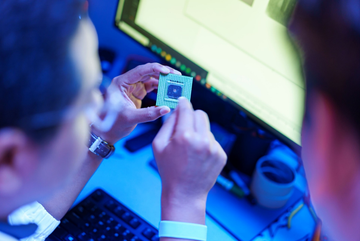
ST Microelectronics and NUS Establish Joint Research Center 'HELIX' for Edge AI
ST Microelectronics and the National University of Singapore have established the 'HELIX' joint research center aimed at implementing embedded AI in edge environments. Over a four-year period, the center will conduct research across the entire technology stack from algorithms to silicon, focusing on memory-centric architecture leveraging ST's 18nm FD-SOI technology and embedded PCM. The core objective is to implement intelligence directly in physical devices such as robots and drones while minimizing energy consumption.
2026.08.28by 배종인 기자

ams, Enhancing Humanoid Robot Sensing and Communication with Digital Photonics
ams OSRAM has unveiled solutions that leverage digital photonics technology to enhance the sensing and communication capabilities of humanoid robots. The company implements environmental awareness and precision manipulation through dToF sensors, optical force sensors, and structured light emitters, while supporting LED-based non-verbal communication through the EVIYOS and ALIYOS platforms. According to market research, the humanoid robot market is projected to grow from $600 million in 2025 to $51 billion in 2035, with improvements in robot sensing capabilities expected to serve as a key growth driver.
2026.08.27by 배종인 기자

Nvidia Unveils Jetson Orin Nano 2…78TOPS·2x Inference Performance
Nvidia has unveiled the Jetson Orin Nano 2. It delivers 78TOPS AI computing performance and 2x inference performance compared to the previous model while reducing power consumption by 40%. The device is scheduled for launch in the first half of 2027, and major robotics and drone manufacturers including Cognex, Doosan Bobcat, Matic, and Wing are currently reviewing early adoption.
2026.08.26by 배종인 기자
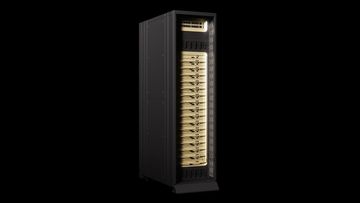
NVIDIA Begins Mass Production of Groq 3 LPX…Achieves 3,400 Tokens Per Second Inference Performance
NVIDIA has started mass production of the Groq 3 LPX AI inference accelerator. Based on the Vera Rubin NVL72 platform, this product achieves 3,400 output tokens per second, raising the performance benchmark in the agentic AI market. With response speeds 4 times faster than existing solutions, agent tasks can be handled within minutes. AI cloud companies Nebius and Groq are planning early adoption.
2026.08.25by 배종인 기자











