



Smart Home Batteries, Why State of Health (SOH) is More Important Than State of Charge
 Published2018.04.26 14:07
Smart home technology is rapidly growing and being adopted. Millions of homes are installing systems such as video doorbells, remote camera monitors, and security control panels, and this number will continue to increase at an even faster pace in the future.
While older security systems simply sounded an alarm when an intrusion occurred, today's systems allow users to remotely monitor various locations in their homes via smartphones, offering higher convenience and utility. Here, "smart" ultimately means "connectivity." In order to deliver video content from a remote camera to a smartphone, a certain form of communication is required.

Because these applications are characterized by safety and security, the system must have high reliability, and for this to be achieved, predictable power is needed to keep all system components operating at all times.
Many devices used in smart home systems are connected to household AC power, but for remote cameras and other equipment to be used in various locations including outdoors, it may be more appropriate to operate the complete product with a battery. To maintain trust in such "always-on" systems and achieve continuous communication, intelligence for monitoring and maintaining the battery and power system must be added. At a minimum, users should be able to receive alerts or notifications about problems when they occur. Furthermore, the system should be able to continuously monitor both the charge state and health state of the power supply.
How can we check and report the battery's state of charge and, more importantly, the battery's state of health? This task is best accomplished using a dedicated battery fuel gauge device.
First, let's understand the difference between state of charge (SOC, remaining charge) and state of health (SOH, aging level). We are always concerned about the state of charge—whether the battery is full, empty, or how much remains. In the case of smartphones (which have a built-in battery fuel gauge), the battery will be charged and discharged more than once a day. However, in smart home applications, especially when connected to AC power, the state of charge will remain close to 100% almost always. The battery is used as backup power in case the AC power is interrupted. Therefore, in these applications, state of charge is not always the most useful parameter to track.
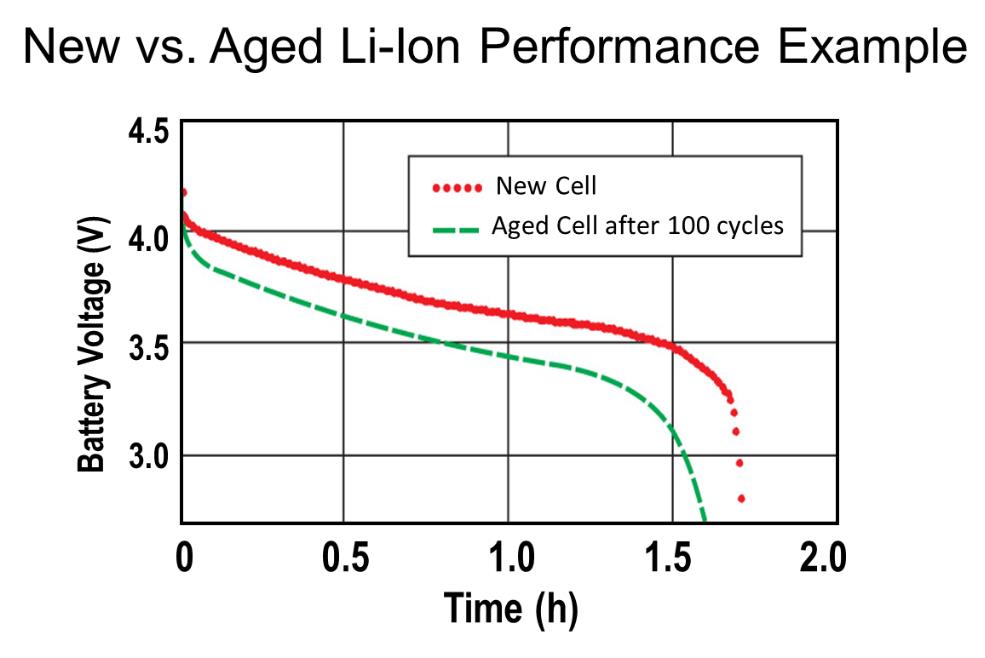
State of health (SOH) indicates how well the battery performs its function in the application compared to when it was new. For example, suppose an application started with a 1000mAh cell. Depending on operating conditions or environmental conditions, after one to two years, the effective capacity of this cell may degrade to 850mAh. Then the state of health would be 85%. This means the battery is performing 85% as well as it did when new. While battery characteristics vary, typically once the state of health drops below 70-75%, battery capacity degrades rapidly. Consequently, for safety and security related applications, when the battery state of health reaches 80%, it is time to replace the battery.
For example, consider a system that can operate at a minimum battery voltage of 3.4V. Under these conditions, an aged battery can provide energy for only about one hour. In contrast, a new battery can last about 1.7 hours.
Through good charge management, a rechargeable battery can be recovered multiple times from a completely depleted state to a fully charged state, but in this process, degradation occurs for various reasons. The primary reason is repeated charging and discharging cycles, but another reason is exposure to heat.
A camera with an embedded battery operating outdoors can be exposed to high temperatures for extended periods. Some cameras use solar panels to recharge the battery. While this method is useful for implementing off-grid applications providing wireless connectivity, it requires installation in a location with strong sunlight, which means prolonged heat exposure that can accelerate battery cell performance degradation.
Related news
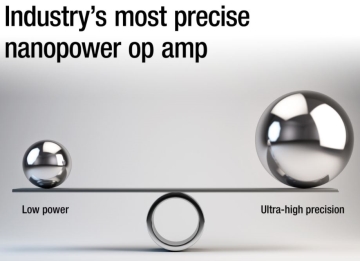
TI Launches Lowest Power, High-Precision, Zero-Drift Nanopower Amplifier
TI announced the launch of ultra-high precision operational amplifier products that consume the lowest supply current in the industry. The new LPV821 zero-drift nanopower operational amplifier, which delivers excellent power-to-precision performance, enables achievement of maximum DC precision while consuming 60% less power than competitors' zero-drift devices. The LPV821 is well-suited for precision applications such as wireless sensing nodes, home and factory automation equipment, and portable electronic devices.
2017.12.11by 김지혜 기자
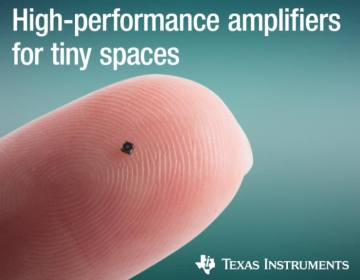
TI Launches Ultra-Small Operational Amplifier with Low Power Consumption
TI announced the launch of the industry's smallest operational amplifier and low-power comparator products with a size of 0.64mm². By utilizing the TLV9061 operational amplifier and TLV7011 comparator product families, which are the first to employ the ultra-compact X2SON package, system size and cost can be reduced while maintaining high performance across various IoT, personal electronic devices, and industrial applications such as mobile phones, wearables, optical modules, motor drives, smart grids, and battery-powered systems.
2018.02.07by 김지혜 기자
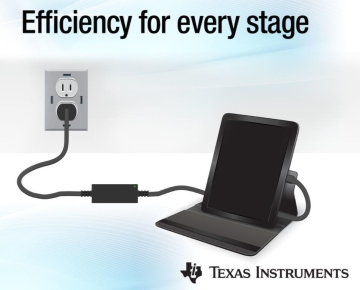
TI Unveils Power Management Chip for Higher Efficiency and Smaller Size
TI announced the launch of multiple new power management chip products that can reduce the size of power supplies and charging solutions for personal electronic devices and portable industrial equipment while improving efficiency. TI's new chipset product operating at up to 1MHz combines the UCC28780 active clamp flyback controller and UCC24612 synchronous rectifier controller, enabling power supply size reduction by half in AC/DC adapters and USB PD (Power Delivery) chargers. Additionally, the bq25910 6A 3-level buck battery charger is a suitable product for battery-powered electronic devices requiring maximum charging efficiency with minimal solution size, capable of reducing solution footprint by up to 60% in smartphones, tablets, and electronic POS devices.
2018.03.08by 김지혜 기자
Ecolab and K-water Discuss Innovation Collaboration in Advanced Industry Water Management
Ecolab and the Korea Water Resources Corporation jointly discussed cooperation directions for maximizing water use efficiency in advanced industries such as semiconductors and data centers and establishing sustainable water circulation. The two companies agreed to gradually develop a long-term cooperation model that combines water resource infrastructure and water management technology to promote water efficiency optimization, water reuse, and carbon reduction.
2026.08.28by 명세환 기자

H.Energy Obtains Green Technology Certification…SolarOnCare Operating at 99.82% Uptime
H.Energy has obtained green technology certification from the Small and Medium Business Administration for solar power generation forecasting and I-V curve anomaly diagnosis technology. The AI-based asset management platform SolarOnCare is deployed across more than 3,000 power plants nationwide, achieving a system uptime of 99.82% and a 3.7% improvement in power generation performance. Through real-time data analysis, it protects power generation revenue by detecting and managing minor losses such as module degradation and partial shading early on.
2026.08.25by 명세환 기자











