



Unveiled Baseband-Antenna Reference Design for Multi-Standard Small Cell Base Stations
 Published2012.05.14 12:15
May 14, 2012, Seoul, Korea — Freescale Semiconductor (NYSE: FSL www.freescale.com ) today announced a new reference design for a Small Office/Home Office (SOHO) base station that is partially powered by two Gallium Arsenide (GaAs) monolithic Microwave Integrated Circuits (MMICs).
This comprehensive baseband-antenna reference design combines a Freescale RF radio board with the QorIQ Qonverge BSC9131 base station SoC (System–on-Chip) and is a multi-protocol solution that supports various mobile phone bands, enabling developers to easily transition from 3G to 4G LTE. Procuring the base station SoC and RF devices from the same vendor offers the advantages of shortened time-to-market and ensured optimal compatibility and integration.
The Freescale GaAs MMICs mounted on the wireless board are the MMZ25332B and MMZ09312B amplifiers. Both MMICs offer excellent linearity and power efficiency and support multiple bands, including Band 1/WCDMA and Band 13/LTE. These MMICs can support multiple UMTS frequency bands through simple tuning, as well as the wireless reference board.
"Ritu Favre, Vice President and General Manager of Freescale's RF Business Unit, said, 'Building a comprehensive femtocell base station solution by purchasing components individually from various vendors is not only cumbersome but also expensive. Freescale has created a one-stop shop for femtocells by combining Freescale's GaAs MMIC and QorIQ Qonverge technologies on wireless boards, enabling designers to shorten development time and leverage scalability when transitioning from 3G to 4G.'"
The QorIQ Qonverge BSC9131 device features a scalable architecture that supports various wireless interfaces, including LTE, LTE-FDD & TDD, and WCDMA/CDMA. This device supports baseband processing by combining a Power Architecture® core with a high-performance StarCore DSP utilizing MAPLE-B (Multi-accelerator Platform Engine) technology. Furthermore, by adopting an interconnect fabric, next-generation node process technology, and seamless RFIC communication and antenna interfaces, it eliminates the need for additional chips, thereby reducing board space and costs.
Supported devices
The new MMZ25332B and MMZ09312B MMIC devices, developed by Freescale partner Benetel and mounted on the wireless board, belong to the family of RF GaAs MMIC solutions for femtocells. Additionally, Freescale's two low-noise amplifiers, the MML09211H and MML20211H, are included on the wireless board. These devices are specially designed to meet the receiver sensitivity requirements of femtocells. Further details on these devices can be found at www.freescale.com/RFMMIC .
Leader of base station applications
Freescale provides comprehensive semiconductor solutions for base station applications ranging from femtocells to macrocells, including Airfast RF power solutions, QorIQ Qonverge SoCs, and RF GaAs MMICs. Freescale, the world's leading provider of RF power LDMOS power transistors used in wireless base stations, holds numerous GaAs-related patents and was one of the first companies to develop devices based on GaAs technology. Furthermore, it recently announced the Airfast 28V AFT26HW050GS LDMOS transistor, specially designed for wide-bandwidth microcell/metrocell LTE applications.
Price and supply situation
The baseband-antenna reference design consists of two complementary boards: one QorIQ Qonverge femtocell base station development board and one or more RF radio boards. The BSC9131RDB QorIQ Qonverge reference design board is available for purchase at $900 (USD). The RF radio board is $1,700 (USD). The part number is PSC913XRFBD-XXYY, where "XX" and "YY" indicate the supported bands. Further details about the board can be found at www.freescale.com/BSC9131RDB .

관련뉴스
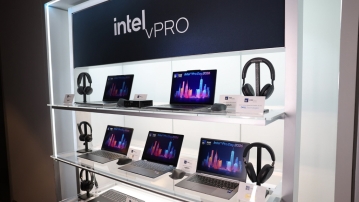
Intel Unveils Next-Generation 'Core Ultra Series 3' and vPro Platform for Enterprise PCs
Intel has officially unveiled the "Intel Core Ultra Series 3" for next-generation enterprise PCs and the latest vPro platform, addressing a wide range of demands from enterprise notebooks to high-performance workstations.
2026.03.26by 배종인 기자
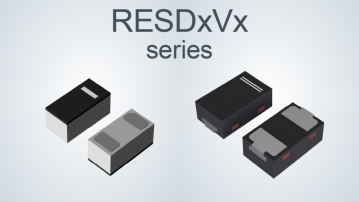
ROHM Launches ESD Protection Diode Compatible with High-Speed Interfaces of 10Gbps or Higher
반도체 전문 기업 로옴(ROHM)이 10Gbps를 넘어서는 차세대 고속 데이터 통신 환경에 대응할 수 있는 ESD(정전기 방전) 보호 다이오드 ‘RESDxVx 시리즈’를 개발하며, 고속 인터페이스에서 요구되는 신호 품질 유지와 IC 보호 성능을 동시에 끌어올렸다.
2026.03.26by 배종인 기자
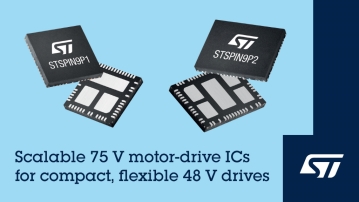
ST Launches 75V Drive IC Targeting 48V Industrial Motor Driving
ST마이크로일렉트로닉스가 48V급 산업용 구동 시스템 설계에 맞춘 75V 모터 드라이브 IC ‘STSPIN9P’ 시리즈를 공개했다. 새 제품군은 하프 브리지와 풀 브리지 구조로 구성돼 모터 종류와 출력 조건에 따라 설계를 확장할 수 있도록 한 것이 특징이다. 전원 회로와 보호 기능, 전류 감지 회로를 칩에 통합해 시스템 구성을 단순화했으며, 최대 500W급 애플리케이션까지 대응하도록 설계됐다. 회사는 레퍼런스 디자인과 데모 보드도 함께 제공해 산업 자동화, 로보틱스, 펌프, 팬, 조명, 섬유 기계 등에서 개발과 평가를 지원할 계획이다.
2026.03.26by 배종인 기자

Nordic supports security updates for the entire lifecycle of IoT devices at a single fixed cost
Nordic Semiconductor, a global leader in low-power wireless connectivity solutions, has unveiled a single fixed-cost licensing model that delivers FOTA (Firmware Over-the-Air) and device management capabilities throughout the device lifecycle via nRF Cloud, and introduced a new firmware update solution to prepare for the enforcement of the European Union's Cyber Resilience Act (CRA).
2026.03.26by 배종인 기자

Practical Training in Low-Noise, Low-Power Circuit Design All in One Place… Training Fee Support
고감도 아날로그 회로와 센서 기반 시스템 설계 역량을 강화할 수 있는 ‘2026 고급 엔지니어 실무 마스터 클래스’가 오는 4월16일 서울 가산동 e4ds 컨퍼런스 센터에서 열린다. 이번 과정은 온라인이 아닌 오프라인 유료 실습 교육으로 진행되며, 현장 중심의 심화 학습을 원하는 엔지니어를 대상으로 한다. 이번 교육은 텍사스 인스트루먼트(Texas Instruments)가 교육비를 지원해 정가 25만원에서 10만원 할인 된 15만원에 참가할 수 있다.
2026.03.26by 배종인 기자











