

.png)

Samsung Electronics Reduces Energy on Wind-Free Air Conditioners with 'Smart Energy' Service
 Published2018.05.25 12:15
On the 25th, Samsung Electronics will hold a signing ceremony for the 'National Electricity Demand Resource Trading (hereinafter National DR, Demand Response)' pilot project with the Ministry of Trade, Industry and Energy at the GLAD Hotel in Yeouido, Seoul.
The 'National DR' pilot project is a program promoted by the Ministry of Trade, Industry and Energy to enable efficient electricity usage not only in large-scale workplaces but also in ordinary households by returning corresponding benefits to users who save energy during peak hours of electricity usage.
To this end, the Ministry of Trade, Industry and Energy has signed agreements with six companies, including Samsung Electronics, and is carrying out a project targeting 40,000 households nationwide from June to November of this year, expecting to improve energy efficiency across the country and foster the energy-linked IoT industry.
As part of this pilot project, Samsung Electronics will recruit approximately 30,000 households by August and launch a 'Smart Energy' service that reduces electricity bills using Wind-Free air conditioners equipped with power peak management functions and AI and IoT-based control technology.
Wind-free air conditioners equipped with a power peak management function automatically adjust their operating rate to reduce power consumption upon receiving a signal from the Korea Power Exchange.
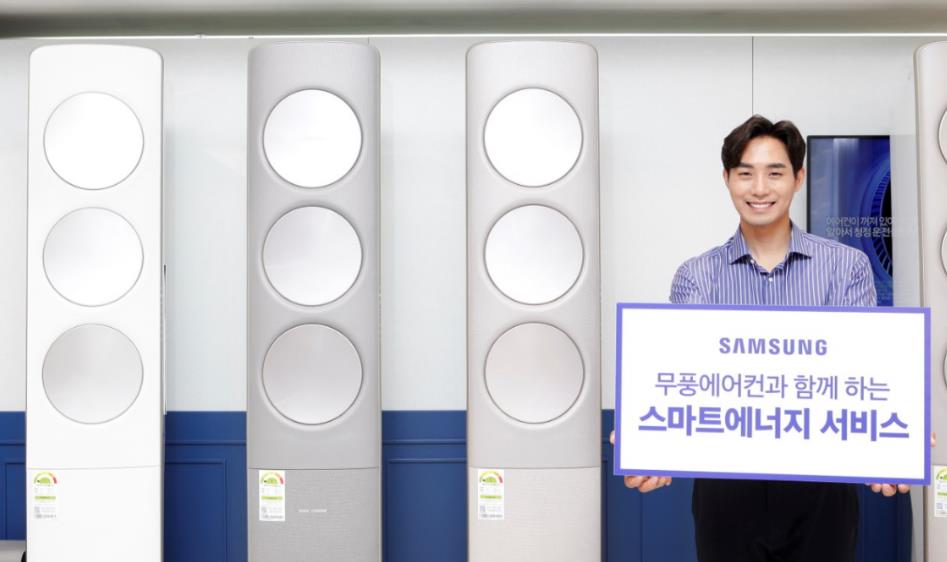
According to the Ministry of Trade, Industry and Energy, if all households in Seoul use air conditioners with peak management functions, 1.2 GW of electricity, equivalent to one nuclear power plant, can be reduced annually.
Samsung Electronics 'Smart Energy'Customers using the service can easily check detailed information related to air conditioners, such as operating status, electricity consumption, usage, energy saving methods, and incentive details, through the 'SmartThings app' installed on their smartphones.
In addition, by installing an IoT power meter from Incoored, a startup company that participated in the 'National DR' pilot project, you can obtain various information needed to save on electricity bills in real time, such as total household power usage, estimated electricity bills, and notifications regarding progressive billing stages.
Customers participating in Samsung Electronics' 'Smart Energy' service not only save on electricity bills but also receive 'Samsung Rewards Points' based on their savings. These points are settled on a monthly basis and are useful as they can be used on Samsung Pay to exchange for various gift certificates or top up prepaid cards.
Customers who wish to participate in Samsung Electronics’ ‘Smart Energy’ service simply need to purchase a 2018 model Wi-Fi-enabled Wind-Free air conditioner at an offline store such as Samsung Digital Plaza and apply for subscription through the ‘SmartThings App’.
While this pilot project is currently limited to air conditioners, Samsung Electronics plans to expand energy-related services to a wide range of IoT home appliances, including refrigerators and washing machines, starting next year to introduce intelligent IoT to more consumers.
관련뉴스
LG Electronics Integrates DeepThinQ Technology into Air Conditioners
LG전자가 인공지능 플랫폼인 딥씽큐를 적용한 ‘휘센 씽큐 에어컨’ 신제품을 앞세워 에어컨 시장에 새로운 패러다임을 제시하고 가정용 에어컨 시장을 지속 선도한다. LG전자는 서울 여의도 LG트윈타워에서 H&A(Home Appliance & Air Solution)사업본부장 송대현 사장, 에어솔루션사업부장 이감규 부사장 등이 참석한 가운데 ‘2018년형 LG 휘센 에어컨’ 신제품발표회를 열었다. 이날 LG전자는 자체 인공지능 플랫폼인 딥씽큐(DeepThinQ)를 탑재한 ‘휘센 씽큐 에어컨’을 비롯해 신제품을 대거 선보였다. LG전자가 휘센 에어컨에 인공지능 브랜드인 ‘씽큐’를 적용한 것은 이번이 처음이다.
2018.01.18by 김지혜 기자
Samsung Electronics Unveils Wind-Free Air Conditioner at AHR Expo
Samsung Electronics will showcase a variety of wind-free air conditioners, including wall-mounted residential units and cassette-type (ceiling-mounted indoor units) in 1Way and 4Way configurations, along with air conditioning solutions at the 'AHR Expo'. The wind-free cooling is characterized by rapidly lowering the temperature with powerful airflow during initial operation, and then maintaining the appropriate temperature by distributing subtle cooling evenly through micro holes instead of direct airflow once the user's desired temperature is reached.
2018.01.23by 김학준 기자
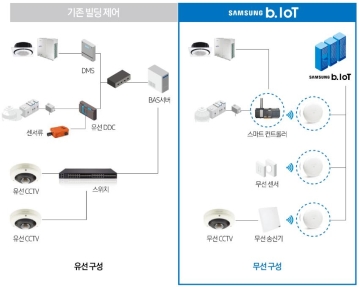
삼성전자, b.IoT로 ‘스마트캠퍼스’ 구축한다
삼성전자는 전남대학교와 ‘스마트캠퍼스 구현을 위한 b.IoT 통합 솔루션 구축’관련 MOU(양해각서)를 체결했다고 밝혔다. 삼성전자의 ‘b.IoT 솔루션’은 사물인터넷(IoT) 기반의 빌딩 관리 솔루션으로 공조·조명·전력·보안·네트워크 등 다양한 설비를 하나의 시스템으로 통합해 효율적인 빌딩 운영을 지원한다. 전남대학교는 삼성전자와의 협업을 통해 17개 동에 제각기 설치돼 있던 시스템에어컨 실내기를 ‘b.IoT’ 솔루션 하나로 통합 관리하고 피크 시간 전력 제어, 비효율 운전 기기 감지, 에너지 소비 목표 설정에 따른 사용량 모니터링 등으로 에너지 절감에 큰 효과를 볼 수 있게 됐다.
2018.04.02by 김지혜 기자
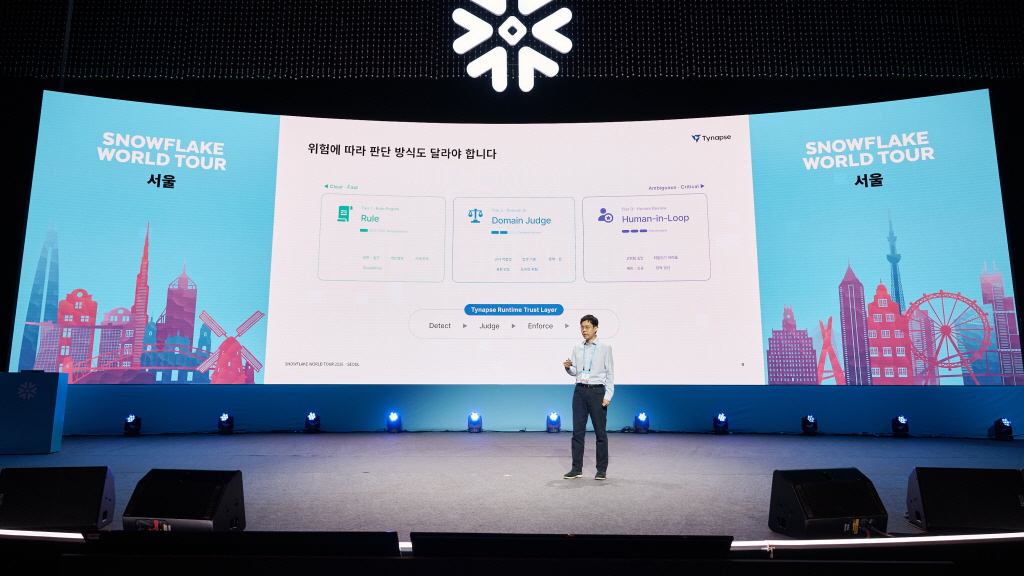
The Problem with AI is Not Performance, but Trust
CEO Kang Min-seung emphasized at Snowflake's World Tour Seoul that generative AI has entered a phase where "trust" rather than accuracy becomes the key competitive advantage. As AI is applied to various tasks including consultation, risk management, and operational automation, incorrect data, erroneous responses, and bias are creating actual business risks. He pointed out that enterprises must build a trust layer above AI. To achieve this, accurate data management, semantic structuring, governance, and prompt security are essential. He explained that AI is not merely an automation tool but a technology that reorganizes the entire organization's workflows and decision-making systems. Snowflake provides a platform that supports this trust-based AI operation, emphasizing that enterprises should build "trustworthy AI" rather than "intelligent AI."
2026.08.28by 배종인 기자
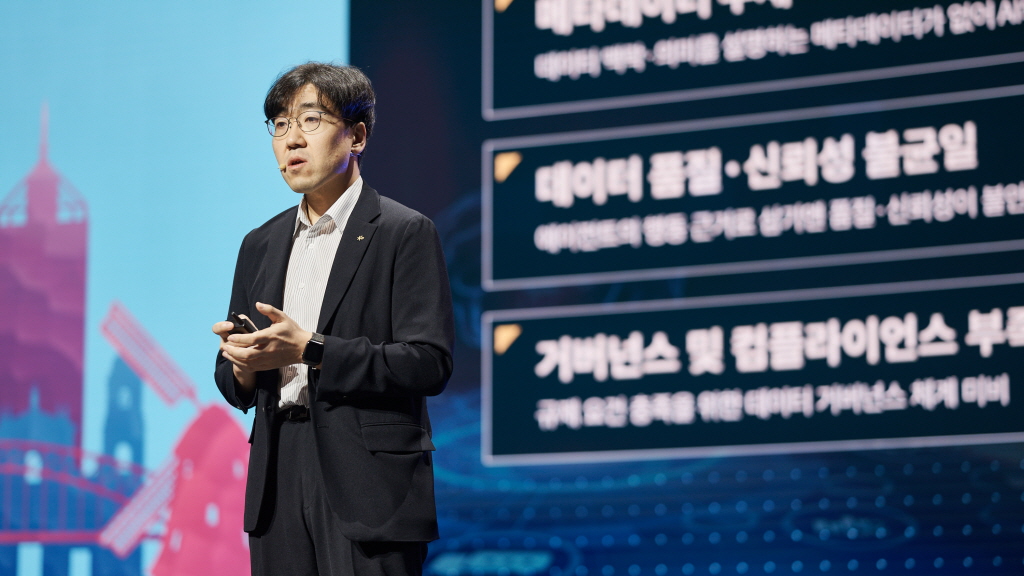
The Decisive Factor for AI Agents in Finance: "Trustworthy Data Infrastructure"
The key to spreading AI agents in the financial sector is establishing a trustworthy data system. KB Kookmin Bank is operating over 100 AI agents by 2025 and is promoting expansion to 300. AI is automating repetitive tasks across various areas such as consultation, risk management, wealth management, and relationship management. However, if data quality, governance, and semantic structuring are insufficient, errors and risks increase. KB is building an AI-Ready organization through a multi-model strategy of GPT, Gemini, and Claude, as well as a Snowflake-based data system. The bank emphasized that AI has entered a phase where it restructures not just simple automation but the entire work process and decision-making system.
2026.08.28by 배종인 기자











