



KARI Develops Helicopter Operation Software with Artificial Intelligence Support
 Published2018.08.07 09:57
Software Modification Time Reduced by Up to 50%

MathWorks announced that the Korea Aerospace Research Institute (KARI) has adopted MathWorks' model-based design solution to develop automatic flight control system (AFCS) software for helicopters that complies with the international aviation software standard DO-178C.
In the past at KARI, when researchers developed control laws, flight operation program software developers had to manually code and test. If even a minor misunderstanding occurred between the control law designer and the software developer, the probability of software errors would increase, and in some cases, those errors would not be discovered until the flight test phase.
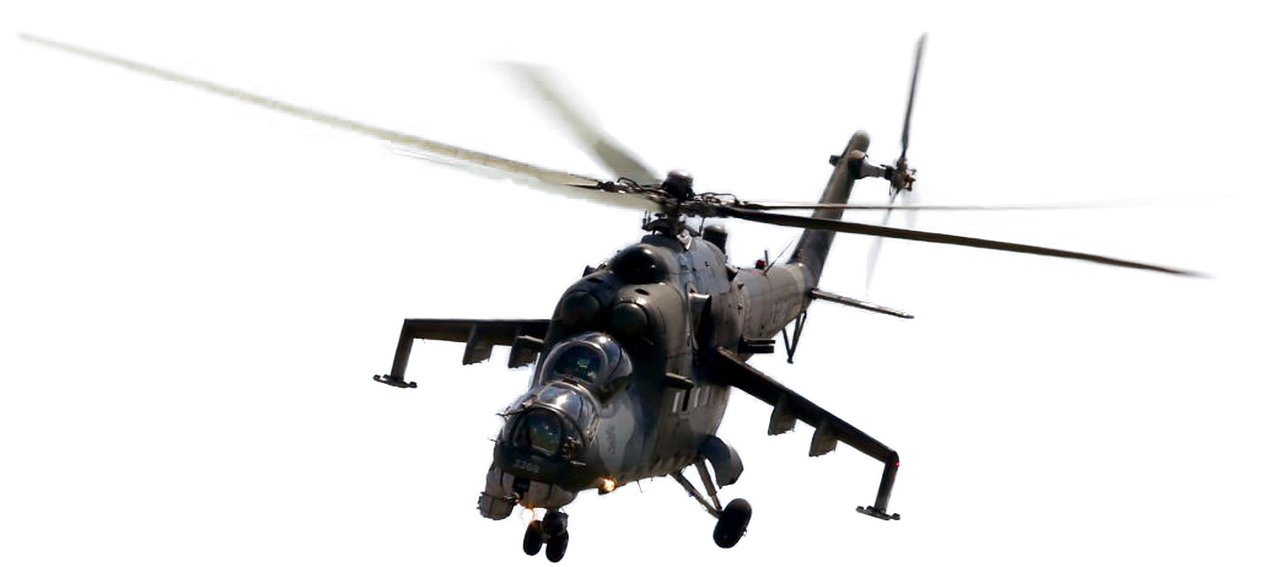
KARI, which conducted the country's first helicopter automatic flight control system project, sought to build an environment that could not only generate code but also automatically verify and validate control law software to comply with DO-178C guidelines.
KARI developed a control law model containing submodels for basic stabilization and outer loop control, as well as mode switching, using MathWorks' Simulink, and combined it with the nonlinear motion model of the aircraft. Through this model, simulations were executed under conditions such as actuator and sensor failures, and simulation results were post-processed with MATLAB to generate detailed reports containing fuselage velocity, attitude, and actuator displacement according to pilot input.
Additionally, KARI researchers automatically verified and validated the control law software in an environment established through MathWorks Consulting Services. As a result, in response to urgent requests commonly received during the project, the automated process with model-based design reduced software modification time by up to 50%.
Furthermore, the research team generated code directly from the Simulink control law model using Embedded Coder, eliminating software bugs caused by misunderstandings between the control law designer and the software developer. Since DO-178C procedures were automatically reflected in the development and verification environment, developers without prior experience in DO-178C could automatically comply with the guidelines.
Dr. Kang Young-shin of KARI's Flight Control Research Team stated, "By utilizing MATLAB and Simulink, we were able to successfully complete the project within the deadline with significantly less time and cost for control law design and software development compliant with DO-178C."
Related news

MathWorks Announces Release 2017b of the MATLAB and Simulink Product Families
MathWorks announced Release 2017b (R2017b) today. R2017b includes new capabilities in MATLAB and Simulink, 6 new products, and updates and bug fixes for 86 other products. Additionally, R2017b introduces new deep learning key capabilities that simplify the way engineers, researchers, and other domain experts design, train, and deploy models. The detailed deep learning capabilities and products included in R2017b with deep learning support are as follows.
2017.09.26by 김자영 기자

MathWorks Integrates MATLAB and NVIDIA TensorRT for AI Model Development
MathWorks announced the integration of MATLAB and NVIDIA TensorRT through GPU Coder. Through the collaboration between the two companies, engineers and scientists can now develop new artificial intelligence (AI) and deep learning models with higher performance and efficiency in MATLAB to meet the increasingly growing demand in data center, embedded, and automotive application fields.
2018.03.30by 김지혜 기자

AI can be applied in practice even by non-experts
Any engineer or scientist with problem-identification capabilities and the ability to conceive solutions can apply AI in practice with the assistance of MATLAB.
2018.07.25by 이수민 기자
ST Microelectronics and NUS Establish Joint Research Center 'HELIX' for Edge AI
ST Microelectronics and the National University of Singapore have established the 'HELIX' joint research center aimed at implementing embedded AI in edge environments. Over a four-year period, the center will conduct research across the entire technology stack from algorithms to silicon, focusing on memory-centric architecture leveraging ST's 18nm FD-SOI technology and embedded PCM. The core objective is to implement intelligence directly in physical devices such as robots and drones while minimizing energy consumption.
2026.08.28by 배종인 기자

ams, Enhancing Humanoid Robot Sensing and Communication with Digital Photonics
ams OSRAM has unveiled solutions that leverage digital photonics technology to enhance the sensing and communication capabilities of humanoid robots. The company implements environmental awareness and precision manipulation through dToF sensors, optical force sensors, and structured light emitters, while supporting LED-based non-verbal communication through the EVIYOS and ALIYOS platforms. According to market research, the humanoid robot market is projected to grow from $600 million in 2025 to $51 billion in 2035, with improvements in robot sensing capabilities expected to serve as a key growth driver.
2026.08.27by 배종인 기자











