



Using existing wearable devices for medical purposes
 Published2018.08.23 07:01
Sensor accuracy has already reached a level suitable for medical use.
Optical heart rate sensors are increasingly being incorporated into wearable devices.

The applications for this sensor are diverse, providing wearers with information ranging from sports and fitness activities to health status. This information allows the wearer to accurately understand their current condition and take quick action.
So, what can product developers measure with this sensor? The table below lists some of the most common measurements used in fitness applications today.
| Measurement items | definition | Athletic ability | fig |
| Maximum oxygen Consumption (VO₂ max) | Aerobicability. You may notice gradual changes in your cardiovascular health. | The higher it is, the better the athletic ability. | The higher it is, the lower the risk of death from heart disease and the faster the recovery. |
| Stable time heart rate | Heart rate while awake and not engaged in strenuous activity | The lower the better. | The higher it gets, the more advanced the cardiovascular disease becomes. |
| heart rate resilience | Heart rate changes over 1 minute after intense exercise | The higher it is, the better the exercise endurance. | font-size:10px;">The higher it is, the healthier your cardiovascular system is. |
| heart rate reaction | Heart rate changes during the first minute of exercise | The higher it is, the less prepared your heart is for exercise. | A high heart rate response and a decreased ability to increase heart rate may indicate atherosclerosis. |
| Cardiac efficiency | Average cadence divided by average resting heart rate | The higher it is, the less heartbeats are needed for physical activity. | If your heart efficiency is low, you may have high blood pressure. |
| Heart rate variability (HRV) | Statistical variability of heart rate intervals | H It is caused by psychosocial stress or excessive exercise. | It may indicate atrial fibrillation and arrhythmia. |
(Source: National Institutes of Health, Journal of Pacing and Clinical Electrophysiology)
So, let's take a look at what optical heart rate sensors can measure and how they could be used in future health and medical wearables.
Maximal oxygen consumption (VO₂ max)
To understand your health, you need to measure physical activity and your body's responses to it. Some wearable devices can measure maximal oxygen consumption (VO₂ max), which can help measure chronic changes in cardiovascular health. A higher VO₂ max indicates improved performance during aerobic exercise. Wearable devices that measure VO₂ max can also be used for medical purposes. A higher VO₂ max is associated with a lower risk of death from heart disease and improved recovery capacity.
Resting heart rate
Resting heart rate is an indicator of fitness level. A relatively lower resting heart rate, especially when not engaged in strenuous activity, indicates better health. Lowering your resting heart rate can reduce your risk of developing cardiovascular disease.
Heart rate recovery
Heart rate recovery refers to the ability to return to normal levels after physical activity, and can be used to predict health and cardiac function. A healthier heart recovers faster. A higher heart rate recovery indicates greater endurance and cardiovascular health. Heart rate recovery is measured by measuring the difference between the heart rate during exercise and the heart rate 1-2 minutes after stopping exercise.
Heart rate response
Another useful measurement using a heart rate sensor is the heart rate response to exercise, measured approximately one minute after starting exercise. Increased muscle activity activates the sympathetic nervous system. The poorer your fitness, the stronger your heart rate response to exercise. Regular exercise allows your body to adapt. While your heart rate may seem to increase with exercise, it actually takes more intense exercise to achieve the same heart rate. A high heart rate response and increased cardiac activity, coupled with a decreased ability to elevate your heart rate, may indicate arterial disease.
Cardiac efficiency
Regular exercise improves cardiac efficiency, which is the ratio of cardiac activity to the energy expended to achieve it. The more efficient your heart is, the more you can perform physical activities with fewer heartbeats. Cardiac efficiency is a key indicator of heart health. Low cardiac efficiency is associated with many cardiovascular diseases, including high blood pressure.
HRV (Heart rate variability)
HRV refers to the degree of heart rate variability, or the subtle changes between one cardiac cycle and the next. HRV is linked to mental and physical exertion, allowing it to monitor the effects of stress on the body. HRV can also predict arrhythmia and atrial fibrillation. While previously only used in elite sports, HRV is now being utilized by the general public.
For more information on how HRV is measured and what the results indicate, see this article on heart rate variability by Dr. Chris Eschbach, director of the Biometrics Laboratory at Valencell.
organize
Recently, new wearable devices have been announced that can measure atrial fibrillation, arrhythmia, and core body temperature. All of these features utilize optical heart rate sensors using PPG. The features discussed above represent only a small fraction of the possibilities. Today, countless wearable devices already have these features ready to be used.
For more information on the above, see How Sensor Systems Work and What They Measure and 10 Lessons Valence Learned from Developing Over 50 Biometric Wearable Devices .
This article is based on a contribution from Texas Instruments.
관련뉴스
'Ultra-small, low power, and high efficiency' are key to healthcare semiconductors
스마트폰을 들고 다니는 것만으로도 계단을 오르내렸는지, 얼마나 걸었는지를 이동 거리부터 속도까지 알 수 있다. 스마트폰 센서 시장의 성장이 가속화되면서 헬스케어 센서들이 탑재되는 추세로 가고 있다. 삼성전자는 2014년 발표한 ‘갤럭시 노트4’에 자외선 센서와 심장박동 센서를 탑재한 바 있고, 올해 ‘마이 BP 랩’을 발표해 갤럭시S9 시리즈의 광센서로 혈압과 스트레스를 측정할 수 있게 했다.
2018.04.10by 김지혜 기자
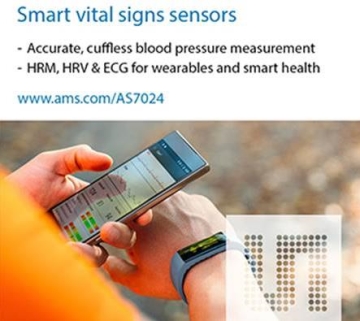
ams Launches Reference Design for Vital Signal Sensor for Wearable Devices
ams는 자사의 AS7024를 기반으로 한 최초의 통합 바이탈 신호 센서 레퍼런스 디자인을 출시했다고 밝혔다. 이 솔루션을 활용하면 24시간 내내 빠르고 정확할 뿐 아니라 압박대를 사용할 필요가 없어 더욱 편리한 커프리스(cuffless) 혈압 측정이 가능하다. AS7024 기반의 새로운 바이탈 신호 센서 레퍼런스 디자인은 AS7024 같은 하드웨어는 물론, 혈압, 심박(heart rate measurement, HRM), 심박변이도(heart rate variability, HRV), 심전도(electrocardiograms, ECG) 측정에 필요한 소프트웨어까지 모두 통합하고 있다. AS7204 센서 IC는 3개의 LED, 포토다이오드, HRM용 광학 프런트엔드와 시퀀서, 그리고 ECG용 아날로그 프런트엔드를 높이가 낮은 6.1mm x 2.7mm 크기의 패키지에 통합하고 있다.
2018.04.30by 김지혜 기자
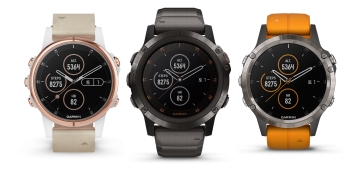
Garmin Launches GPS Multisport Smartwatch 'Phoenix 5 Plus' Series
Garmin is planning to accelerate expansion in the premium smartwatch market through enhanced marketing of its GPS multisport smartwatch Fenix 5 Plus series.
2018.07.17by 이수민 기자
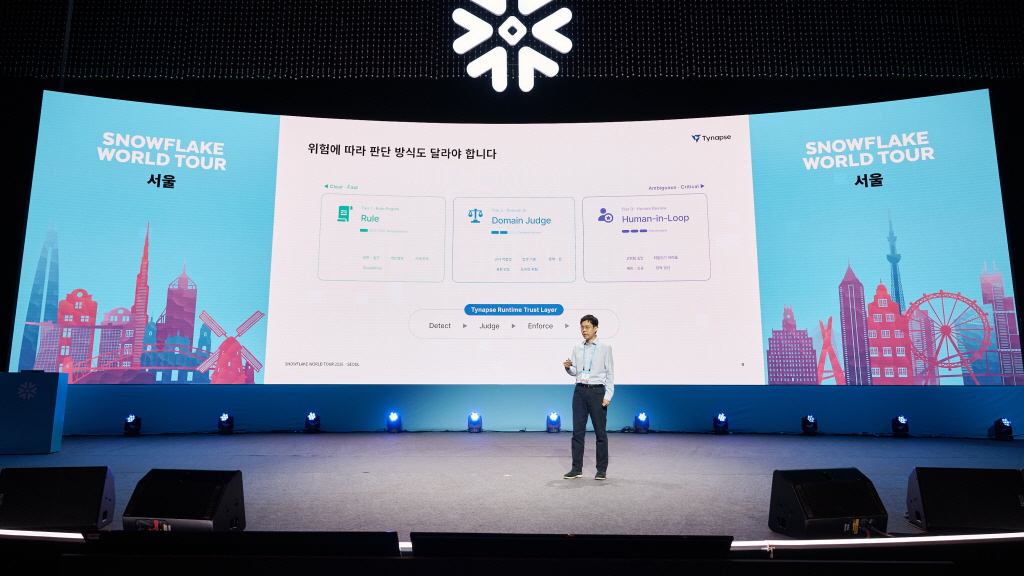
The Problem with AI is Not Performance, but Trust
CEO Kang Min-seung emphasized at Snowflake's World Tour Seoul that generative AI has entered a phase where "trust" rather than accuracy becomes the key competitive advantage. As AI is applied to various tasks including consultation, risk management, and operational automation, incorrect data, erroneous responses, and bias are creating actual business risks. He pointed out that enterprises must build a trust layer above AI. To achieve this, accurate data management, semantic structuring, governance, and prompt security are essential. He explained that AI is not merely an automation tool but a technology that reorganizes the entire organization's workflows and decision-making systems. Snowflake provides a platform that supports this trust-based AI operation, emphasizing that enterprises should build "trustworthy AI" rather than "intelligent AI."
2026.08.28by 배종인 기자
The Decisive Factor for AI Agents in Finance: "Trustworthy Data Infrastructure"
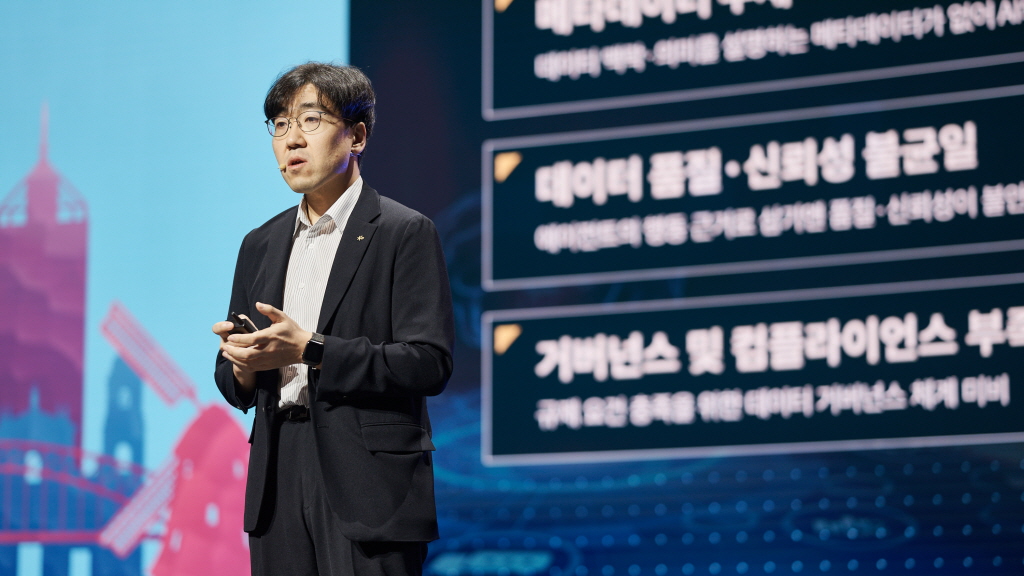
The key to spreading AI agents in the financial sector is establishing a trustworthy data system. KB Kookmin Bank is operating over 100 AI agents by 2025 and is promoting expansion to 300. AI is automating repetitive tasks across various areas such as consultation, risk management, wealth management, and relationship management. However, if data quality, governance, and semantic structuring are insufficient, errors and risks increase. KB is building an AI-Ready organization through a multi-model strategy of GPT, Gemini, and Claude, as well as a Snowflake-based data system. The bank emphasized that AI has entered a phase where it restructures not just simple automation but the entire work process and decision-making system.
2026.08.28by 배종인 기자











