


Launch of the TLE7250 Family of Next-Generation Automotive High-Speed CAN Transceivers Offering Enhanced Robustness and Energy Efficiency
 Published2012.06.08 10:15
June 7, 2012, Seoul – Infineon Technologies (Korea Representative Director Seung-soo Lee) has launched the latest high-speed CAN transceivers designed for automotive network applications: the TLE7250 family consists of the TLE7250G and TLE7250GVIO. The TLE7250G interfaces with 5V microcontrollers, while the TLE7250GVIO supports 5V or 3.3V microcontroller I/O interfaces by providing a voltage reference pin. Compared to the previous generation, the new transceivers offer enhanced immunity to Electromagnetic Interference (EMI) over a frequency range from 1 MHz to 1 GHz and reduced Electromagnetic Emission (EME) characteristics between 150 kHz and 1 GHz. In addition, the devices provide excellent ESD robustness of at least ±8 kV in accordance with IEC61000-4-2. Due to its high impedance characteristics when not in use, the TLE7250 transceiver family reduces CAN bus leakage current to 5µA (microamperes) in power-down mode. This improves energy efficiency, combined with low current consumption characteristics of less than 15µA (under 5V standby conditions). The TLE7250G and TLE7250GVIO are optimized for excellent passive operation in the power-down state, making them highly suitable for mixed-supply CAN networks.
Transceivers connect all different Electronic Control Units (ECUs) on the In-Vehicle Network (IVN) architecture and play a key role in data exchange for automotive applications. As an interface between the physical bus layer and the CAN (Control Area Network) protocol controller, the TLE7250G and TLE7250GVIO drive signals to the bus and protect the microcontroller from interference occurring within the network.
Frank Schwertlein, Vice President and Head of Standard Power at Infineon Technologies’ Automotive business unit, said, “Infineon offers a vast product range for various bus sectors, including high-speed CAN and low-speed CAN, as well as LIN and FlexRay.” He added, “Building on the success of the previous generation, the new high-speed CAN TLE7250 transceiver provides enhanced robustness and energy efficiency, which can increase reliability at the vehicle level while reducing CO2 emissions.”
All products in the TLE7250 transceiver family, including the TLE7250G and TLE7250GVIO, are based on Smart Power Technology (SPT) developed by Infineon. SPT enables the integration of the advantages of bipolar and CMOS control circuits alongside DMOS power devices on the same monolithic circuit. Both the TLE7250G and TLE7250GVIO, as well as SPT technology, have obtained AEC certification and are optimized to withstand harsh automotive environments.
The TLE7250 transceiver family provides a data transmission rate of up to 1 Mbaud and is ideal for large CAN networks that provide high data transmission rates due to safety characteristics against malfunction, optimized output slew rates for CANH and CANL signals, and various operating modes such as normal, receive-only, and standby, each having specific characteristics for current consumption and data transmission.
TLE7250G and TLE7250GVIO comply with ISO11898-2 and meet the German OEM hardware requirements specification V1.3 of May 2012. Furthermore, Infineon's TLE7250 transceiver family can be used in global ECU platform designs because it meets the latest international ESD and EMC requirements.
The new CAN transceiver ICs provide various features that ensure safety, cost-effectiveness, and efficient operation. In addition to short-circuit protection for bus lines to GND (battery) and VCC, these devices block vehicle transients. With reduced short-circuit current characteristics of up to 100mA, the TLE7250G and TLE7250GVIO can cut the current requirements of 5V voltage regulators in half while reducing associated system costs. Because the TxD timeout function provides a security solution, the CAN bus is not interrupted by faulty software, microcontroller failures, or short circuits in the TxD signal.

관련뉴스

Intel Unveils Next-Generation 'Core Ultra Series 3' and vPro Platform for Enterprise PCs
인텔이 차세대 기업용 PC를 위한 ‘인텔 코어 Ultra 시리즈 3’와 최신 vPro 플랫폼을 공식 발표하며, 기업용 노트북부터 고성능 워크스테이션까지 폭넓은 수요 충족에 나섰다.
2026.03.26by 배종인 기자

ROHM Launches ESD Protection Diode Compatible with High-Speed Interfaces of 10Gbps or Higher
반도체 전문 기업 로옴(ROHM)이 10Gbps를 넘어서는 차세대 고속 데이터 통신 환경에 대응할 수 있는 ESD(정전기 방전) 보호 다이오드 ‘RESDxVx 시리즈’를 개발하며, 고속 인터페이스에서 요구되는 신호 품질 유지와 IC 보호 성능을 동시에 끌어올렸다.
2026.03.26by 배종인 기자
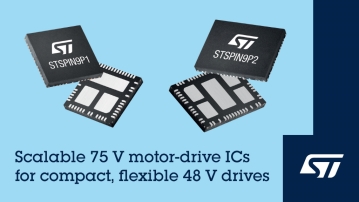
ST Launches 75V Drive IC Targeting 48V Industrial Motor Driving
ST마이크로일렉트로닉스가 48V급 산업용 구동 시스템 설계에 맞춘 75V 모터 드라이브 IC ‘STSPIN9P’ 시리즈를 공개했다. 새 제품군은 하프 브리지와 풀 브리지 구조로 구성돼 모터 종류와 출력 조건에 따라 설계를 확장할 수 있도록 한 것이 특징이다. 전원 회로와 보호 기능, 전류 감지 회로를 칩에 통합해 시스템 구성을 단순화했으며, 최대 500W급 애플리케이션까지 대응하도록 설계됐다. 회사는 레퍼런스 디자인과 데모 보드도 함께 제공해 산업 자동화, 로보틱스, 펌프, 팬, 조명, 섬유 기계 등에서 개발과 평가를 지원할 계획이다.
2026.03.26by 배종인 기자

Nordic supports security updates for the entire lifecycle of IoT devices at a single fixed cost
Nordic Semiconductor, a global leader in low-power wireless connectivity solutions, has unveiled a single fixed-cost licensing model that delivers FOTA (Firmware Over-the-Air) and device management capabilities throughout the device lifecycle via nRF Cloud, and introduced a new firmware update solution to prepare for the enforcement of the European Union's Cyber Resilience Act (CRA).
2026.03.26by 배종인 기자

Practical Training in Low-Noise, Low-Power Circuit Design All in One Place… Training Fee Support
고감도 아날로그 회로와 센서 기반 시스템 설계 역량을 강화할 수 있는 ‘2026 고급 엔지니어 실무 마스터 클래스’가 오는 4월16일 서울 가산동 e4ds 컨퍼런스 센터에서 열린다. 이번 과정은 온라인이 아닌 오프라인 유료 실습 교육으로 진행되며, 현장 중심의 심화 학습을 원하는 엔지니어를 대상으로 한다. 이번 교육은 텍사스 인스트루먼트(Texas Instruments)가 교육비를 지원해 정가 25만원에서 10만원 할인 된 15만원에 참가할 수 있다.
2026.03.26by 배종인 기자











