



Samsung Electronics Establishes Fine Dust Research Institute to Address Deepening Fine Dust Problem
 Published2019.01.04 13:46
Researching Fine Dust Problems and Finding Solutions
As South Korea's fine dust standards have risen to advanced country levels and awareness of environmental and safety issues has expanded, fine dust problems are emerging as a social issue.
In particular, ultrafine dust with particle sizes of 2.5㎛ or less is not filtered in the respiratory system and can travel to the lungs, penetrating blood vessels and cells, making its hazards severe. However, scientific clarification of causes and solutions remain insufficient.

Fine dust problems are a social challenge directly linked to national health
The key to solving this problem is the input of innovative research capabilities from companies based on a proactive and long-term perspective.
On the 4th, Samsung Electronics established a Fine Dust Research Institute to research fundamental technologies for addressing fine dust problems.
The Fine Dust Research Institute will be established within Samsung Electronics' Advanced Institute of Technology, and Hwang Sung-woo, Vice President of the Advanced Institute of Technology, has been appointed as the institute director.
Samsung Electronics has decided to comprehensively research fine dust problems and find technical solutions through the Fine Dust Research Institute.
The Fine Dust Research Institute plans to secure necessary technologies and solutions for solving fine dust problems by understanding the entire cycle from the generation causes of fine dust through measurement and analysis to collection and decomposition, and by exploring technical solutions step by step.
Based on technologies possessed by the Advanced Institute of Technology, the Fine Dust Research Institute will develop low-cost, high-precision, and ultra-miniature sensor technologies that serve as the foundation for fine dust research, as well as research new technologies applicable to products such as filter technology and decomposition technology through innovative materials.
External capabilities will also be actively utilized. Samsung Electronics plans to conduct systematic clarification of fine dust causes and in-depth research on hazards through the Advanced Institute of Technology's Open Innovation program, which collaborates with leading domestic and international experts from various fields including chemistry, physics, biology, and medicine.
Hwang Sung-woo, Vice President of Samsung Electronics' Advanced Institute of Technology, said, "We hope that the establishment of this Fine Dust Research Institute will contribute to concentrating social capabilities to address fine dust problems."
Related news
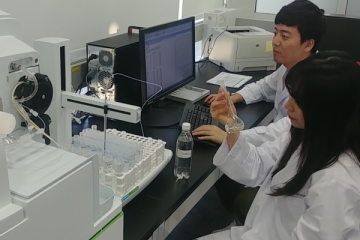
UK Environment Agency Gives Highest Rating to LG Electronics Water Science Research Institute's Water Analysis Capabilities
LG Electronics' Water Science Research Institute achieved the highest score in a food analysis proficiency evaluation conducted by the UK Department for Environment, Food and Rural Affairs. The analysis error value from the Water Science Research Institute's results was 0.0, receiving recognition for its analytical capabilities and reliability. The Water Science Research Institute, which LG Electronics opened in Changwon, South Gyeongsang Province earlier this year, is a facility dedicated to researching next-generation core technologies for Puricare water purifiers.
2018.10.29by 이수민 기자

Samsung Electronics Unveils Remote Access Function for Remotely Connecting TVs and Peripherals
Samsung Electronics will showcase a remote access feature at CES 2019. The newly introduced remote access function enables wireless connection of PCs, smartphones, tablets, and other devices located at remote or close distances to a TV, allowing users to control programs and apps installed on each device from the TV's large screen.
2018.12.31by 이수민 기자
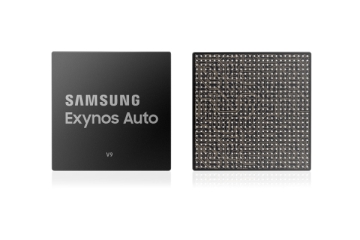
Samsung Electronics Starts Launch of Automotive Semiconductors
Samsung Electronics will supply Audi with the automotive semiconductor "Exynos Auto V9" for next-generation infotainment systems in 2021. The Exynos Auto V9 is a high-performance, low-power processor for premium infotainment systems that Samsung Electronics is introducing for the first time since unveiling the "Exynos Auto" automotive semiconductor brand in October 2018.
2019.01.03by 이수민 기자
Nvidia invests $5 billion in Intel
NVIDIA and Intel, leaders in global AI computing technology, are now forging ahead in providing cutting-edge solutions through NVLink-based architecture integration. NVIDIA and Intel have officially announced a strategic partnership and stated that they will jointly develop customized data center and personal computing products to accelerate diverse applications and workloads ranging from hyperscale to enterprise and consumer markets, thereby laying the foundation for the next generation computing era.
2025.09.22by 배종인 기자
.jpg)
Applied Materials Launches Environmental Protection Campaign to Mark World Cleanup Day
Applied Materials Korea (CEO Park Kwang-seon) is carrying out environmental cleanup activities with employees and their families around the Dongtan Sinricheon area on the occasion of World Cleanup Day, evolving into a company that engages with the local community beyond technological innovation.
2025.09.22by 명세환 기자











