



Samsung Electronics Successfully Develops Next-Generation RFIC and DAFE Chips for 5G Base Stations
 Published2019.02.23 09:02
Samsung DAFE reduces base station power consumption by approximately 25%.
Accelerating the miniaturization and lightweighting of base stations will increase 5G deployment.
Samsung Electronics has successfully developed a wireless communication core chip (RFIC) for next-generation 5G mmWave base stations that significantly enhances wireless communication performance.
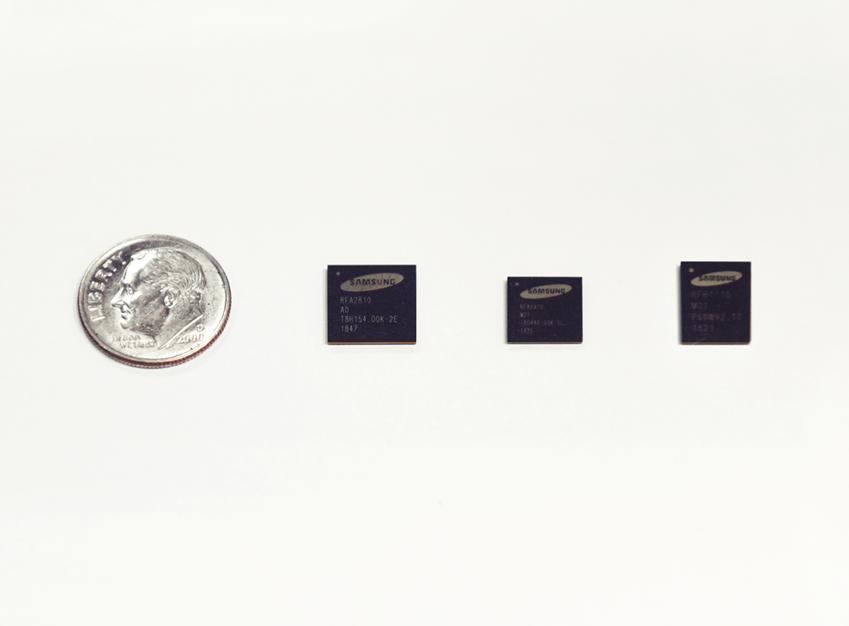
Samsung Electronics' next-generation 5G RFIC chipset
The next-generation wireless communication core chip significantly improves supported frequencies and communication performance, while still maintaining industry-leading low-power performance. In 2017, Samsung Electronics developed a first-generation wireless communication core chip with industry-leading low-power performance.
The next-generation wireless communication core chip has expanded the signal bandwidth by 75% from the existing 800㎒ to 1.4㎓, and has improved noise and linearity characteristics to enhance transmission and reception sensitivity, thereby expanding the maximum data transmission rate and service coverage.
The size has also been reduced by approximately 36% compared to the previous model, and the low-power function and minimization of heat dissipation structures can further miniaturize 5G base stations.
This next-generation wireless communication core chip can support 28 GHz and 39 GHz, which will further enhance the competitiveness of 5G products in countries such as the US and Korea, which have selected this band as the 5G commercial frequency band.
Samsung Electronics plans to mass-produce next-generation wireless communication core chips starting in the second quarter of this year, and will additionally develop chips for the 24 GHz and 47 GHz frequencies, which are scheduled for additional allocation in Europe and the United States, within the year.
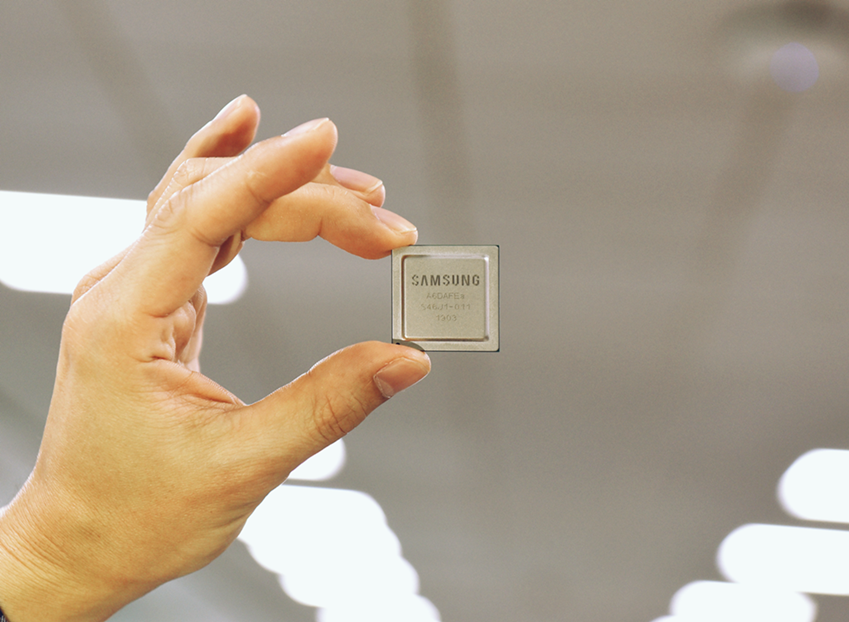
Samsung Electronics' 5G DAFE chip
Samsung Electronics also succeeded in developing its own digital-to-analog conversion chip (DAFE).
The digital-to-analog conversion chip is a chip that converts digital and analog signals for 5G ultra-wide bandwidth communications. When applied to 5G base stations, it can reduce the size, weight, and power consumption of the product by approximately 25%.
The miniaturization and lightweighting of base stations will reduce network investment and operating costs for telecommunications carriers, enabling them to provide 5G services more quickly in more areas.
samsung“Samsung Electronics is leading the commercialization of 5G in Korea and the United States, and has supplied more than 36,000 5G base stations to key domestic and foreign operators to date,” said Jeon Kyung-hoon, Executive Vice President and Head of the Electronics Network Business Division. “As a leader in the 5G market, we will accelerate the spread of ultra-high-speed, ultra-low-latency, and hyper-connected infrastructure through continuous differentiation of 5G technology, and open the era of the Fourth Industrial Revolution, bringing about new changes to individuals’ lives and industries.”
관련뉴스
Samsung Electronics Debuts Built-in Appliances and Home IoT Solutions Targeting Millennials in North America
삼성전자와 데이코가 19일부터 21일까지 미국 라스베이거스에서 열리는 KBIS 2019에 참가해 혁신 기술과 디자인이 접목된 프리미엄 빌트인 가전 라인업을 대거 공개한다. 개막 하루 전, 삼성전자는 별도 전시관을 마련하여 테크놀로지 쇼케이스를 공개했다. 새로운 라이프스타일을 반영한 차세대 혁신 가전, 최첨단 AI 기술을 집약한 가정용 로봇 등으로 구성된 특별 전시관에서 삼성전자는 미래 AI홈의 비전을 제시했다.
2019.02.18by 이수민 기자
Samsung Electronics to Launch 'Galaxy Fold' in April, "Minimum 2.22 Million Won"
Samsung Electronics unveiled the Galaxy Fold at Samsung Galaxy Unpacked 2019, held in San Francisco, USA. The Galaxy Fold is the world's first smartphone equipped with a 7.3-inch Infinity Flex Display. When folded, it can be used as a compact smartphone with a 4.6-inch cover display. It is characterized by the ability to split the screen for use and simultaneously run multiple applications, offering unprecedented powerful multitasking that presents new mobile experiences and possibilities.
2019.02.21by 이수민 기자
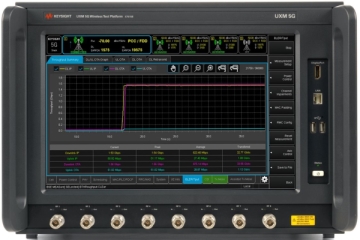
키사이트, 삼성전자와 최신 3GPP 5G NR 상호운영성 테스트 성공
키사이트 테크놀로지스가 키사이트 UXM 5G 무선 테스트 플랫폼과 삼성전자 5G 엑시노스 모뎀 5100을 기반으로 키사이트 5G NR 네트워크 에뮬레이션 솔루션을 사용해 최대 5G NR 데이터 스루풋을 시연했다. 양사의 협업으로 이뤄낸 이번 성과는 5G 초광대역 무선통신 애플리케이션의 가속화를 지원하는 이정표가 되었으며, 3GPP 5G NR 릴리스 15 사양을 기반으로 한 풀 스택 상호운용성 테스트를 성공적으로 이끈 솔루션으로 평가된다. 이번 시연에서는 256QAM 및 4x4 MIMO 기술을 활용한 최대 데이터 스루풋을 검증했다.
2019.02.22by 이수민 기자

Intel Unveils Next-Generation 'Core Ultra Series 3' and vPro Platform for Enterprise PCs
인텔이 차세대 기업용 PC를 위한 ‘인텔 코어 Ultra 시리즈 3’와 최신 vPro 플랫폼을 공식 발표하며, 기업용 노트북부터 고성능 워크스테이션까지 폭넓은 수요 충족에 나섰다.
2026.03.26by 배종인 기자

ROHM Launches ESD Protection Diode Compatible with High-Speed Interfaces of 10Gbps or Higher
반도체 전문 기업 로옴(ROHM)이 10Gbps를 넘어서는 차세대 고속 데이터 통신 환경에 대응할 수 있는 ESD(정전기 방전) 보호 다이오드 ‘RESDxVx 시리즈’를 개발하며, 고속 인터페이스에서 요구되는 신호 품질 유지와 IC 보호 성능을 동시에 끌어올렸다.
2026.03.26by 배종인 기자











