


The Ministry of Science and ICT (MSIT) announced the launch of its ICT Standard Insights program, promising to revitalize regional economies by expanding ICT standards.
 Published2019.03.13 16:41
| Following the example of the Netherlands and Ireland
| Held first in Naju, Jeonju, Busan, and Seoul
ICT convergence leads to increased productivity in traditional industries.

Ministry of Science and ICT
The Ministry of Science and ICT announced on the 13th that starting this year, it will provide the ICT Standard Insight (ISI) program to local businesses and university students to support the revitalization of the local economy.
The Ministry of Science and ICT planned the ISI, which educates the nation's top experts on core ICT technologies and convergence cases, such as AI, ICBM (IoT, cloud, big data, and mobile), with the aim of spreading ICT standard technologies centered on regional hubs, together with the Korea Information and Communications Technology Association, a domestic ICT standards organization.
The Telecommunications Technology Association (TTA) of Korea plans to hold ISIs in Naju (Energy IoT), Jeonju (Smart Farm), Busan (Autonomous Ship), and Seoul (Software Convergence) in consultation with local organizations, and will expand nationwide by accepting applications from additional regions in the future.
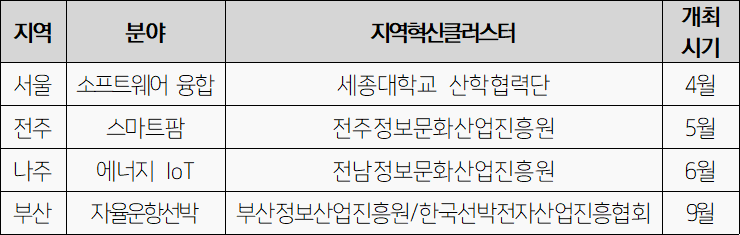 <br /> 19th ISI hosting plan
Each region in the country is striving to revitalize the local economy by integrating local industries and ICT that can take advantage of regional characteristics, thereby increasing income and creating jobs.
In order to integrate ICT into traditional industries such as energy, agriculture, and shipping, a sufficient understanding of core ICT technologies, such as AI, is necessary. However, the reality is that this is facing difficulties due to a lack of technical experts and regional information gaps.
The Ministry of Science and ICT plans to support the development of specialized industries in each region by supporting the commercialization of regionally specialized technologies and the training of local talents, together with the country's top experts with extensive experience in ICT standards and technology commercialization.
We will be able to contribute to the revitalization of local industries through specialized support, such as customized ICT standard technologies tailored to each region's needs, courses for businesses on successful ICT convergence, and ICT standardization training for local university students.
Countries like the Netherlands and Ireland are also striving to advance the industrial structure of their entire nation, including overcoming the limitations of traditional industries and innovating local industries through the integration of ICT to create new added value.
In the Netherlands, the 'Precision Farming' project, launched in 2010, has achieved innovations in agricultural productivity, including reduced energy consumption and improved quality, by utilizing ICT such as GPS and IoT sensor technology in crop management.
Ireland is pursuing an innovative plan to prevent water waste and increase agricultural productivity by building an intelligent irrigation system called 'Waterbee' based on ICT technology to address the problem that 60% of the water resources used for crop cultivation are wasted each year due to inefficient irrigation systems.
Yong Hong-taek, Director General of Information and Communication Industry Policy at the Ministry of Science and ICT, said, “The core of the 4th Industrial Revolution is He said, “We will support companies and students in each region of the country to receive high-level ICT standard technology education.”
관련뉴스
Ministry of Science and ICT Launches "Domestic Production" of Core Quantum Computing Technologies
Development of next-generation ICT core technologies, including quantum computing that leverages principles of quantum mechanics to achieve computational performance millions of times greater than conventional supercomputers, is entering full-scale implementation. The Ministry of Science and ICT has finalized the quantum computing technology development project promotion plan and the 2019 next-generation information computing technology development project promotion plan, and will proceed with full-scale project execution. Over the next five years, a total of 44.5 billion won will be invested in core source technology development such as quantum computer hardware and future promising fields including new quantum computing architecture, quantum algorithms, and foundational software, with 6 billion won to be allocated in 2019. Accordingly, by 2023, demonstration of a 5-qubit class quantum computing system with reliability of 90% or higher is planned.
2019.02.08by 이수민 기자
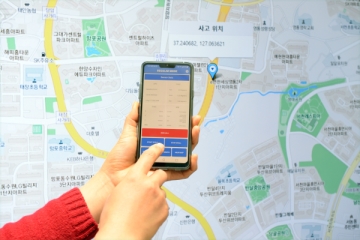
ETRI secures golden time in traffic accidents with automatic rescue request terminals.
The Electronics and Telecommunications Research Institute (ETRI) has developed seven types of e-Call terminals that support emergency rescue services as a result of a project funded by the Ministry of Science and ICT to establish standards for vehicle ICT-based emergency rescue systems and develop vehicle terminals. e-Call is a service that automatically transmits relevant information such as vehicle location to a control center when an in-vehicle device such as a black box, navigation system, or smartphone detects a traffic accident. Researchers expect that this terminal will help reduce mortality rates by securing the golden hour for critical patients faster than before, which is crucial in time-sensitive medical situations.
2019.02.21by 이수민 기자

The 2nd ICT Regulatory Sandbox Review Committee granted special treatment to four cases, stating, "If a law doesn't exist, we'll create one."
The Ministry of Science and ICT held the second New Technology and Service Review Committee to examine and designate ICT regulatory sandbox projects. The review committee deliberated and resolved to grant demonstration exceptions and provisional permits for a total of four cases: 'Mobile VR Experience Service Truck,' 'Mobile-based End-of-Life Vehicle Quotation Comparison Service,' 'Smart Electric Vehicle Charging Outlet,' and 'Personal Life-Saving Maritime Distress Signaling Device.' The Ministry of Science and ICT plans to hold the third New Technology and Service Review Committee in April to deliberate and resolve additional regulatory sandbox agenda items.
2019.03.07by 이수민 기자
Nvidia invests $5 billion in Intel
NVIDIA and Intel, leaders in global AI computing technology, are now forging ahead in providing cutting-edge solutions through NVLink-based architecture integration. NVIDIA and Intel have officially announced a strategic partnership and stated that they will jointly develop customized data center and personal computing products to accelerate diverse applications and workloads ranging from hyperscale to enterprise and consumer markets, thereby laying the foundation for the next generation computing era.
2025.09.22by 배종인 기자
.jpg)
Applied Materials Launches Environmental Protection Campaign to Mark World Cleanup Day
Applied Materials Korea (CEO Park Kwang-seon) is carrying out environmental cleanup activities with employees and their families around the Dongtan Sinricheon area on the occasion of World Cleanup Day, evolving into a company that engages with the local community beyond technological innovation.
2025.09.22by 명세환 기자











