



97% of companies don't make data-driven decisions.
 Published2019.11.13 16:05
While 94% of organizations believe data and analytics are critical to digital transformation and business growth, 97% of real-time decisions are not data-driven.
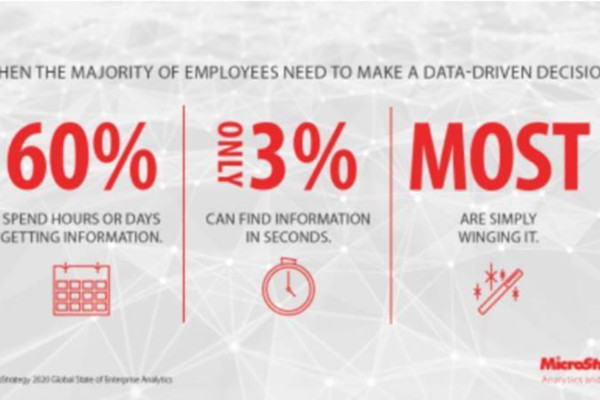
MicroStrategy Korea (MSTR), an enterprise analytics and mobile software company, announced the '2020 Global State of Enterprise Analytics' report, commissioned by market research firm Hall & Partners, on the 9th.
According to the report, despite 94% of organizations believing that data and analytics are critical to digital transformation and business growth, most organizations are not building a data-driven culture.
Frontline workers are less data-savvy than executives and management, and have significantly less access to data and analytics. The gap between data empowerment and data deprivation is most pronounced in the financial services industry, where only 11% of frontline employees have access to analytics reports.
60% of employees said it took them hours or days to get the information they needed, while only 3% could find it in seconds.
When employees who aren't analytically adept need to make data-driven decisions, 79% have to ask IT or business analysts for help, and only 7% have access to self-service tools.
Investment in analytics initiatives, including talent and technology analytics, is on the rise, with 75% of large enterprises and 59% of small and midsize enterprises (with 1,000 or fewer employees) saying they will invest more in talent, while 79% of large enterprises and 60% of small and midsize enterprises saying they will invest more in technology.
“We were surprised by how much of the workforce still has a rudimentary approach to data-driven decision-making,” said Marge Breya, senior vice president and chief marketing officer at MicroStrategy. “With self-service analytics adoption at around 30%, companies need to empower their entire workforce to gain timely insights.”
He added, “With 65% of organizations planning to increase their analytics investments in the next year, we encourage companies to focus their investments on building an insights-first culture that rewards data-driven decision-making and continuous innovation—the essential foundation of an Intelligent Enterprise™.”
Meanwhile, respondents who said they were leveraging data and analytics reported benefits such as increased efficiency and productivity, faster and more effective decision-making, and better financial performance. The retail and healthcare industries are leading the way by using analytics to develop new products and understand revenue streams.
Meanwhile, this survey was conducted on 500 business intelligence and analytics professionals from Brazil, Germany, Japan, the UK, and the US across 10 industry sectors (financial services, government, healthcare, hotels, manufacturing, retail, software technology, professional services, telecommunications, and others) with annual sales of over $100 million in the second quarter of 2019.
관련뉴스
Schneider Electric Opens Remote Security Monitoring Center
슈나이더 일렉트릭이 서울에 원격 사이버 보안 모니터링 센터를 개소했다. 슈나이더 일렉트릭 원격 사이버 보안 모니터링 센터는 제어 네트워크의 트래픽을 실시간 모니터링하여 인가되지 않은 장비의 접속 및 악성코드의 침입, 비정상 활동이 감지될 때마다 고객에게 알림 메시지를 전송한다. 사이버 보안 전문팀에서는 다양한 고객 경험과 데이터 분석을 통해 사이버 보안 대응에 관련한 정기 보고서를 제공한다. 해당 보고서에는 고객사의 사이버 보안 환경을 향상시킬 수 있는 관련 정보와 권고사항이 포함된다.
2019.11.04by 이수민 기자
ADI's mSure Technology Adopted in Elgama Electricity Meter Design
ADI의 mSure 진단 기술은 다양한 유형의 전력량계 조작 수법들을 탐지할 수 있다. 리투아니아의 엘가마는 자사의 전력량계 설계에 mSure 기술을 적용한 새 전력량계를 2020년 말까지 출시한다고 밝혔다. 분석 서비스와 mSure를 연동하면 계량기 정확도를 직접 모니터링하여 개별 계량기 상태에 대한 데이터를 다시 보고한다. 따라서 오작동하는 계량기와 더 많은 불법 조작 사례들을 밝혀내는 데 도움이 된다. mSure를 탑재한 계량기들이 생성한 미가공 데이터는 클라우드 기반 분석 서비스에 전달 및 처리되므로 전력회사들은 원하는 시간 간격으로 전체 계량기 작업자들에게 보고서를 전송할 수 있다.
2019.11.08by 이수민 기자
Ecolab and K-water Discuss Innovation Collaboration in Advanced Industry Water Management
Ecolab and the Korea Water Resources Corporation jointly discussed cooperation directions for maximizing water use efficiency in advanced industries such as semiconductors and data centers and establishing sustainable water circulation. The two companies agreed to gradually develop a long-term cooperation model that combines water resource infrastructure and water management technology to promote water efficiency optimization, water reuse, and carbon reduction.
2026.08.28by 명세환 기자
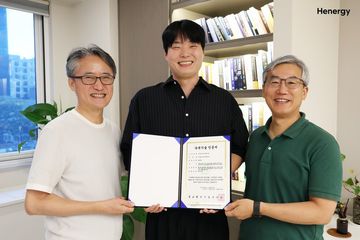
에이치에너지, 녹색기술인증 획득…솔라온케어 가동률 99.82%
에이지에너지가 태양광 발전예측 및 I-V커브 이상진단 기술로 중소벤처기업부 녹색기술인증을 획득했다. AI 기반 자산관리 플랫폼 솔라온케어는 전국 3,000개 이상 발전소에 적용되어 99.82%의 시스템 가동률과 3.7% 발전성능 개선을 달성했다. 실시간 데이터 분석을 통해 모듈 노화와 부분 음영 등 미세한 손실을 조기에 감지하고 관리함으로써 발전 수익을 보호한다.
2026.08.25by 명세환 기자
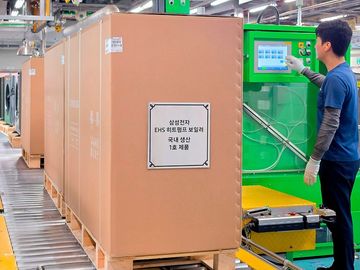
삼성전자, EHS 히트펌프 보일러 광주서 국내 생산…연 10만 대 규모
삼성전자가 난방 전기화 추진에 맞춰 광주사업장에서 EHS 히트펌프 보일러 국내 생산 체제를 구축한다. 2,132㎡ 규모 전용라인에서 이달 시험생산을 시작해 9월 말 본격 양산에 돌입할 예정이며, 연간 10만 대 이상 생산 능력을 갖춘다. 투입 전력 대비 약 5배 열을 생성하는 이 제품은 계절성능계수 4.9를 기록하며 화석연료 기반 보일러 대비 에너지 효율이 높고 탄소 배출을 줄인다.
2026.08.24by 명세환 기자











