

.png)

[Technical Analysis] 15W-class Wireless Power Transmission Technology for IIoT Exemplified by Taiwan-based KNOWMAX
 Published2019.11.25 16:09
Chris Clearman, WW Motor Control Solutions Manager

Wireless power transfer (WPT) generally refers to technology that transmits power without wires to recharge batteries.
Although Nikola Tesla first proposed the concept of WPT and foreshadowed the era of wireless communication, it was only in recent times with the smartphone era that this function of charging batteries without physical connections has been widely adopted.
Wireless power transfer technology is rapidly being adopted across diverse fields including industrial, medical, consumer, and automotive applications.
In particular, as application autonomy increases, the advantages of convenience and robustness offered by wireless charging have become more prominent. Since no plugs or special connectors are required and there are no contact points susceptible to failure, products can be completely sealed, offering environmental advantages. As applications dependent on mobility increase, WPT technology continues to expand.
KNOWMAX, a Taiwan-based wireless power solution specialist, uses TI's C2000 real-time microcontroller (MCU), Piccolo™ F2803x, along with its own proprietary technology to provide customized software, firmware, and hardware solutions to customers. These solutions are primarily integrated into end applications such as transmitters for large charging stations in power banks and receivers inside tablets.
At higher power levels, wireless power solutions are expected to be used in robots, industrial utilities, warehouse vehicles, electric vehicles, large vehicles, and construction vehicles. As Industrial Internet of Things (IIoT) continues to develop and grow, increasing numbers of devices will integrate wireless power functionality.
According to IHS Insights, the IoT environment is expected to comprise approximately 75 billion connected objects by 2025.
From simple low-power inductive types used in personal electronic devices to complex high-power resonant types for dynamic and autonomous applications, WPT systems, driven by the vision to make battery-powered applications easier and more robust, are expected to proliferate more broadly.
In high-power applications where efficiency is more critical, the C2000 MCU provides differentiated capabilities for enterprises like KNOWMAX in signal sensing, processing, flexible high-resolution PWM control, and system protection mechanisms for high-frequency inverters.
While opportunities for developers worldwide to develop WPT applications remain limited, the IIoT field is expected to continue experiencing unprecedented exponential growth, heralding the advent of a wireless era.
Tank Huang of KNOWMAX Technology stated, "TI's C2000 MCU provides the flexibility required to implement systems that meet various market demands, as well as high-resolution pulse width modulation (PWM) capable of precisely controlling power stages," and added, "We are making large-scale software investments in devices including proprietary technology for WPT."
KNOWMAX Technology is a company focused on 15W wireless power solutions, having invested substantial research and development in developing its proprietary 15W solution.
While low-cost 5-10W wireless power products are widely available in the market, there are very few products that can actually support both 15W wireless power transmission technology such as the C2000 MCU and 15W wireless power receivers.
KNOWMAX also provides technology to integrate solutions with the receiver's battery, enabling customers to allocate more time to enhancing their own products, and technology that allows easier integration of additional functionality when using KNOWMAX products compared to fixed-function modules.
Assuming a KNOWMAX customer manufactures a 150W charging station capable of simultaneously charging up to 10 devices, KNOWMAX develops customized solutions through close cooperation with customers and provides support to pass FCC (Federal Communications Commission) and UL (Underwriters Laboratories) certifications.
Related news
"Wireless charging from smartphones to electric vehicles" A look at the present and future of wireless power transmission technology
There is a place that helps companies develop wireless charging products. It is the Wireless Power Transfer Technology Center. The Wireless Power Transfer Technology Center was established in May 2018 as part of the Industry Convergence Foundation Building Project, a national strategic initiative. The center is Korea's only specialized technical center for wireless power transfer, conducting testing, research, and business support related to wireless power transfer, which is a foundational technology for the Fourth Industrial Revolution. The center supports the revitalization of Korea's wireless power transfer industry and helps companies acquire global competitiveness by providing support in core technology development, global certification testing services, pre-testing, and resolution of technical challenges.
2019.02.20by 이수민 기자

The Era of 15W Wireless Charging Is Just Around the Corner: How to Meet WPT Requirements?
Wireless Power Transfer (WPT) generally refers to technology that transmits power without wires to recharge batteries. WPT technology is being rapidly adopted across various industrial, medical, consumer, and automotive applications. In particular, as application autonomy increases, the advantages of wireless charging in terms of convenience and robustness become more significant in applications that depend on mobility. TI's C2000 MCU provides not only the flexibility required to adapt systems to diverse markets, but also high-resolution PWM capable of precisely controlling power stages.
2019.10.29by 이수민 기자
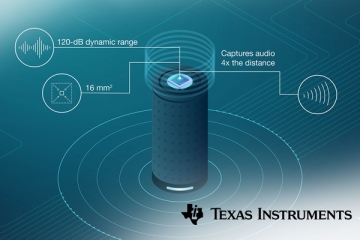
TI Launches Audio ADC Capturing Voice from 10m Away
Smart home system developers require far-field voice capture performance to implement voice command functionality. However, until now, it has been challenging to capture voice commands in noisy environments due to limited microphone sensor numbers and signal processing capabilities. In response, TI Korea has introduced the TLV320ADC5140, a 4-channel audio ADC with enhanced far-field voice capture performance, to the Korean market. As part of TI's Burr-Brown audio ADC product line, the TLV320ADC5140 enhances far-field voice capture capability for applications such as high-end speakers, soundbars, wireless speakers, high-definition TVs, IP cameras, video conferencing systems, and smart appliances up to a radius of 10 meters.
2019.11.19by 이수민 기자
Intel Unveils Next-Generation 'Core Ultra Series 3' and vPro Platform for Enterprise PCs
Intel has officially unveiled the "Intel Core Ultra Series 3" for next-generation enterprise PCs and the latest vPro platform, addressing a wide range of demands from enterprise notebooks to high-performance workstations.
2026.03.26by 배종인 기자
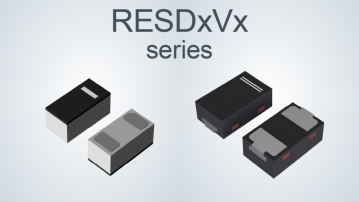
ROHM Launches ESD Protection Diode Compatible with High-Speed Interfaces of 10Gbps or Higher
Semiconductor specialist ROHM has developed the 'RESDxVx series' of ESD (electrostatic discharge) protection diodes capable of responding to next-generation high-speed data communication environments exceeding 10Gbps, simultaneously enhancing both signal quality maintenance required in high-speed interfaces and IC protection performance.
2026.03.26by 배종인 기자











