
 해리스 vs 트럼프, 반도체 업계 대선 결과 예의주시
 기사입력2024.09.24 12:09
반도체 산업이 AI 시대 패권을 차지하기 위한 핵심 국가 경쟁력으로 떠오른 가운데, 11월 미국 대선 향방에 반도체 업계가 예의주시하고 있다. 향후 대선 결과에 따른 전개 시나리오를 예상하고 대비책을 논의하는 자리가 마련돼 업계 관계자들이 한자리에 모였다.

댓글
관련 뉴스
"A Breakthrough Device in the Sensor Industry Is Inevitable"
With the development of AI, robotics, and IoT, devices are becoming intelligent, and the importance of sensors for data collection is increasing. Meanwhile, it is analyzed that for the sensor industry, which has a low share in the semiconductor sector, the emergence of breakthrough devices utilizing sensors is necessary for growth.
2024.07.16by 배종인 기자
'Power Efficiency' is Key to AI Infrastructure... Red Light on Korean Semiconductor's 'Green Energy' Self-Sufficiency
The surge in AI infrastructure expansion triggered by generative AI is driving heightened demand for GPUs, AI accelerators, high-capacity SSDs, and HBM. As AI servers with high computational loads and substantial power consumption are rapidly proliferating, there is mounting pressure to reduce data center operational costs and fulfill RE100 commitments, leading to increased interest in low-power and green energy-based semiconductors. Recent trends show that the industry is responding earnestly to power efficiency challenges, with efforts increasingly focused on exploring server-side AI model optimization and lightweight solutions.
2024.07.26by 권신혁 기자
Limitations of Korean Fabless Sector… “Bold Government Investment Urgently Needed”
The domestic market for system semiconductors, which is drawing attention as a future growth engine, is facing a challenging environment for development. As the growth momentum of small and medium-sized fabless companies is being hindered, concerns are growing that the entire domestic semiconductor industry could face a crisis, and bold government investment is being called for.
2024.07.30by 김예지 기자
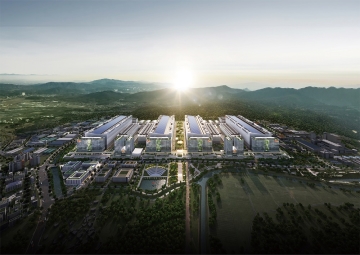
Industry is necessary for cities to survive...Semiconductor-region joint growth role model
Youth population outflow and national population decline have made the crisis of regional extinction a reality. Even Busan, Korea's second-largest city, is experiencing a decline in its young population due to outmigration, earning it the epithet of "old age and the sea," and in this context, regional industries have been shown to have significant impacts on regional growth, suppression of population outflow, and population inflow. In particular, in regions where the semiconductor industry is located, positive factors such as increased population inflow, employment creation effects, increased tax revenue, and policy support have promoted urban growth. The cases of Japan's Kyushu, which is becoming a semiconductor hub, and Korea's regions such as Yongin-Hwaseong-Pyeongtaek, known as the Korean Silicon Valley, have established themselves as representative examples of semiconductor-driven regional growth.
2024.08.06by 권신혁 기자

No sense of recovery of R&D budget in 2025...Neglect of radio and basic technology
The government has confirmed the 2025 major R&D budget at 24.8 trillion won, announcing it as the largest ever, while the increased R&D allocation is concentrating on AI, semiconductors, advanced robotics, quantum, and manufacturing—referred to as next-generation growth engines—resulting in a narrowed position for foundational technologies such as radio frequency.
2024.08.12by 권신혁 기자