



Young people in emerging markets are driving the global spread of AI.
 Published2025.12.05 13:37
Young people in emerging countries such as India, Brazil, Mexico, and South Africa are driving the global spread of AI.
The 'Digital Well-being Hub', jointly established by Cisco and the Organisation for Economic Co-operation and Development (OECD), has announced the results of its latest research.
This report identified stark regional and generational gaps in the use of generative AI and digital well-being, highlighting the need for a balanced approach.
Research shows that young people in emerging countries like India, Brazil, Mexico, and South Africa are driving the global spread of AI, ranking among the world's highest in nearly every indicator, including AI usage, trust, and educational engagement. Those under 35 also showed the highest participation rate not only in social media and online devices, but also in generative AI.
In contrast, respondents from European countries reported lower levels of trust and greater uncertainty and concern about the use of AI. This is a marked difference from the past trend in which emerging countries were slower to adopt technology compared to developed countries.
Studies have shown that leisure screen use exceeding five hours per day is associated with decreased personal well-being and life satisfaction.
In particular, Korea was found to have the highest level of 'screen fatigue' in the world.
Young people in emerging markets report spending the most time on screens during leisure time, relying on digital channels for social interaction, and experiencing extreme emotional ups and downs due to technology use.
Generational differences were also evident. More than half of respondents under 35 are actively using AI, and more than 75% rated AI as useful.
Half of respondents aged 26 to 35 have already completed AI-related training.
Conversely, the middle-aged and older age group over 45 years old had low levels of AI use and trust, and especially among those over 55 years old, many responded that they were “not sure if they trust AI.”
This is interpreted as uncertainty resulting from lack of technological familiarity and experience.
“Helping emerging markets build AI capabilities is not simply about disseminating technology, but about unlocking the potential for individuals to shape their own future,” said Guy Diedrich, senior vice president and global innovation officer at Cisco. “AI must be designed responsibly, with transparency, fairness, and privacy as core values.”
He added, “AI can contribute most to improving well-being when it improves work efficiency, improves collaboration, and provides learning opportunities.”
Cisco has completed AI training for approximately 26,000 employees to date, and as a founding member of the AI Workforce Consortium, which includes 10 leading global companies, Cisco is committed to fostering AI talent across the ICT industry.
This joint OECD-Cisco study presents challenges to citizens, businesses, and government leaders around the world: closing the digital skills gap, strengthening digital literacy across all age groups, and prioritizing digital well-being. It delivers the message that when technological innovation is combined with efforts to protect individual health and well-being, the digital future can truly be a future for all.

관련뉴스
.jpg)
Cisco Expands Partnership with Nvidia to Accelerate Adoption of Enterprise AI
시스코가 25일 엔비디아와 파트너십을 확대해 기업에 AI 기술 솔루션을 제공한다고 밝혔다. 양사는 AI 데이터센터 구축을 간소화하는 통합 아키텍처를 제공하는 데 초점을 맞췄다.
2025.02.26by 명세환 기자

AMD, Cisco, Nokia Strengthen Collaboration in India...Build Open Telecom AI Platform
지오 플랫폼이 AMD, 시스코, 노키아와 함께 모바일 월드 콩그레스 2025에서 오픈 텔레콤 AI 플랫폼 구축 계획을 3일 발표했다. AI 기반 솔루션으로 통신사와 서비스 제공업체의 효율성, 보안, 수익 창출 지원을 목표로 한다.
2025.03.04by 권신혁 기자
.jpg)
Sensestone Recognized for PLC Security Innovation
Senstone, a domestic authentication and security specialist company (CEO Yoo Chang-hoon), and its global headquarters swIDch (London, UK) received the 'Global InfoSec Awards' at the RSA Conference 2025 (RSAC 2025) held in San Francisco, USA. Senstone was selected as a Hot Company in PLC Security and received recognition for innovation and leadership in the global market.
2025.04.30by 배종인 기자
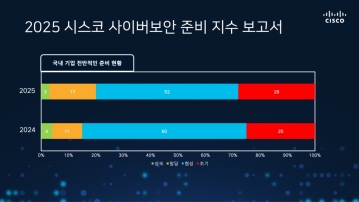
“Korea’s cybersecurity readiness is still low”
시스코(Cisco)가 최근 발표한 2025년 사이버보안 준비 지수(Cybersecurity Readiness Index)에 따르면 한국 기업의 사이버보안 대비 수준이 여전히 낮으며, AI 기술 발전이 새로운 보안 위협을 초래하고 있는 것으로 나타났다.
2025.05.09by 배종인 기자
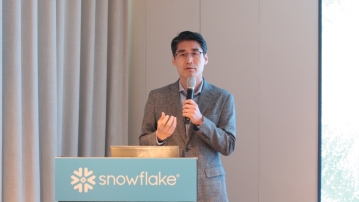
“Empowering all organizations to easily combine data and AI to create business value”
글로벌 AI 데이터 클라우드 기업 스노우플레이크(Snowflake)가 기자 간담회를 개최하고, 지난 2∼5일 미국 샌프란시스코에서 열린 ‘스노우플레이크 서밋(Snowflake Summit) 2025’에서 발표된 내용을 공유했다. 스노우플레이크는 이번 스노우플레이크 서밋 2025의 핵심은 기업 고객의 니즈에 대응한 전략적 기능 확장이라며, 먼저 데이터 아키텍처의 효율성을 강화해 투자 대비 수익(ROI)을 높이는 방향성이 제시됐다고 밝혔다.
2025.06.24by 배종인 기자











