



AI will spread to smartphones, robots, and wearables after 2028.
 Published2026.02.23 15:18
.jpg)
Lee Se-cheol, Executive Director of Citigroup
Post-processing technologies, such as hybrid bonding, are rapidly emerging as key competitive advantages.
With the advent of the artificial intelligence (AI) era, structural changes in the global semiconductor industry are accelerating.
At the Semicon Korea 2026 press conference held on February 11, Citigroup Managing Director Lee Se-cheol presented the "Semiconductor Market Outlook" and diagnosed that AI has become a key growth engine in the semiconductor market.
The executive director explained, “After PCs, the internet, and mobile devices, AI is now leading a new super cycle,” tracing the historical flow of the semiconductor industry.
The analysis is that while demand for semiconductors has steadily increased in the past era of PCs, the Internet, and mobile devices, the memory and computing structures themselves are fundamentally changing as parallel computing and large-scale data processing become essential in the AI era.
A particularly notable change is the reduction in the physical distance between memory and logic.
In the existing von Neumann architecture, the CPU and memory were separated to perform sequential operations, but in the AI environment, the GPU/TPU and memory are closely coupled to perform parallel operations, which is changing.
This has led to a surge in demand for HBM (High Bandwidth Memory).And, investment in AI infrastructure centered on servers is driving the memory market.
Citing the example of Nvidia's 'KV Cache (Key-Value Cache)' announced at CES, the executive explained that technology for improving AI model efficiency is actually explosively increasing memory demand.
KV cache is a technology to improve computational efficiency, but as large-scale AI models spread, memory usage is expanding beyond HBM to DDR, SSD, and even storage areas.
Amidst this trend, the semiconductor market is undergoing a computing paradigm shift that repeats 'concentration and dispersion.'
Computing, which has moved from mainframes to PCs and then to servers, is currently focused on AI servers, but in the medium to long term, it is expected to expand to edge devices such as on-device AI, physical AI, and personal AI.
“Once server-centric AI innovation reaches a certain level, AI will spread to smartphones, robots, and wearables after 2028,” the executive predicted.
In terms of technology, the importance of post-processing as well as pre-processing is being greatly emphasized.
High-value-added memory such as HBM is facing increasing costs due to increasing die sizes, and hybrid bonding, precision alignment, plasma activation, and inspection/measurement technologies are emerging as key competitive advantages to address this.
The explanation is that the boundaries between pre-process and post-process are collapsing, and an era has arrived in which collaboration between the two processes is essential.
“With the spread of AI, memory is no longer a simple commodity, but is evolving into a semi-custom product designed for specific purposes,” said Executive Director Lee.He emphasized, “The valuation method and industrial structure of the memory market will also change.”
The semiconductor paradigm shift triggered by AI is presenting both new opportunities and challenges to the Korean semiconductor industry. Technological innovation and strategic responses across the entire ecosystem to prepare for the AI era are more crucial than ever.

Comments
Related news
“Semiconductors to grow by double digits by 2025”
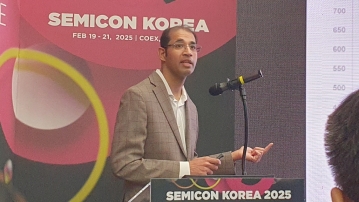
Gaurav Gupta, vice president of Gartner, stated at the Semicon Korea 2025 press briefing held on February 19th, "The semiconductor market in 2025 will achieve double-digit growth. Additionally, with the expansion of autonomous driving and electric vehicle markets, significant growth will be achieved over the next decade," indicating that the semiconductor industry will continue to grow.
2025.02.24by 명세환 기자
“Korean semiconductors to continue growth with increased investment in AI and HPC”
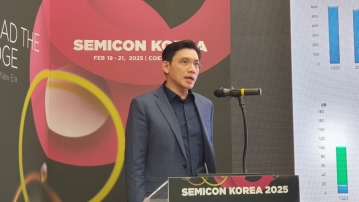
Clark Tseng, director at SEMI, forecast at a press briefing for Semicon Korea 2025 held on February 19th that Korea's semiconductor industry will continue to grow driven by AI and HPC demand.
2025.02.24by 배종인 기자
Applied Materials CEO Prabhu Raja: "Collaboration through EPIC Centers will double semiconductor innovation."
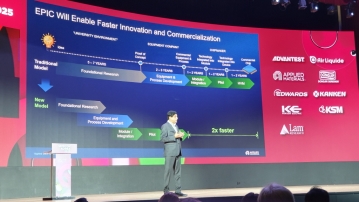
Prabu Raja, president of the Semiconductor Products Group at Applied Materials, delivered a keynote speech at Semicon Korea 2025 held on the 19th, presenting on the theme of "Accelerating Energy-Efficient Semiconductors through Collaborative Innovation."
2025.02.25by 배종인 기자
.jpg)
Applied Materials to Unveil Energy-Efficient AI Semiconductor Technology at SEMICON Korea 2026
Applied Materials Korea, a leader in advanced semiconductor and display materials engineering solutions worldwide, will participate in 'Semicon Korea 2026' held at Seoul COEX from February 11 to 13, and will unveil key technologies for energy-efficient AI computing.
2026.01.29by 배종인 기자
EVG Unveils Advanced Memory and Packaging Process Solutions at Semicon Korea 2026
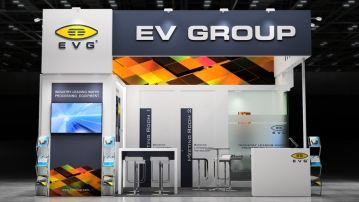
EV Group (EVG) will participate in 'Semicon Korea 2026' held at Seoul COEX from February 11 to 13, showcasing key process technologies for advanced memory semiconductors and next-generation packaging.
2026.02.10by 배종인 기자











