



Microchip Establishes Major Hydrogen Production Base in Alabama, U.S.
 Published2026.04.28 10:06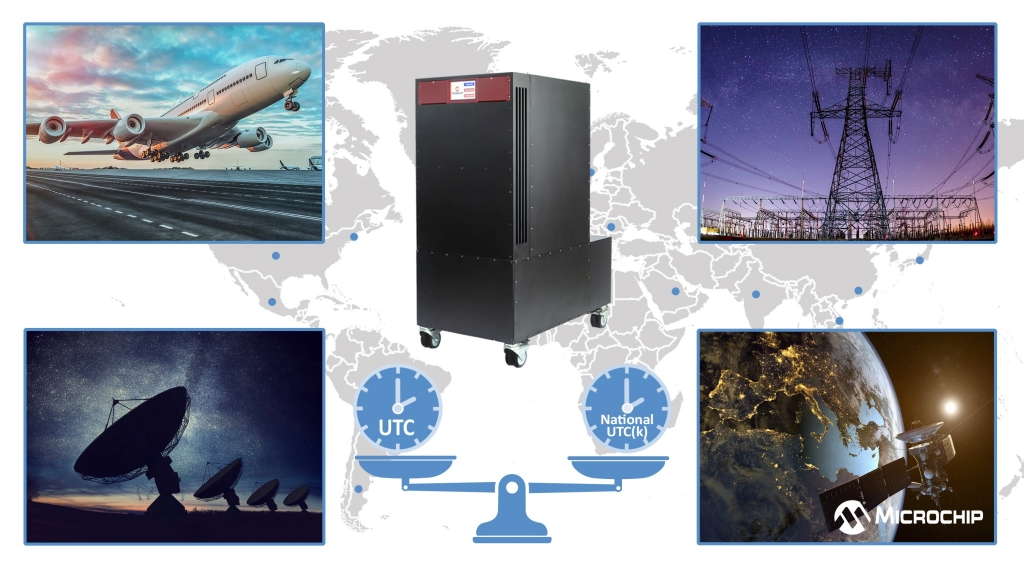
Expansion of UTC-based infrastructure and increased demand from hydrogen majors
A hydrogen maser is a device that generates very stable microwave frequencies by utilizing the properties of hydrogen atoms, and it is one of the core technologies used to maintain Coordinated Universal Time (UTC). In particular, as time synchronization accuracy is directly linked to system stability in power grids, mobile communication networks, and satellite communications, the importance of related equipment is growing. Recently, the growing movement to secure independent time standards at the national level is acting as a factor driving increased demand.
This facility produces a product family of timing and synchronization products, including the 'MHM-2020' active hydrogen maser, auxiliary output generators, and crystal oscillators. The MHM-2020 is characterized by providing synchronization precision at the picosecond level and being designed for stable long-term operation. This is intended to meet the performance requirements of high-precision environments such as GNSS-based system correction, deep space exploration, and radio astronomy.
The facility spans approximately 15,000 square feet and includes a temperature stability testing area and research and development laboratories. In particular, the company plans to strengthen its industry-academia collaboration system through cooperation with the nearby University of Alabama, covering areas such as equipment utilization, personnel training, and research consulting. Local researchers explained that this investment is an extension of joint research aimed at advancing timing and frequency technologies.
Microchip views this investment as a strategy to go beyond simple production expansion and simultaneously secure supply stability and technological advancement. A company official stated that the company intends to respond to increasing customer demand while enhancing its competitiveness in precision timing technology through collaboration with research institutions.
Precise time synchronization is considered a factor directly linked to next-generation communications, the space industry, and the stability of national infrastructure. This expansion of production bases is interpreted as an example demonstrating that competition among companies to secure supply chain stability and technological leadership in the global timing market is intensifying.

Comments
Related news
Mouser Supplies Microchip PIC32WM-BZ6 Multiprotocol Module
Global authorized electronics distributor Mouser Electronics has begun supplying Microchip Technology's PIC32WM-BZ6 multiprotocol module, expanding its presence in the IoT and industrial wireless solutions market.
2026.02.20by 배종인 기자
Vector and Microchip Unveil Integrated Solution for Small ECUs, Easing the Initial Burden of SDV Development
With the proliferation of Software-Defined Vehicles (SDV), vehicle control architecture is being restructured around high-performance central computing and lightweight edge nodes, making development efficiency for small ECUs increasingly important. Vector Korea and Microchip have launched a pre-integrated embedded solution combining the dsPIC33A digital signal controller and MICROSAR IO. This combination targets resource-constrained ECUs such as sensor and actuator control devices, focusing on reducing initial integration work and project risk to accelerate the start of application development. The two companies plan to provide evaluation bundles as well, with the goal of addressing the demand for cost-optimized distributed control node development in SDV environments.
2026.03.12by 명세환 기자
Microchip Expands TA101-Based Trust Platform… Supports Manufacturers' Response to Cybersecurity Regulations
As cybersecurity regulations become stricter, there is a growing trend of requiring security features during the product development phase for industrial and automotive products. Microchip Technology has expanded its TA101-based Trust platform to respond to these changes and has unveiled a solution that combines a secure authentication IC and cloud-based key management service. Through the TrustFLEX security IC and TrustMANAGER platform, it supports both factory and field provisioning environments, and reportedly helps address major cybersecurity regulations such as IEC 62443 for industrial applications, ISO/SAE 21434 for vehicles, and UNECE WP.29.
2026.03.16by 배종인 기자
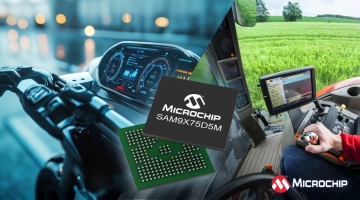
Microchip Launches 'SAM9X75' Hybrid MCU Targeting Automotive HMI
Microchip has launched 'SAM9X75D5M', an automotive-grade hybrid MCU targeting HMI applications for vehicles and e-mobility. The product features a SiP structure that integrates an Arm926EJ-S processor and 512Mbit DDR2 SDRAM in a single package, providing higher processing performance and memory capacity while maintaining a familiar MCU-based development environment. It can be applied to digital cockpit clusters, smart clusters for two- and three-wheeled vehicles, air conditioning control, and EV chargers, and is designed to reduce PCB design and memory supply burdens through component integration.
2026.03.25by 배종인 기자
Microchip, Confirmation of International Certification for Industrial Security Development Framework
Microchip Technology has received IEC 62443-4-1 ML2 certification from UL Solutions. This certification focuses on verifying that the secure development system—spanning design, development, verification, and maintenance—is operated in accordance with international standards, rather than the performance of individual products. As security requirements grow for connected industrial equipment and products with digital elements, this certification is regarded as a benchmark for supply chain security audits and preparation for compliance with the EU Cyber Resilience Act (CRA).
2026.04.07by 배종인 기자











