



UNIST and Sungkyunkwan University Develop High-Efficiency Organic Solar Cells That Surpassed AI Predictions
 Published2026.05.21 12:01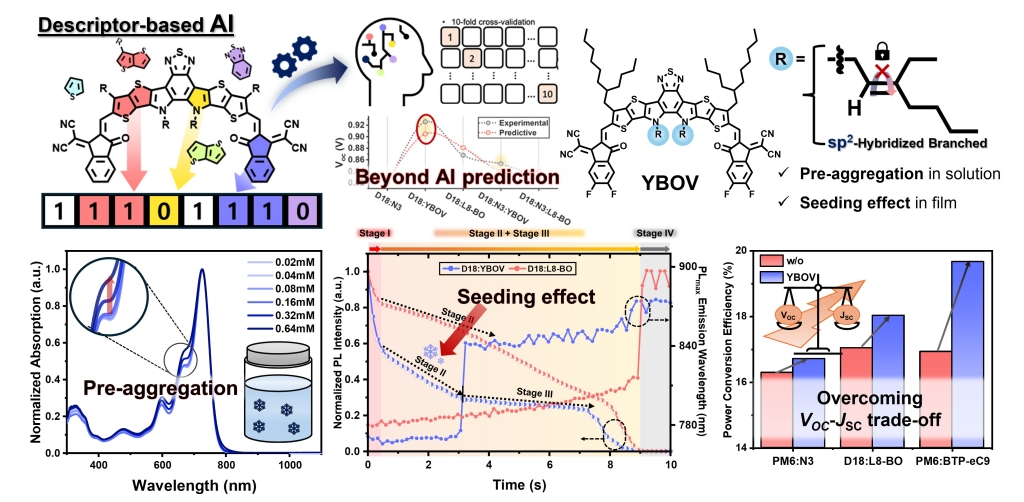
Recorded 19.67% efficiency in eco-friendly process, confirmed molecular aggregation effect missed by AI
Professor Chang-Duck Yang's team from the Department of Energy and Chemical Engineering at UNIST and Professor Doo-Hyun Ko's team from Sungkyunkwan University disclosed the research results on the 21st. The research achievement was published in the international academic journal 'Advanced Energy Materials' in the field of energy materials on April 20.
The research team newly designed an electron acceptor molecule called 'YBOV'. YBOV exhibits the characteristic of aggregating molecules in a solvent, and it was analyzed that this aggregation organizes the molecular arrangement of the photoactive layer during the thin film formation process, thereby facilitating charge transfer.
YBOV-based organic solar cells recorded a maximum photoelectric conversion efficiency of 19.67% even under conditions using orthoxylene, an eco-friendly solvent, instead of toxic chlorine-based solvents. In other electron donor-electron acceptor combinations as well, efficiency was improved compared to the control group when a small amount of YBOV was added.
This result also demonstrated the limitations of existing AI prediction models. The AI model trained by the research team on 750 organic solar cell data points predicted the open-circuit voltage of YBOV-based devices to be lower than the actual value. This is explained by the fact that the calculation method, which focuses on the structure of a single molecule, failed to sufficiently reflect the collective behavior of molecules in solution.
The joint research team stated that this study demonstrates that in the design of organic solar cells, not only the molecular structure but also the aggregation behavior in solution must be considered. Organic solar cells are lightweight and flexible, so their potential applications in building facades, windows, and wearable devices are being explored.
UNIST researchers Seok-Hwan Jeong, Dong-Hoo Won, and Zhu Sun participated as co-first authors in this study. The research was conducted with support from the Ministry of Science and ICT, the National Research Foundation of Korea, and the InnoCore Project.

Comments
Related news
UNIST Develops Technology to Produce Hydrogen and Silica from Waste Solar Panels
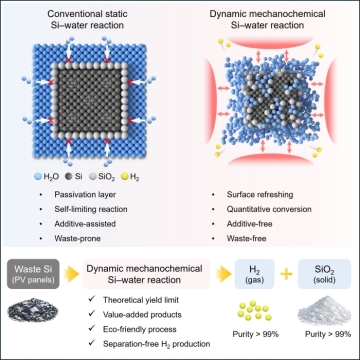
A research team at UNIST has developed a technology that simultaneously produces high-purity hydrogen and industrial-grade silica by utilizing silicon from end-of-life solar panels. The technology achieved up to 5 times higher efficiency compared to conventional methods and is noteworthy for securing both economic viability and environmental sustainability. The research results have been published in the international journal Joule, and future industrial applications are anticipated.
2026.04.06by 배종인 기자

UNIST Launches Full-Scale Research on AI Transformation for Shipbuilding… Begins Development of Shipbuilding-Specific Mega-Industry AI
UNIST has been selected as the lead research institution for the shipbuilding sector under the Ministry of Science and ICT's "Mega-scale Industrial AI Research Support Project" and is launching research on artificial intelligence transformation in the shipbuilding industry. This project, which involves a total investment of 40.3 billion won, focuses on developing mega-scale industrial AI by utilizing design, production, and quality data accumulated at shipyards, and applying and validating it in actual field environments. The research team plans to establish a multimodal-based foundation model that jointly learns design drawings, work instructions, video, and sensor data, and will promote automation and optimization of key tasks such as ship design and production planning.
2026.04.13by 배종인 기자
IBS, UNIST, and POSTECH Improve Room-Temperature Luminescence Performance of 2D Semiconductor Quantum Light Sources
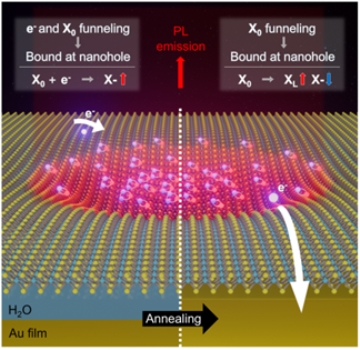
A joint research team from the Institute for Basic Science (IBS), UNIST, and POSTECH has improved the room-temperature luminescence performance of 2D semiconductor-based quantum light sources. The research team confined excitons, which easily diffuse at room temperature, within nanohole structures and reduced excess charges through heat treatment to improve light emission conditions. As a result, exciton confinement efficiency reached approximately 98%, and luminescence efficiency increased by approximately 130 times compared to previous results. The research results were published in the international journal Science Advances on March 13. This achievement demonstrates the potential to lead to research on photonic quantum devices with reduced cryogenic dependence and room-temperature single-photon light sources.
2026.04.14by 배종인 기자
KIMS and UNIST Develop Electrochemical System for Simultaneous Production of Hydrogen and Formate Using Waste Glycerol
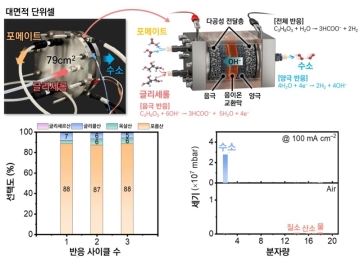
A joint research team from the Korea Institute of Materials Science and UNIST has developed an electrochemical system that produces hydrogen and formate simultaneously by utilizing glycerol, a biodiesel byproduct. The research team implemented an anion exchange membrane electrolysis system that applies glycerol oxidation reaction instead of the conventional oxygen evolution reaction in water electrolysis. Using a copper-cobalt-based non-precious metal catalyst, the team achieved 110 mA/cm² at 1.31 V, with formate selectivity of approximately 96%, and confirmed stable operation even in a large-area cell of 79 cm². The related research was published in the international academic journal Joule on March 18, 2026.
2026.04.14by 배종인 기자
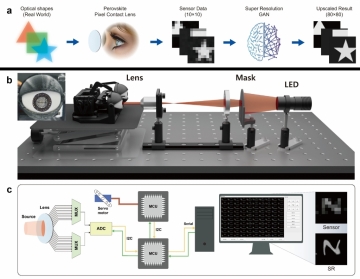
UNIST Develops Smart Contact Lenses That Control Robotic Arms with Eye Movements
A research team led by Professor Jeong Im-du from the Department of Mechanical Engineering at UNIST has developed a smart contact lens that enables control of a robotic arm through eye movement alone. The lens surface features 100 optical sensors directly implemented on it that read gaze changes, and AI restores these into high-resolution information and converts it into control signals. The research results were published in Advanced Functional Materials in March 2026, and in eye model experiments, the system recognized nine-directional gaze gestures with 99.3% accuracy.
2026.04.15by 배종인 기자











