

Siemens Launches Simcenter PhysicsAI to Accelerate CFD Design Exploration with AI
 Published2026.06.02 13:32
Provided as a Simcenter STAR-CCM+ add-on
Reduced design review time by utilizing existing CFD data
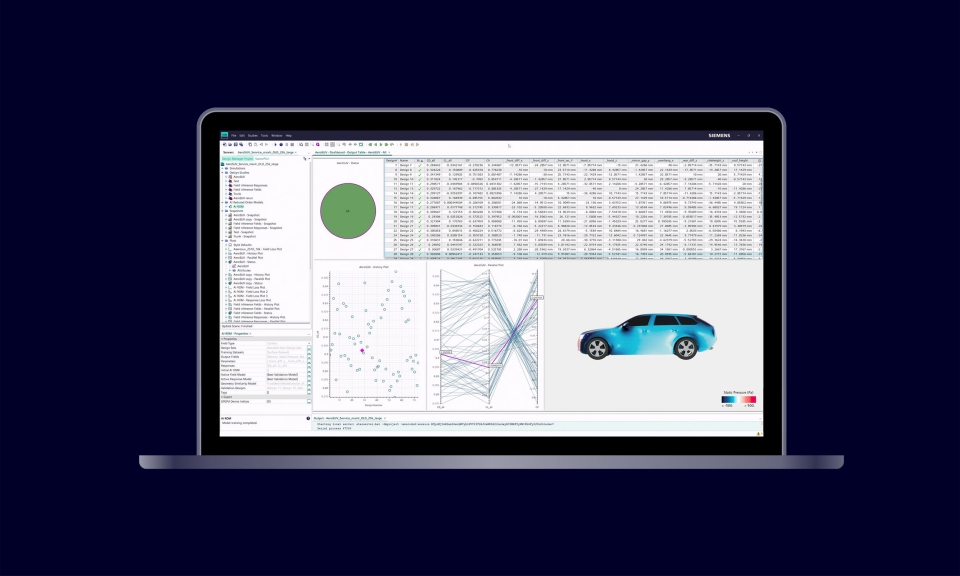
Siemens announced on the 2nd that it is expanding its Simcenter engineering simulation and test solution portfolio through Simcenter PhysicsAI. This software is provided as an add-on to Simcenter STAR-CCM+, a CFD analysis software.
CFD is a core analysis technology used to analyze fluid flow, heat transfer, and aerodynamic performance. However, high-fidelity analysis requires long computation times and consumes significant computing resources, which can place a burden on development schedules in fields involving frequent iterative reviews, such as automotive aerodynamic design or electronic equipment cooling design.
Simcenter PhysicsAI generates AI reduced-order models (ROM) by learning from existing CFD results and DOE (Design of Experiments) data. ROM is a predictive model that simplifies complex analysis results and is used to rapidly estimate the performance of new design geometries. Siemens has applied geometric deep learning technology to this, which learns 3D geometric data such as CAD geometry or meshes.
According to the company, Simcenter PhysicsAI supports design exploration up to 1,000 times faster than existing workflows. GPU-based predictions are performed up to 100 times faster than CPUs, and built-in verification features allow comparison of AI prediction results with high-fidelity CFD analysis results.
Simcenter PhysicsAI is closer to an auxiliary tool for rapidly screening initial design candidates than a replacement for physics-based analysis. As the manufacturing industry demands both shortened development times and reduced computing costs, AI-based design exploration that reuses existing simulation data is expected to become a major driver of change in engineering workflows.

Comments
Related news

Siemens Korea Announces 2026 Promotions
Siemens Korea (CEO and President Jung Ha-joong) announced a promotion list of 62 employees on the 5th, including 7 promotions to executive and director positions. The list of promoted executives and directors is as follows. ■ Promotions to Executive Vice President △Yu Gil-nam, Smart Infrastructure Executive Vice President △Lee Won-seop, Smart Infrastructure Executive Vice President △Jang Hee-don, Digital Industry Executive Vice President △Ko Seung-hun, Digital Industry Executive Vice President △Kang Kyung-hwa, Digital Industry Executive Vice President ■ Promotions to Director △Shin Hyun-soo, Smart Infrastructure Director △Lee Geon-joo, Digital Industry Director
2026.01.05by 배종인 기자
Physical AI Growth Driven by Two Axis: 'Humanoid Competition' and 'Industrial Automation'
The 2026 CES venue that was recently held served as a stage showcasing the full-scale emergence of a new technology paradigm called 'Physical AI' on the industry forefront. While software-centric AI has thus far assisted human cognition and decision-making, this year's CES marked the declaration that AI has entered a phase where it moves, works, and collaborates in the actual physical world. Global enterprises including Hyundai Motor Group, Boston Dynamics, NVIDIA, LG Electronics, and Siemens unveiled their Physical AI strategies in different ways, igniting competition for market leadership.
2026.01.12by 배종인 기자
Siemens Named a Leader in Gartner's Magic Quadrant for Quality Management System (QMS) Software
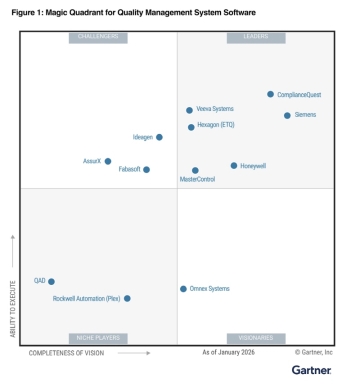
Siemens has announced that it has been selected as a Leader in Gartner's Magic Quadrant for Quality Management System (QMS) Software. Gartner defines leaders as comprehensive QMS providers that support broad requirements including regulatory compliance, risk management, and process improvement. Siemens explained that it connects design, manufacturing, and operations based on Teamcenter X Quality and Opcenter X Quality, supporting enhanced traceability and workflow standardization. The company also emphasized its approach of integrating technologies such as generative AI, predictive analytics, XR, digital twins, and IoT into the quality lifecycle.
2026.02.04by 명세환 기자
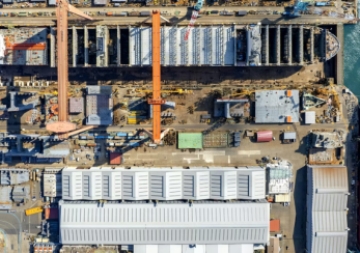
Siemens and HD Hyundai Collaborate on Building Integrated Digital Shipbuilding Platform
Siemens has been selected as the preferred partner for constructing HD Hyundai Heavy Industries' integrated digital shipbuilding platform. This collaboration serves as a core foundation for HD Hyundai's "Future Advanced Shipyard" project, with the goal of connecting the entire design and production processes through a single data flow. The two companies plan to implement a digital thread based on Siemens Xcelerator and integrate CAD, PLM, digital manufacturing, and automation domains. The platform will be constructed in phases beginning in 2026 and is scheduled to be applied to operating vessels starting in 2028.
2026.02.19by 명세환 기자
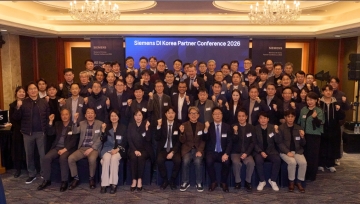
Siemens DI Korea Holds Partner Conference… Shares Cooperation Strategies
Siemens Korea's Digital Industries (DI) held a partner conference in Seoul and shared last year's business achievements and future collaboration directions with key domestic partners. Representatives and executives from approximately 60 partner companies attended the event to discuss global and domestic market strategies, product portfolio management directions, industry-specific challenges, and new customer development approaches. The venue also featured an awards ceremony for outstanding partners, and the restructured global partner program was introduced. The company stated that based on these outcomes, it plans to pursue enhanced competitiveness of domestic partners and expanded joint performance.
2026.03.18by 명세환 기자