


“AI-based predictive diagnostic technology is key to realizing autonomous manufacturing and physical AI”
 Published2026.06.26 13:00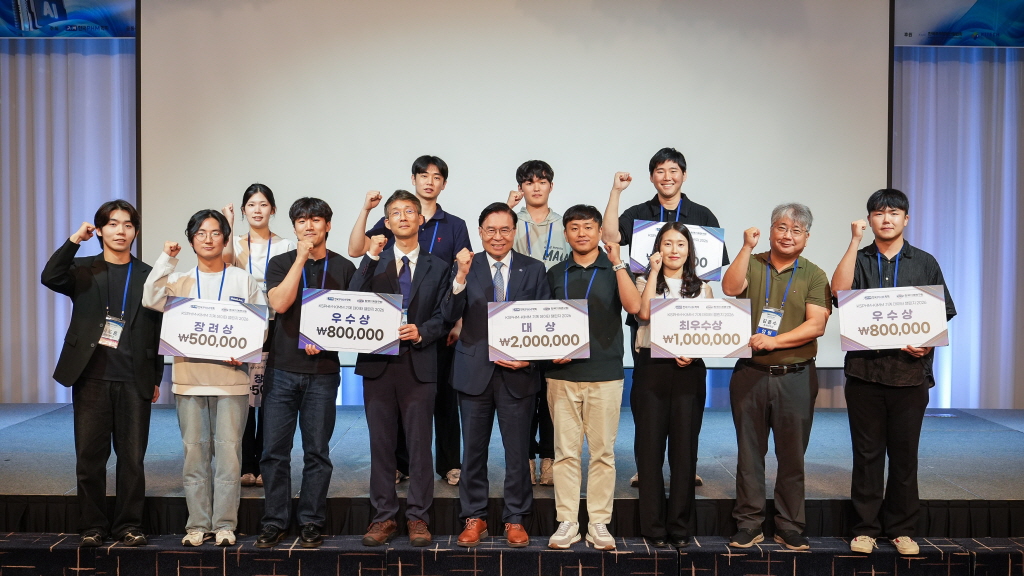
The Korea Institute of Machinery and Materials (KIMM) held an artificial intelligence (AI) competition utilizing real-world industrial data and set out to spread machine data-based physical AI technology. Participants verified the performance and applicability of AI models based on the theme of predicting bearing remaining lifespan.
The Korea Institute of Machinery and Materials announced on the 26th that it held the '2026 KSPHM-KIMM Machine Data Challenge' and conducted the final presentation evaluation and awards ceremony at the Westin Chosun Hotel in Busan on the 25th.
This competition is a data contest designed to validate AI-based Prognostics and Health Management (PHM) technology. It was conducted by evaluating the potential for industrial application using actual machine data held by the Korea Institute of Machinery and Materials (KIMM).
A total of 80 teams and 259 participants took part in this year's competition. In addition to 205 participants from 64 university teams, participation also extended to industry and research institutions. Major participating organizations included Ajou University, Sungkyunkwan University, the Electronics and Telecommunications Research Institute, and Hyundai Motor Company.
The theme of the competition is 'Predicting Remaining Life Using Bearing Degradation Data'. Participants developed an algorithm to predict the point of failure based on data collected under variable operating conditions.
Bearings are core components of rotating machinery, and failure can lead to equipment shutdown and safety issues. Particularly in industrial settings, where operating conditions are inconsistent and difficult to predict, this technology is presented as a core technology applicable to the fields of autonomous manufacturing and smart maintenance.
As a result of the final judging, the Grand Prize was awarded to the Electronics and Telecommunications Research Institute (EHEI) team. The Top Excellence Award went to the Dongguk University team (BRIDGE), while the Excellence Awards were given to the Korea Aerospace University and Seoul National University teams. Encouragement Awards were presented to teams from the State University of New York Korea, Ajou University, and Seoul National University, among others.
The winning teams cited the ability to validate AI models using actual industrial data as a key feature. They also suggested that prediction methods combining domain knowledge and AI could be effective for industrial applications.
Ryu Seok-hyun, President of the Korea Institute of Machinery and Materials, stated, “AI-based predictive diagnostic technology is key to the realization of autonomous manufacturing and physical AI,” adding, “We plan to expand the data utilization ecosystem centered on the machine data platform.”
The Korea Institute of Machinery and Materials plans to develop this competition into a demonstration case of machine data-based AI technology and continue to promote the expansion of the related industrial ecosystem.

Comments
Related news
Humanoid Robots Move Beyond Demonstration to Adoption Stage… KIMM: “The Next Five Years Will Be a Watershed”
The Korea Institute of Machinery and Materials has indicated 2026 as a turning point for the commercialization of humanoid robots. In a policy report released on the 8th, the institute stated that as the United States and China are engaged in a competition for leadership, Korea has a window of around five years to develop and concrete its response strategy. In the market, price reductions and production expansion are proceeding simultaneously, and while Korea possesses strengths in manufacturing infrastructure, it identified a need for supplementation in general-purpose AI and dedicated component supply chains. The Korea Institute of Machinery and Materials proposed that both localization of core components and global technology cooperation should be pursued in tandem.
2026.04.08by 명세환 기자
.jpg)
KIMM Establishes Foundation for 7-Day Continuous Verification of High-Power Lasers and Optical Components
The Korea Institute of Machinery and Materials has developed three types of testbeds for the first time in Korea capable of validating the long-term performance of high-power laser light sources and optical lenses. The research team applied these to domestically-produced 1kW fiber optic lasers and fused silica lenses, conducting continuous performance evaluation over seven days (168 hours). With the establishment of a foundation to monitor real-time output changes, focal position errors, and optical coating damage thresholds, the scope of reliability verification for domestic laser equipment and optical components is expected to expand.
2026.04.09by 배종인 기자
.jpg)
KIMM Fully Deploys Humanoids at 50th Anniversary Event
The Korea Institute of Machinery and Materials unveiled the AI humanoid 'Kairos' at its 50th anniversary commemoration ceremony and presented expanded research areas to focus on, including manufacturing equipment, thermal energy conversion, air technology, and virtual engineering. The institution, which was established in 1976 and has been responsible for machinery and production technology foundations during the country's industrialization process, is now positioning intelligent mechanical systems, carbon neutrality, and digital engineering together. Given that the institute recently disclosed the humanoid development schedule and strategic research group plans separately, this event is interpreted as both a commemorative occasion and a venue for clearly communicating the research institution's shifting priorities to the outside world.
2026.04.14by 배종인 기자
KIMM, “How AI is utilized determines manufacturing competitiveness”
The Korea Institute of Machinery and Materials has published "Mechanical Technology Policy" No. 123, which analyzes the AX and DX strategies of Japan's automotive industry. The report analyzes that Toyota and Honda are utilizing AI not as an automation technology but as a means to support on-site decision-making and organizational capabilities. The Korea Institute of Machinery and Materials recommends that Korea's manufacturing industry should also develop an AX strategy based on on-site operations, organization, and ecosystem, moving beyond a technology adoption-centered approach.
2026.05.14by 명세환 기자
KIMM and Korean Register Publish Safety Review Report on Hydrogen Fuel Propulsion Ships
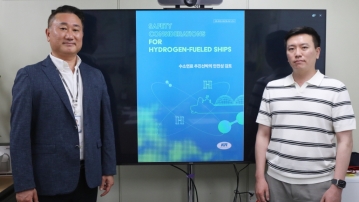
The Korea Institute of Machinery and Materials and Korean Register have published a technical report summarizing major risk factors and safety mitigation measures for hydrogen fuel propulsion vessels. The report addresses safety issues that must be reviewed during ship application, including hydrogen storage and supply systems, fire and explosion hazards, cryogenic risks, and hydrogen embrittlement. It is expected to be utilized in design and safety reviews by the shipbuilding and shipping industries in conjunction with the International Maritime Organization's approval process for interim safety guidelines on hydrogen fuel propulsion vessels.
2026.06.08by 배종인 기자











