


[2026 Power Electronics Conference] ST Manager Zhang Zhet, “Leading the Era of Electrification Through Leading WBG Semiconductor Solutions”
 Published2026.07.18 17:25
Expansion of high-efficiency power conversion solutions centered on GaN and SiC-based power semiconductor technology
Development of SiC-based Integrated Motor Drive and AlN DBC Package Targeting the Chinese Market
[Editor's Note] STMicroelectronics is expanding its high-efficiency power conversion solutions centered on GaN and SiC-based power semiconductor technologies, and is also strengthening its electric vehicle powertrain technology in collaboration with China's e-Drive Lab. The 7kW GaN single-stage OBC has achieved high efficiency and miniaturization, while the ZVS totem-pole PFC has significantly improved performance compared to conventional PFCs with 99.3% efficiency. The company is also providing 4–10kW power solutions for heat pumps and high-efficiency systems based on Vienna PFC. Furthermore, targeting the Chinese market, it has developed SiC-based integrated motor drives and AlN DBC packages, and is emphasizing a strategy of electrification and high efficiency utilizing WBG technology. Against this backdrop, ST participated in the 2026 Power Electronics Conference, held from July 13 to 16, to introduce its power semiconductor solutions. At this academic conference, I met Manager Jang Jett from ST and heard about ST's power solutions.
.jpg)
▲ Jang Jet, STMicroelectronics Manager
■ Please introduce the core solutions for this exhibition.
Through this exhibition, ST aims to present solutions on how next-generation power semiconductor technologies centered on GaN and SiC can maximize energy efficiency in future mobility and eco-friendly industrial HVAC systems, and to propose technologies for future high-efficiency high-power inverter systems through collaboration with a domestic university (Dankook University e-Drive Joint Lab).
I am curious to know what the biggest technical differentiator of the newly introduced 7kW PowerGaN Single-Stage On-Board Charger is.
The biggest technical difference of the 7kW PowerGaN Single-Stage Onboard Charger (OBC) is that it combines next-generation GaN devices with an innovative Single-Stage topology to maximize power efficiency and density.
The applied e-mode HEMT devices achieve 'Zero Qrr' with no reverse recovery charge while possessing ultra-high-speed switching characteristics, and the package solution maximizes heat dissipation performance by applying Top Cooling Package (TSC) technology.
It is designed to ensure system reliability by stably controlling heat generation even during high-output operation, and has been proposed as a future solution for next-generation EVs.
■ The advantages of the 2kW Interleaved ZVS TTP PFC structure compared to standard PFC What is it? In particular, please explain the role the STM32G4 digital controller plays in power design.
The 3-channel interleaved ZVS Totem-pole PFC structure has a clear advantage over general PFC in terms of conversion efficiency, power density, and thermal performance.
It provides a high conversion efficiency of 99.3% and high power density through MDmesh DM6 MOSFET and resonant ZVS control.
In addition, by achieving excellent thermal efficiency with silicon HV MOSFETs, it provides a cost-optimized, high-efficiency solution compared to standard PFCs.
In addition, the STM32G4 digital controller performs real-time control of complex ZVS algorithms, efficiency optimization based on load conditions, and high-speed protection functions, perfectly driving high-efficiency power conversion.
I am curious about the target market for ST's heat pump solutions (4kW–10kW). I would also like to know the advantages for system design of a structure that integrates Vienna PFC and motor control.
First, the target market for ST's heat pump and HVAC solutions is high-efficiency energy management for commercial and industrial use. Specifically, it covers everything from 4kW commercial air conditioners to 7kW high-efficiency air conditioning drive systems and 10kW high-power cooling systems used in large industrial facilities.
The primary target application is the market seeking to reduce carbon emissions and maximize energy efficiency in eco-friendly smart factories or commercial buildings.
The system design advantage of the structure integrating Vienna PFC and motor control is that it reduces design complexity, thereby shortening the client's development time, and supports the implementation of stable, high-efficiency, and eco-friendly HVAC systems based on a proven architecture.
Previously, the PFC stage and the motor drive inverter stage were physically and control-wise separated, requiring the control loops of each stage to be designed and verified independently, which led to increased system complexity and form factor.
ST improved power density and energy efficiency simultaneously by integrating two functional blocks into a single system architecture.
In addition, by realizing the 'stable multi-motor control performance' most essential for HVAC systems, we provide customers with the ability to organically integrate ST's extensive power semiconductor portfolio into a single system.
■ I am curious to know what innovations the Integrated Traction Motor Drive, developed in collaboration with Dankook University, offers compared to existing methods.
Earlier this year, ST established the e-Drive Joint Lab with Dankook University and is conducting joint projects related to the development of high-output inverter-based e-Drive system technology and power electronics applications.
Among the various projects, this collaboration is innovative in that it resolved the fundamental thermal limitations arising from inverter and motor integration using ST's advanced SiC packaging technology.
The inverter and motor are combined into one.If it sags, the intense heat generated by the motor is transferred directly to the inverter, leading to a fatal problem where the switching element is exposed to high temperatures.
To address these thermal limitations, ST applied advanced SiC packaging technology (DMT-32) utilizing an AlN (aluminum nitride)-based DBC (Direct Bonded Copper) substrate.
Furthermore, this demo is considered an example of innovation for perfectly realizing an ultra-compact, high-output propulsion system that maximizes power density relative to volume in future mobility environments where hardware space is extremely limited.
■ Finally, the message I most want to convey to the visitors through this exhibition is
The core message STMicroelectronics wants to convey through this exhibition is 'the power of high-efficiency power semiconductors to accelerate a sustainable future.'
We intend to demonstrate, through the various solutions introduced here, how next-generation GaN and SiC high-efficiency power semiconductors are transforming the environment and industries.
In particular, the collaboration with Dankook University on a future mobility propulsion system serves as a milestone demonstrating how ST's leading semiconductor technology, combined with the excellent engineering capabilities of a Korean university, can overcome the technical challenges of high power output and ultra-miniaturization.
I would like to emphasize that ST is not merely a company that sells parts, but an innovation partner that collaborates with academia and industry to shape the future.
Through this KIPE exhibition, ST aims to convey its vision of providing a solid technological foundation with leading wide bandgap (WBG) semiconductor technology and integrated solution architecture to solve the energy problems facing humanity and lead the era of electrification.

Comments
Related news
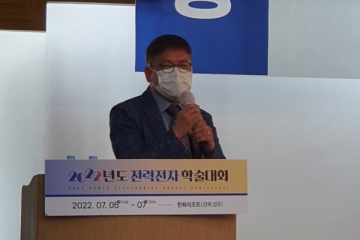
Power Electronics Society, 2022 Academic Conference, Industry-Academia-Research Hot Participation… Best Performance
Over the past two years, academic exchanges that had contracted due to the impact of COVID-19 are resuming. The Power Electronics Academic Conference was held in a fully in-person format, providing an opportunity for academia and industry in the power electronics field to share their research achievements and next-generation technologies.
2022.07.07by 명세환 기자
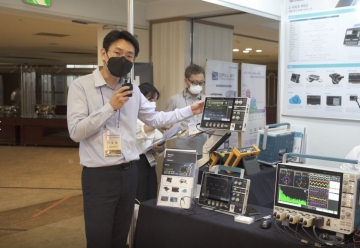
[2022 Power Electronics Conference] Tektronix Unveils New 2 Series Oscilloscopes
At the recent power electronics academic conference, related industry participants showcased various products in the power electronics field. We met with Kwon Oh-sung, Deputy Director of the Technical Support Team at Tektronix, who participated in this event bringing together industry, academia, and research institutions, and heard about the newly launched 2-series oscilloscope as well as explanations of the products brought to the conference exhibition.
2022.07.15by 명세환 기자
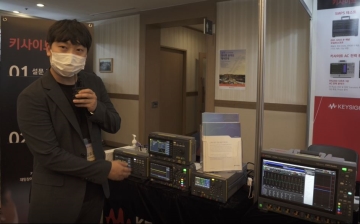
[2022 Power Electronics Conference] Keysight Showcases Diverse Power Electronics Portfolio
At the recent power electronics academic conference, industry stakeholders participated and showcased various products in the power electronics field. We met with Kim Hyo-jun, Marketing Manager at Keysight Technologies, who participated in this industry-academia-research collaborative event, and heard about the Infineon EXR series oscilloscope as well as explanations on the diverse power electronics portfolio that Keysight brought to the conference exhibition.
2022.07.15by 명세환 기자
.jpg)
[2022 Power Electronics Conference] Asung Korea: "Confident in Stable Supply of IT Components Amid Global Supply Crunch"
At the recently held Power Electronics Academic Conference, industry participants presented various products in the power electronics field. We met with Park Ki-do, Senior Executive of Asung Korea, who participated in this event that brought together academia, industry, and research institutions, and heard explanations about the diverse power electronics portfolio they brought to the conference exhibition.
2022.07.15by 명세환 기자
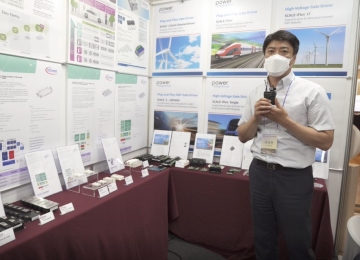
[2022 Power Electronics Conference] Davo Corporation Shares Power Integration Solutions with Infineon
At the recently held Power Electronics Academic Conference, related industry participants showcased various products in the power electronics field. We met with Ha Jae-won, Sales Manager at Dabo Corporation, who participated in this event bringing together academia, industry, and research institutions, and heard an explanation about the diverse power electronics portfolio brought to the academic conference exhibition.
2022.07.15by 명세환 기자











