


ST, “GaN Rapidly Emerges as Key Power Semiconductor for Motor Control Innovation”
 Published2026.07.20 09:55
ST STPOWER GaN 제품, 산업·가전·로봇 등에서 MOSFET·IGBT 대체
■ 다양한 애플리케이션에서 GaN의 이점
오늘날 전력 전자 장치 업계의 가장 큰 도전 과제는 높아져 가는 효율성과 전력 성능 개선에 대한 요구를 만족시키면서도 제품의 가격 경쟁력 확보와 부피 축소라는 목표를 끊임없이 추구해야 한다는 것이다.
비교적 새로운 와이드 밴드갭 화합물인 갈륨 나이트라이드(GaN) 기술 도입은 그러한 방향으로 나아가고 있으며, 상용화가 확대되면서 사용량이 빠르게 증가하고 있다.
성능 지수(FOM), 온-저항 RDS(on), 총 게이트 차지(QG) 측면에서 실리콘 소자보다 더 나은 고전자 이동도 트랜지스터(HEMT) 소자는 GaN을 기반으로 하며, 높은 드레인-소스 전압 용량, 제로 역회복 차지 및 매우 낮은 고유 정전용량을 제공한다.
GaN 기술이 처음으로 가장 널리 쓰였던 애플리케이션은 전력 변환이다. GaN은 엄격한 에너지 요구 사항도 충족할 수 있도록 효율성을 개선하는 선도적인 솔루션을 제공한다. 더욱 높은 스위칭 주파수에서 구동할 수 있는 특성 덕분에 전력 밀도가 더 높으며, 이는 궁극적으로 시스템 전체의 크기와 무게를 줄이고 비용까지 낮추는 효과로 이어진다.
전자 모터 설계에서도 크기와 전력 효율성이 중요하다. 구동부에서의 전도 및 스위칭 손실을 최소화하는 것은 에너지 낭비를 줄이는 핵심이다.
실리콘 기술이 전력 밀도, 항복 전압, 스위칭 주파수에 대한 이론적 한계에 도달하게 되면서 기존의 실리콘 MOSFET 및 IGBT를 사용하는 모터 드라이버 성능을 개선하기란 점점 더 어려워지고 있다. GaN 트랜지스터는 우수한 전기적 특성 덕분에 고전압 모터 제어 애플리케이션에서 MOSFET 및 IGBT를 대체할 수 있는 유효한 대안이다.
.jpg)
▲GaN 트랜지스터 기반 전력 인버터를 단순화한 블록 다이어그램

■ 차세대 모터 인버터의 원동력
GaN은 저주파수(최대 20kHz)에서 작동하는 애플리케이션에서도 중요한 이점을 제공할 것으로 예상된다. 가전제품 영역에서, 세탁기, 냉장고, 에어컨 및 진공청소기와 같은 모터 구동 시스템은 속도, 토크 및 효율을 제어하기 위해 모터 인버터에 크게 의존한다. 이러한 모터는 산업용 서보 또는 정밀 모터와 달리, 기계적 및 기능적 제약으로 인해 물리적 크기가 대체로 고정되어 있다. 따라서 모터 자체를 축소하여 전체 시스템 크기를 줄이는 기존 방법은 사용할 수 없다. 대신, 이러한 모터를 구동하는 인버터 및 전력 전자 장치에서 개선이 이루어져야 한다.
이러한 의미에서, GaN이 기존의 실리콘 트랜지스터보다 우수한 이점은 단일 매개변수에서 비롯되는 것이 아니라 여러 매개변수에서 비롯된다는 점을 짚고 넘어갈 필요가 있다. 이는 다양한 측면이 결합된 결과이다.
GaN은 사실상 무시할 수 있는 역회복 차지(Qrr)와 낮은 기생 커패시턴스를 가지고 있어 전압 변화량이 약간 더 높더라도 작동 가능하다. 모터 권선 및 절연을 사용하면 최대 허용 전압 변화율이 제한되지만, 더 높은 스위칭 속도에서도 작동할 수 있는 GaN의 기능 덕분에 설계자는 스위칭 엣지를 세심하게 최적화할 수 있다.
또한, 슛스루 결함 위험 없이 데드타임을 안전하게 대폭 줄일 수 있다. 하이사이드와 로우사이드 스위칭 사이의 시간은 10분의 1로 쉽게 줄일 수 있다. 이를 통해 모터 안정성을 저해하지 않고, 인버터 효율을 개선하며, 스위칭 손실을 줄이는 것이 가능하다.
놀랍게도, 성능에 대한 설명은 여기서 끝이 아니다. 사실, 이 모든 ‘사소한’ 개선점이 합쳐져 가장 중요한 성과로 이어지는데, 이는 바로 히트싱크의 제거다.
■ 히트싱크의 사용 필요성 제거
전력 분산이 크게 감소하면서, 설계자가 인버터 전력단에서 부피가 큰 히트싱크를 줄이거나 제거할 수 있게 되었다. 조립 공정의 단계 수도 줄어든다. 히트싱크가 없으면 나사나 마운팅 조인트도 없으므로 기기가 현장에 오랜 시간 배치되었을 때 발생할 수 있는 기계적 고장을 방지할 수 있다. 여기에는 서비스 및 보증 비용 절감을 가능케 해 주목할 만한 잠재력도 있다.
그 결과 더욱 작고 가벼우며 비용 효율적인 인버터 설계가 가능해져, 까다롭고 경쟁이 치열한 가전제품 시장의 요구사항을 더 잘 충족할 수 있게 되었다.
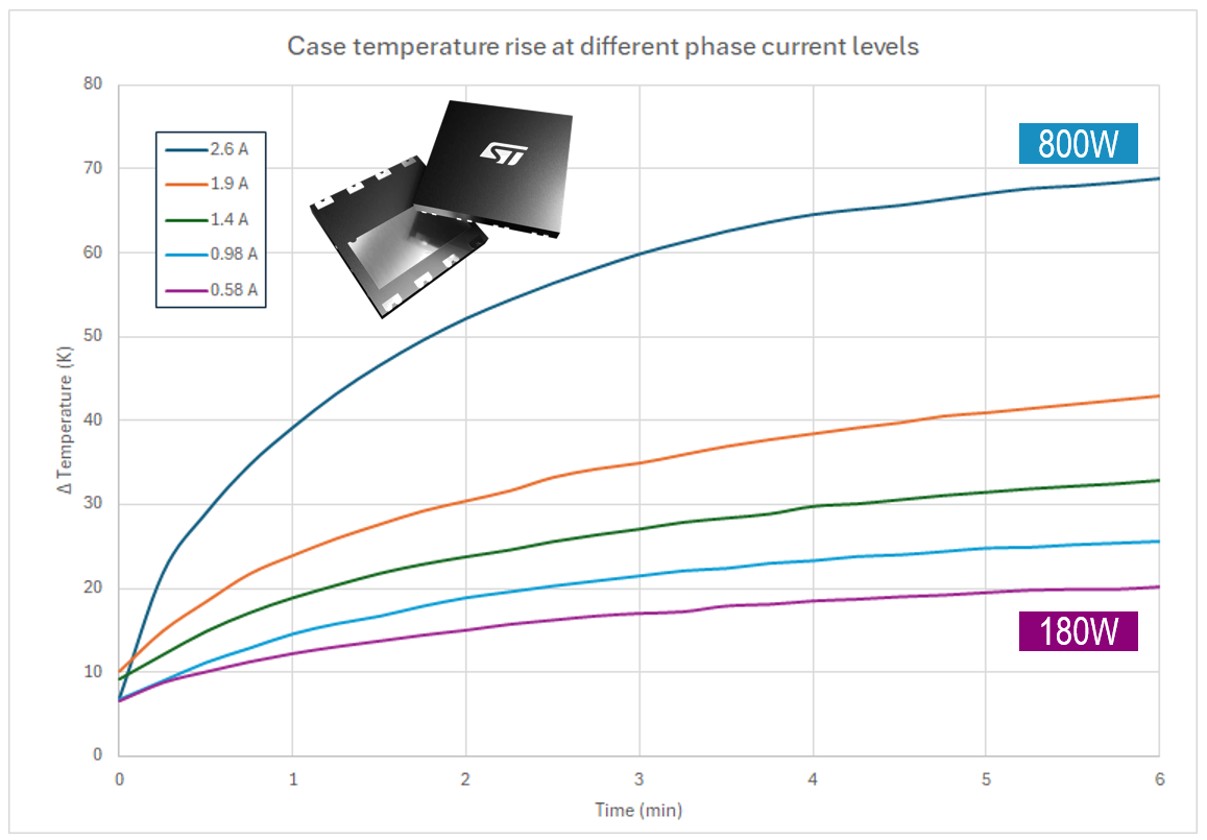 ▲히트싱크 없이 작동하는 모터 인버터에 장착된 700V GaN
파형을 보면 GaN 파형이 얼마나 안정적이고 온도가 낮은지 알 수 있다. 위 예에서 테스트 대상 기기의 전형적인 RDS(on)는 80mΩ이다. 모터 인버터는 16kHz의 스위칭 주파수로 작동하며, 최대 전압 변화량은 10V/ns보다 약간 낮다.
열 폭주 없이 약 800W의 전력 수준을 안전하게 달성할 수 있다. 온도 상승폭 Δt는 70°C 미만으로, 최대 동작 접합 온도(TJmax)인 150°C에 도달하기까지 충분히 여유가 있다.
이 놀라운 결과를 히트싱크 없이 달성했으며, GaN은 일반적인 2층 PCB에 장착해 냉각한다.
■ STPOWER GaN 트랜지스터
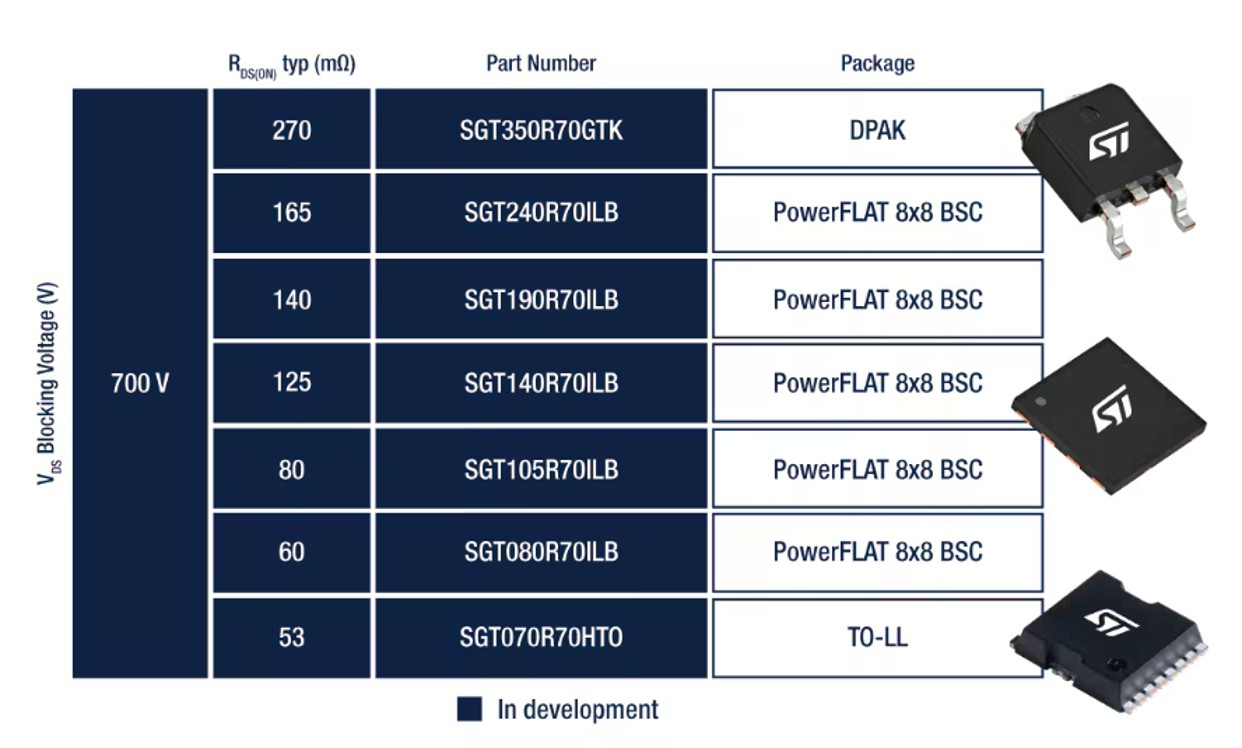
STPOWER GaN 트랜지스터는 상시 오프(normally off) p-GaN 게이트 e-모드 트랜지스터로, 역회복 차지가 없다. ST는 현재 DPAK, 파워플랫 8x8 및 TO-LL 패키지에서 53mΩ∼270mΩ의 전형적인 온-저항 RDS(on)를 가진 700V 항복 전압(VDS) 등급을 갖춘 7개 제품을 제공한다.
제품 포트폴리오는 다양한 패키지, RDS(on) 및 항복 전압 사양을 추가하여 빠르게 성장하고 있다.
추가 정보는 https://www.st.com/en/power-transistors/powergan.html에서 확인할 수 있다.
※ 기고자

Comments
Related news
ST simplifies low-voltage GaN design
STMicroelectronics has launched new half-bridge GaN (Gallium Nitride) gate driver products, STDRIVEG210 and STDRIVEG211, optimized for industrial and telecommunications power conversion applications. The company is now fully committed to simplifying low-voltage GaN designs and supporting the development of high-performance power systems.
2025.10.27by 배종인 기자
ST Unveils Next-Generation GaN Flyback Converter
Global semiconductor company STMicroelectronics (ST) has unveiled an integrated GaN flyback converter series targeting diverse applications including USB-PD chargers, high-speed battery chargers, and auxiliary power supply units, satisfying three core values: design simplification, silent operation, and high-efficiency power management.
2025.11.04by 배종인 기자
ST Launches GaN Power IC 'MasterGaN6'... Targeting Chargers, Lighting, and Solar Power
ST Microelectronics has launched the MasterGaN6, a second-generation MasterGaN half-bridge power IC. The product is characterized by integrating a GaN power transistor supporting 140mΩ RDS(on) and an updated BCD driver in a single package. Designed with dedicated pins for standby and fault indication, protection features, and a minimized external component design, it is engineered for use in chargers and adapters, industrial lighting power supplies, and solar microinverters. ST plans to provide evaluation boards and design support tools alongside the product to enhance ease of review and development.
2026.03.18by 배종인 기자
[Interview] ST Manager Jiyoon Jeong, “Realizing Highest Levels of RDS(on) Miniaturization and High Efficiency in Gen3 SiC MOSFETs”
STMicroelectronics (ST) secures quality and supply through a vertically integrated supply chain from wafers to finished products, and realizes miniaturization and high efficiency with the low RDS(on) of Gen3 SiC MOSFET. System-level solutions such as gate drivers, MCUs, and reference designs, combined with proven reliability, reduce customer risk. In EVs, traction inverters are critical, while in data centers, continuous operation and high power density are key requirements. In this context, ST plans to introduce ST's SiC products through a webinar on April 16th. We met with Jeong Ji-yun, ST Manager, who is in charge of the presentation, to learn about ST's SiC products and technological capabilities.
2026.04.06by 배종인 기자
ST Unveils Two GaN Gate Drivers for Motion Control
ST Microelectronics has unveiled two high-speed half-bridge GaN gate drivers targeting motion control and power stages. The new products are the STDRIVEG212 for 220V and STDRIVEG612 for 600V, characterized by integrating 5V gate drive and protection functions, bootstrap, and LDO into a single package. The company also incorporated a function that disables both switches upon overcurrent detection and Smart Shutdown that delays automatic recovery. ST stated that both products are currently in production and are being supplied together with evaluation boards.
2026.04.14by 배종인 기자











