
Materials Research Institute of Korea, Development of Lead-Free Perovskite-Based Ammonia Gas Sensor
 Published2026.08.05 08:41

Capable of Detecting Leaks at 1ppm Level, New Operating Principle Also Identified
The Korea Institute of Materials Science has developed an ultra-high sensitivity ammonia gas sensor using environmentally friendly perovskite material free of lead. This technology can be applied to safety management of hydrogen and ammonia energy infrastructure, and is evaluated as presenting a new direction in gas sensor research by also identifying a new operating principle for the sensor.
On the 5th, the Korea Institute of Materials Science announced that it has developed an ammonia gas sensor based on lead-free perovskite material through joint research with Pusan National University, Incheon National University, and Macquarie University in Australia.
The sensor can detect ammonia down to minute leaks at the level of 1ppm (one part per million), and the institute explained that the detection operating principle, which had not been previously identified, was newly revealed in this research.
In conventional high-performance gas sensors, lead (Pb)-based perovskite materials have often been utilized, but environmental and safety issues due to lead toxicity have been pointed out as challenges.
In this research, by adopting lead-free perovskite material that does not use lead, the institute demonstrated high sensitivity while reducing environmental burden.
Ammonia is recognized as a key substance in the hydrogen economy as a means of storing and transporting hydrogen.
Conversely, upon leakage it is harmful to human health and the environment, requiring precise detection technology.
The institute projects that this sensor technology will be able to contribute to enhancing the safety of hydrogen and ammonia energy infrastructure in the future.
Inquiries regarding this research can be directed to Dr. Song Myung-gwan, Principal Research Scientist at the Energy and Environmental Materials Research Division, Korea Institute of Materials Science (055-280-3686).

Comments
Related news
KIMS Localizes Multicolor Electrochromic Smart Window Material
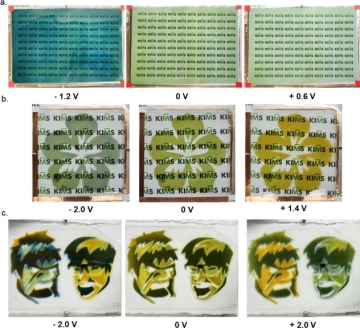
The Korea Institute of Materials Science has developed electrochromic technology that implements yellow, green, and blue colors from a single material through solution processing without vacuum equipment. This technology, which enables large-area fabrication, provides fast color-switching speed, and exhibits excellent durability, is expected to contribute to the localization of materials in energy-saving smart window applications and next-generation color display fields.
2026.07.06by 배종인 기자
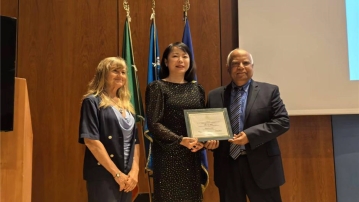
Hee-Sook Yoon, Principal Researcher at KIMS, Selected as Fellow of the World Academy of Ceramics
Hee-Sook Yoon, Director of Korea Institute of Materials Science, has been selected as a Fellow of the World Academy of Ceramics (WAC), the most prestigious international organization in the ceramics field. This international recognition reflects outstanding achievements in ceramic additive manufacturing research utilizing 3D printing technology, demonstrating the global competitiveness of Korea's ceramic materials sector.
2026.07.07by 배종인 기자
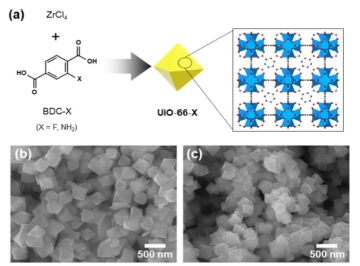
Korea Institute of Materials Science and Pusan National University Develop MOF-Based Multifunctional Fiber Electronic Devices
The Korea Institute of Materials Science and Pusan National University have developed a multifunctional fiber electronic device based on metal-organic frameworks (MOF). The technology enables self-power generation from ambient light such as sunlight without external power supply while simultaneously detecting hydrogen sulfide. By implementing a self-powered sensor with reduced battery dependency in a single fiber, it can be applied to smart textiles, industrial safety wearables, and IoT sensors.
2026.07.08by 배종인 기자
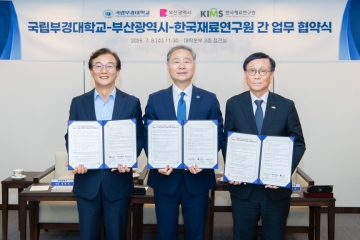
Korea Institute of Materials Science, Pukyong National University, and Busan Metropolitan City Sign MOU to Establish Marine AI Materials Research Center
The Korea Institute of Materials Science, Pukyong National University, and the Busan Metropolitan Government have established a cooperative framework for AI-based marine energy materials research and development. The Marine AI Materials Research Center will be established to combine advanced materials technology and AI research capabilities, with plans to pursue advancement of the regional marine industry, carbon-neutral technology development, and cultivation of specialized personnel.
2026.07.10by 배종인 기자
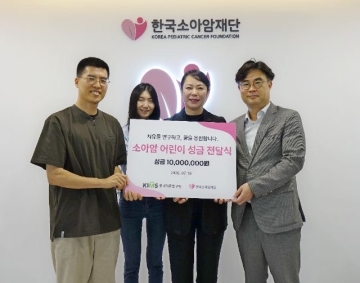
Korea Institute of Materials Science Bio-Health Materials Research Division Donates 10 Million Won to Children with Pediatric Cancer
The Biohealth Materials Research Division of the Korea Institute of Materials Science donated 10 million won to the Korean Pediatric Cancer Foundation in commemoration of receiving an award for excellence. The research department, which conducts materials technology research for the advancement of public health, returned its research outcomes to society by contributing funds to a project supporting the treatment and rehabilitation of children and adolescents with pediatric cancer, which aligns with its research objectives.
2026.07.13by 배종인 기자