
 [EDA 대전환 ①] AI가 칩 설계하는 시대…EDA 경쟁, ‘속도’에서 ‘신뢰’로
 기사입력2026.08.12 15:33
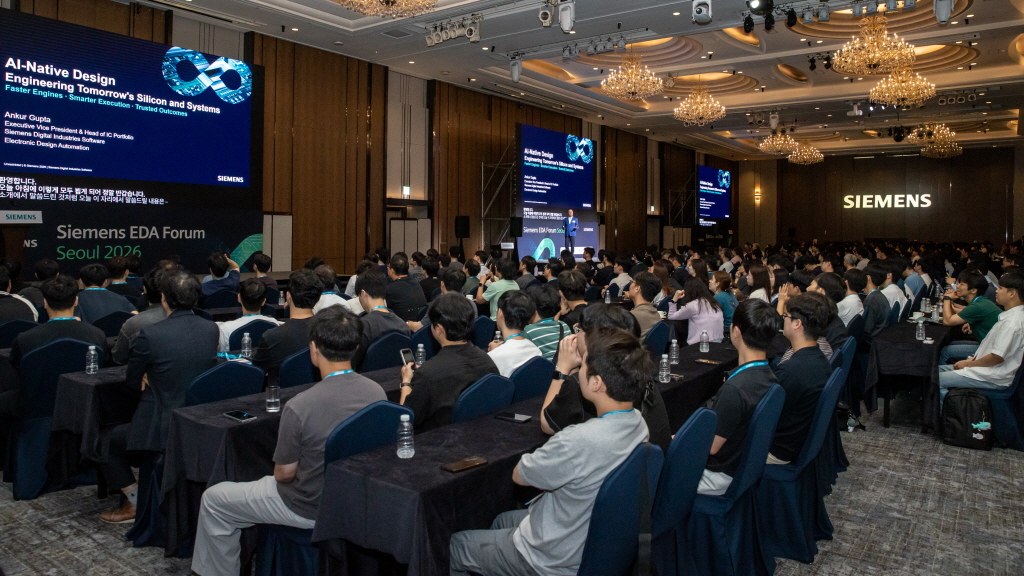
AI가 EDA 도구를 직접 실행·검증·수정하는 ‘자가 검증형’ 설계가 확산되며, EDA 경쟁의 핵심이 속도에서 신뢰로 이동하고 있다. 지멘스는 AI가 작업을 계획·실행·디버깅하는 에이전틱 워크플로를 제시하며 물리 기반 엔진을 통한 정확성을 강조했다. 시높시스·케이던스도 엔비디아 기술을 공유하며 유사한 방향으로 경쟁 중이다. AI 자동화로 생산성은 높아지지만 토큰 비용 관리가 새로운 과제로 떠올랐고, AI가 여러 업체 도구를 연결하면서 플랫폼 종속도 약화되고 엔진 정확도가 핵심 경쟁력으로 부상하고 있다.


댓글
관련 뉴스

[EDA Great Transformation ②] AI Agents are Converging...The Real Competition Ground for EDA's Big Three is 'Physics Engine'
Synopsys, Cadence, and Siemens EDA have entered a competition in 'Agentic EDA' where AI directly executes and validates design tools. Synopsys expanded beyond semiconductors by acquiring Ansys to integrate multiphysics analysis, and is raising RTL automation productivity through AgentEngineer. Cadence built four types of design agents in eight months, leading in the speed competition, and strengthened certification for TSMC and Samsung 2-nanometer processes. Siemens is supplementing the front-end of design based on strengths in sign-off areas such as Calibre and Tessent. All three companies share AI technology based on Nvidia, and the real competition is expected to be decided by 'engineering foundations beneath AI' such as physics engine accuracy, foundry certification, and customer design data.
2026.08.12by 배종인 기자
[EDA Great Transformation ③] Korea Was Already in the Midst of the EDA War
Competition among global EDA companies is intensifying in the Korean market, centered on Samsung's 2nm and HBM and 3D stacking. AI-based design automation is an opportunity to alleviate labor shortages in domestic fabless companies, but it also creates new barriers in licensing and token costs. Korea has now emerged as a key stage in advanced design and verification competition, transcending its role as a market merely adopting EDA technology.
2026.08.12by 배종인 기자
Applied Materials Unveils $5 Billion EPIC Center in Silicon Valley
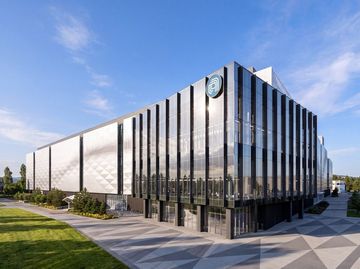
Applied Materials has opened a $5 billion EPIC (Equipment, Process Innovation, and Commercialization) center in Silicon Valley. Major semiconductor manufacturers including TSMC, Samsung Electronics, SK Hynix, Intel, and Micron, along with universities and equipment companies, are participating to address high-performance computing demand driven by AI infrastructure expansion. This collaborative ecosystem executes development stages in parallel from foundational materials research through mass production, shortening the time to technology commercialization.
2026.10.13by 배종인 기자
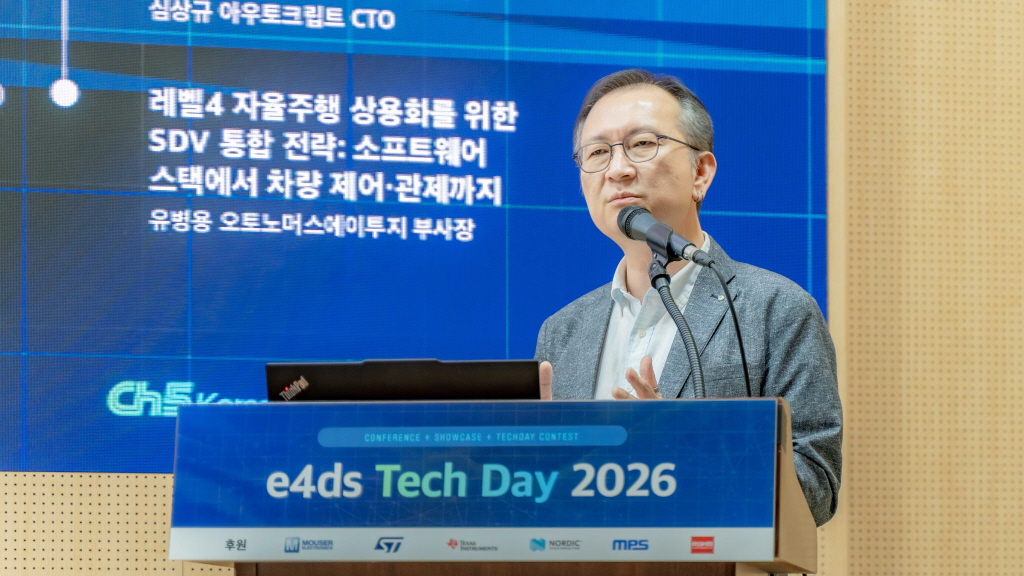
[e4ds Tech Day 2026 ⑨] Sim Sang-gyu, Autocrypt CTO: "In the Physical AI Era, Automotive Security Must Extend Beyond the Vehicle"
At e4ds Tech Day 2026, Sim Sang-gyu, CTO of Autocrypt, explained automotive cybersecurity strategies in the era of Physical AI and SDV (Software-Defined Vehicle). Automobiles are evolving as part of an ecosystem connected to AI, cloud, chargers, IoT, and robots, and he emphasized that the scope of security must expand beyond the vehicle interior to the entire connected environment. In particular, AI model tampering, adversarial attacks, OTA updates, and EV charger hacking were identified as major threats. He explained that response measures require zero trust, AI model integrity protection, intrusion detection, Security by Design and Default, and full lifecycle security management, and that proactive security system establishment beyond regulatory compliance is critical for securing future mobility competitiveness.
2026.10.12by 배종인 기자

Practical HIL Construction Strategy for Automotive and Off-Highway Controller Validation
As vehicle E/E architecture transitions to zonal structures and shifts to software-defined vehicles (SDV), the number of controllers (ECUs) requiring validation and software complexity are surging dramatically. Meanwhile, real vehicle testing cannot provide repeated verification under identical conditions and entails lead time and safety concerns. This white paper explains the principles of HIL (Hardware-in-the-Loop) validation and the structure of the NI platform composed of PXI, SLSC, and VeriStand, and through two actual implementation cases—Camera Record & Replay HIL for In-Cabin Monitoring Controller (ICMU) and Forklift Controller (VCU) HILS—describes how controller-level regression testing becomes possible. Additionally, it explicitly states application boundaries and limitations, such as lack of A2B support.
2026.10.12by 편집부