


TI Unveils Multi-Axis Coreless Current Sensor TMCS2100-Q1 for HEV/EV Traction Inverters
 Published2026.08.27 10:05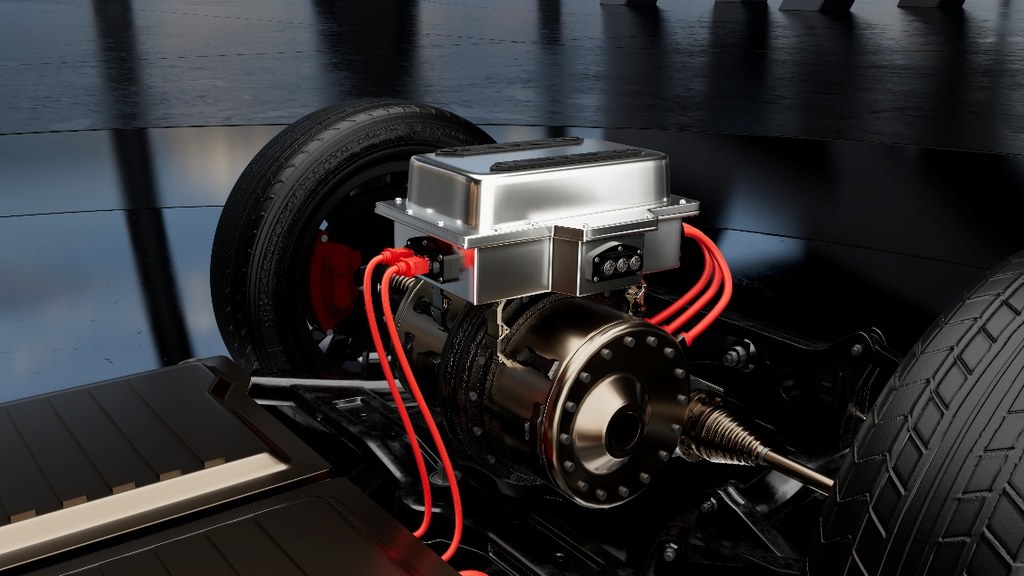


Comments
Related news
.jpg)
TI Innovates Data Center and EV Design Paradigm with Next-Generation Isolated Power Modules
With power demand surging due to AI and electric vehicle proliferation, reliable power supply technology in limited spaces has emerged as a critical industry-wide challenge. Texas Instruments (TI) has unveiled the UCC34141-Q1 and UCC33420 high-performance isolated power modules, which employ proprietary packaging technology to address these requirements and establish a new direction for power design.
2026.03.24by 배종인 기자

Practical Training in Low-Noise, Low-Power Circuit Design All in One Place… Training Fee Support
The "2026 Advanced Engineer Practical Masterclass" to strengthen competencies in high-sensitivity analog circuit and sensor-based system design will be held on April 16 at the e4ds Conference Center in Gasan-dong, Seoul. This program will be conducted as an offline paid hands-on training session, not online, and is targeted at engineers seeking on-site intensive learning. Texas Instruments will provide educational support for this training, allowing participation at 150,000 won, a 100,000 won discount from the original price of 250,000 won.
2026.03.26by 배종인 기자

Pradeep Shenoy, TI’s Lead Computing Power Technology, “‘800V, GaN, and SST’ Enable Power Infrastructure for the 1MW Per Rack Era”
Data center power demand is surging due to the widespread adoption of AI, and the existing 48V architecture has reached its limits, requiring a transition to an 800V DC-based structure. The shift to 800V DC requires a redesign of the entire power system, including PSUs, IBCs, and BBUs. Wide bandgap-based technologies such as GaN and SST are emerging as key enablers for achieving high efficiency, high density, and high reliability. Particularly in the 1MW-per-rack era, power, cooling, and safety requirements are increasing sharply, and there is discussion that an approach viewing and designing the entire system as a single power chain will be necessary. To this end, we arranged a meeting with Pradeep Shenoy, Head of Computing Power Technology at Texas Instruments (TI), an expert in data center power products, to discuss product development and related solutions for data center power.
2026.05.29by 배종인 기자
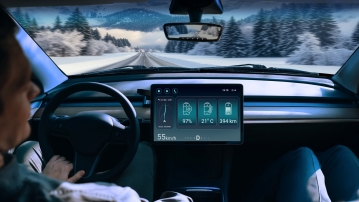
TI Unveils EIS-Integrated 26-Cell Battery Monitor… Enhanced BMS Diagnostic Capabilities
Texas Instruments (TI) has unveiled a 26-cell battery monitor with an integrated EIS engine. The new product focuses on real-time analysis of battery cell conditions in electric vehicles and energy storage systems (ESS), as well as early detection of internal anomalies. TI plans to reduce BMS design complexity and support battery safety and longevity management through this product.
2026.06.10by 배종인 기자

From ADAS to Fully Autonomous Driving, 'Semiconductors' at the Center of Advanced Technology
According to Texas Instruments' video materials featuring Mike Pienovi, president of TI's High-Performance Processors division, and Sneha Narnakaje, TI's automotive radar sensor business manager, who recently test-drove vehicles equipped with ADAS functions, approximately 1,000 to 3,500 semiconductors are installed in a single vehicle today, and their importance continues to grow as the level of autonomous driving increases.
2026.07.07by 배종인 기자











