


Kuntech and ETRI Develop On-Device AI Model Obfuscation and Data Flow Analysis Technology
 Published2026.09.07 12:43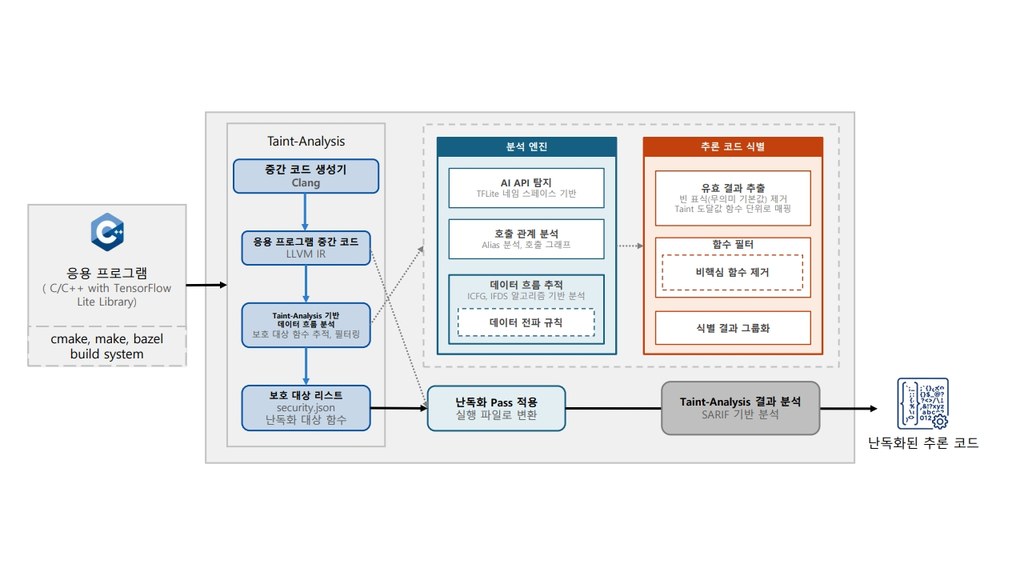
해당 과제는 한국전자통신연구원(ETRI)이 주관하며 쿤텍을 포함한 복수 기관이 공동 수행하고 있다.
주요 기능은 △연산자 식별 정보를 변경하는 비식별화(Renaming) △가중치·편향 등 파라미터를 분리·은닉하는 매개변수 캡슐화(Parameter Encapsulation) △텐서 형상을 변형하는 신경 구조 난독화(Neural Structure Obfuscation) △가짜 연결·노드를 삽입하는 그래프 구조 난독화(Graph Structure Obfuscation) 등이다.

난독화된 모델에서도 별도 실행 정보를 활용해 원래 연산이 정상적으로 수행되도록 구성한다고 쿤텍 측은 설명했다.
단순 함수명 패턴이 아닌 실제 데이터 의존 관계를 분석해 AI 추론에 관여하는 코드를 자동으로 식별한다.
쿤텍은 향후 두 기술을 연계해 리소스가 제한된 온디바이스 환경에서 AI 추론 관련 핵심 코드만 선택적으로 보호하는 방식으로 고도화할 계획이라고 밝혔다.
연구 과정에서 확보한 기술에 대해서는 관련 특허 2건의 출원을 마쳤다.

Comments
Related news

Kuntech Develops Full-Virtualization Test Model Based on Automotive MCU
Automotive software testing must be designed to satisfy stringent requirements. Kuntech has completed development of a full-virtualization test model running on Infineon's TriCore MCU architecture based on real-time embedded systems. The full-virtualization test model using Imperas is equipped with various embedded model libraries, enabling testing that considers only software while eliminating dependency on hardware equipment.
2020.03.27by 이수민 기자
SoC Design Verification Simulator Design Center Established in Pangyo
Kuntech announced the establishment of a Kuntech Design Center officially certified by Imperas in Pangyo Technology Valley 2 in Gyeonggi. Through this establishment, Kuntech will be able to provide virtual platform design services that accelerate software development and hardware verification for customers in domestic and Asian markets.
2020.04.01by 이수민 기자
.jpg)
Kuntec Provides Top-Level Nuclear Power Plant Digital Twin
Kuntech (CEO Bang Hyuk-jun), a specialist company in DX security and embedded virtualization, has supplied 'FastVLabs (FastVLabs)', an embedded virtualization solution that supports the construction of a safety system controller (PLC) digital twin based on hardware virtualization technology for Korea Hydro & Nuclear Power, through collaboration with Suesan ENS.
2024.08.12by 배종인 기자
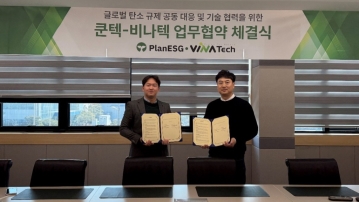
Kuntec and Vinatech join hands to jointly respond to global carbon regulations
Binatech has adopted Kuntech's carbon emissions calculation solution 'PlanESG' to establish a product carbon footprint (PCF) calculation system for its products, proactively responding to global carbon regulations.
2025.02.28by 명세환 기자
.jpg)
Kuntek Signs Official Reseller Agreement with Zscaler to Expand Cloud & AI Security Business
Kuntech has concluded an official reseller partnership agreement with Zscaler, a global cloud security company. Under this contract, Kuntech will supply Zscaler products and services domestically and provide implementation consulting and technical support. Both companies plan to expand security business targeting domestic enterprise customers, focusing on cloud security and generative AI threat response.
2026.05.19by 배종인 기자











