


Kaspersky Detects 270,000 Travel Brand Impersonation Attacks
 Published2026.09.14 12:01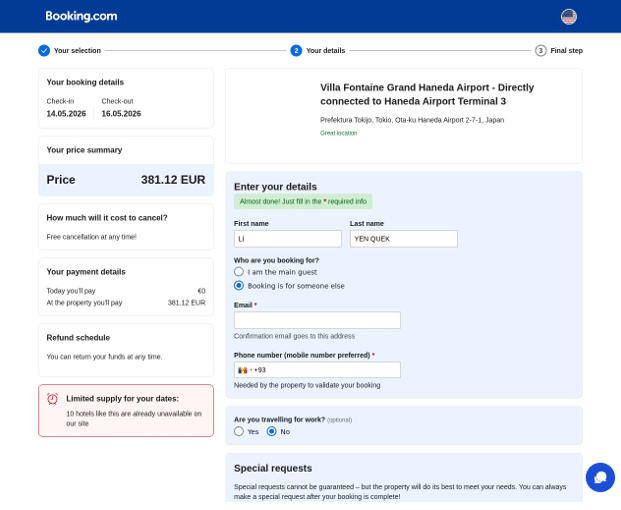
Of these, detections related to transportation brands accounted for 262,663 cases, with Emirates representing 61% and Uber 37%, comprising 98% of total detections.
Detections related to travel and accommodation services totaled 5,414 cases, relatively fewer in number, but trojans accounted for 54.6% of these, indicating concentrated attacks aimed at stealing account information and payment data.
Attackers impersonate legitimate services through phishing pages, fake apps, and false discount offers.
Typical examples include impersonating Ryanair and inducing payment processing fees under the guise of providing "flight compensation," or luring users to fake booking pages similar to Booking.com to steal payment information and fraudulently obtaining money without actual reservations.
Additionally, Kaspersky stated that using Kaspersky Premium with AI-based fraud prevention capabilities enables advance identification of phishing websites and fraudulent payment pages.

Comments
Related news
Kaspersky Detects 'SilverFox' APT Disguised as Tax Notices
Kaspersky has detected an APT attack called "SilverFox" that distributes malicious files by impersonating tax authority tax violation notices. According to GReAT analysis, over 1,600 malicious emails targeting industrial, consulting, trade, and transportation companies in India, Indonesia, South Africa, and Russia were identified in January and February alone. The attackers deployed ValleyRAT, a Python-based backdoor ABCDoor, and a new RustSL variant to attempt remote control and sensitive data exfiltration. Kaspersky noted that South Korea is also vulnerable to impersonation phishing due to its high dependence on e-government and tax systems, and recommended enhancing employee security awareness training and EDR capabilities.
2026.06.23by 명세환 기자
Kaspersky: “Companies Expand Their Security Boundaries to Partners”
According to a supply chain security investment analysis report released by Kaspersky, over 69% of enterprises are willing to invest in supplier security, and 25% are already implementing shared security cost arrangements. As supply chain attacks compromise one-third of global enterprises, companies are shifting their strategy to expand security perimeters from internal operations to their entire ecosystem.
2026.06.25by 명세환 기자
.jpg)
Kaspersky Launches Threat Intelligence Reporting Platform
Kaspersky has launched a threat intelligence reporting service that delivers over 200 in-depth security reports annually through an interactive platform. Moving beyond the conventional static PDF format, the service significantly enhances security analysts' threat analysis efficiency through real-time exploration, linked indicators of compromise, detection rules, CVE information, and customizable filtering by country and industry.
2026.06.29by 명세환 기자
Kaspersky GReAT Detects Complex Function RAT Malware 'CrystalX RAT'
Kaspersky's GReAT has detected a new remote access trojan (RAT) called 'CrystalX RAT' that integrates information stealing, keylogging, clipper, and spyware functionality. This malware is equipped with capabilities for stealing account credentials, modifying cryptocurrency wallet addresses, and real-time surveillance. It is being distributed through YouTube and Telegram in the form of malware-as-a-service (MaaS). As the entry barriers to cybercrime continue to lower, additional security threats are raising concerns.
2026.07.20by 명세환 기자
.jpg)
Kaspersky: “99% of Companies Recognize IT Security as a Business Growth Strategy”
A survey conducted by Kaspersky covering 1,800 respondents across 18 countries revealed that 99% of enterprises recognize IT security as a core strategic asset that extends beyond defensive measures to enable digital transformation and sustainable growth. Data protection (35%) and the capability to safely adopt new technologies (27%) have emerged as the top priorities for security investments, and with the rising threats of supply chain attacks and AI exploitation, enterprises are accelerating their transition toward integrated platform-based solutions.
2026.07.30by 명세환 기자











