



[Interview] Wang Binbin, VP of Product at Calterah, "We will expand high-performance and ultra-compact radar solutions in Korea"
 Published2026.09.28 14:59
"We will expand high-performance and ultra-compact radar solutions in Korea"
Providing various automotive radar solutions including ACC, BSD, and in-cabin sensing
Anticipating diverse collaborations in ADAS and UWB digital keys in Korea
[Editor's Note] Calterah is a Shanghai-based fabless semiconductor company developing mmWave and UWB radar SoCs, providing various automotive radar solutions including ACC, BSD, and in-cabin sensing. In the in-cabin market, Euro NCAP 2026 regulations make CPD and occupant classification key requirements, and the 6T6R structure implements high angular resolution, SNR, and multi-target separation performance. AiP technology enables ultra-compact and highly integrated design while reducing system costs. Major technical challenges in CPD implementation include detecting minute vital signals, clutter rejection, localization, and ensuring robustness. mmWave is suitable for precision sensing, while UWB is appropriate for low-power presence detection. In the Korean market, Calterah anticipates diverse collaborations including CPD modules, door radars, ADAS, and UWB-based digital keys. Accordingly, this publication arranged an interview with Wang Binbin, VP of Product at Calterah, to discuss Calterah's key products and future development directions.

Calterah is a leading fabless semiconductor company in the automotive and industrial millimeter-wave (mmWave) radar SoC and UWB SoC fields.
Headquartered in Shanghai, China, we design high-performance single-chip FMCW (frequency modulated continuous wave) radar chips that integrate RF transceivers, baseband accelerators (BBA), and processors on a single die.
Calterah's solutions are widely applied to various automotive applications including adaptive cruise control (ACC), blind spot detection (BSD), parking assistance, and in-cabin sensing, offering superior angular resolution, extended sensing range, and significant system cost reduction.
Based on solid mmWave technology R&D capabilities, we present products with functional safety and reliability, and our technical excellence is recognized in the global industry.
■ The in-cabin sensing market has been growing rapidly recently. What are the most important in-cabin sensing requirements that the automotive industry currently views as critical, and what is the background for this?
The explosive growth of the in-cabin sensing market stems from strengthened global safety regulations such as 'Euro NCAP 2026' and heightened consumer expectations regarding vehicle safety.
The most critical requirements in this market are undoubtedly 'Child Presence Detection (CPD)' and 'Occupant Detection & Classification'.
CPD is a function that detects a child left alone in a vehicle, and must accurately recognize the child's presence even in difficult-to-detect situations such as when covered with a blanket or asleep.
Occupant detection and classification is an advanced function that precisely grasps not only the presence of occupants but also their location and body size (stature), distinguishing between adults and children, and identifying infants in rear-facing car seats.
■ The Lancang-USRR has adopted the industry's first 6T6R structure. What technical differentiation does it offer compared to existing 3T4R or 4T4R structures?
The 6T6R structure provides more than twice as many virtual channels—36 in total—compared to the conventional 3T4R (12 channels) or 4T4R (16 channels), dramatically enhancing sensing performance.
Specific technical differentiation is as follows.
- Overwhelming angular resolution: Enables precise localization at the seat level
- Superior signal-to-noise ratio (SNR): Accurately captures even minute vital signals
- Enhanced multi-target separation capability: Clearly distinguishes between children and other objects in the vehicle
- Advanced elevation sensing: Accurately detects children in various seating postures
Thanks to these strengths, the 6T6R structure is optimized for CPD applications where reliability, accuracy, and robustness are paramount.
It particularly demonstrates its value in rigorous regulatory environments like Euro NCAP 2026, which demands high detection rates with near-zero false positive rates.
■ What was the reason for applying AiP (Antenna-in-Package) technology, and what advantages can OEMs expect?
The primary objective of adopting AiP technology is to achieve 'ultra-high integration,' revolutionizing product design simplicity and realizing an ultra-compact form factor.
OEMs can introduce high-performance 6T6R sensors with the same module size as conventional 4T4R products without AiP, providing much greater flexibility in radar placement within vehicles.
Additionally, since the antenna array is integrated within the chip package, there is no need to separately design complex antennas on the PCB.
Since Calterah directly validates and guarantees antenna performance at the packaging stage, consistent high-quality RF performance is ensured even under diverse vehicle design conditions.
While the unit cost of the AiP chip itself may be somewhat higher, when comprehensive system implementation costs including the omission of external antenna PCB design, simplified assembly processes, and shortened development time are considered, the overall system cost is actually dramatically reduced.
■ Child presence detection systems have recently emerged as a key safety function in the automotive industry. What are the most challenging technical tasks in implementing CPD?
To implement perfect CPD, the following highly demanding technical challenges must be addressed.
- Signal sensitivity: Precisely detecting minute breathing movements at the sub-millimeter level even in loud environments such as driving noise
- Clutter rejection: Selectively separating only the child's vital signals from complex reflection signals inside the vehicle
- Localization: Accurately identifying the specific seat where the child is located based on high angular resolution
- Robustness: Ensuring stable operation even in situations where the child is covered with thick blankets
- False alarm rejection: Intelligently and perfectly distinguishing between children and non-living objects
■ Calterah has recently expanded into UWB-based in-cabin sensing. What are the respective advantages and limitations of mmWave and UWB?
In the CPD field, where absolute reliability of vital signal detection and precise occupant localization are essential (based on Euro NCAP 2026 standards, etc.), mmWave radar is a far superior choice.
mmWave boasts phase-based minute motion detection capability and high angular resolution through MIMO methods.
In particular, 60GHz mmWave supports a maximum bandwidth of 3.6GHz, delivering very precise distance resolution of approximately 4cm.
Conversely, UWB has a bandwidth of around 500MHz, resulting in distance resolution of only approximately 30cm.
However, mmWave has the limitation that its higher frequency band provides relatively lower penetration capability through seat covers compared to UWB.
On the other hand, UWB is very well-suited for low-cost, low-power applications that only require confirming simple occupant presence.
Generally, UWB chips use 1TX 2RX or 2TX 3RX channels, so they have fewer virtual array elements than 60GHz mmWave, imposing physical limitations on angular resolution.
■ If there are any collaboration areas or application scenarios that Calterah expects in the Korean automotive market, please describe them
Calterah provides an extensive mmWave portfolio from ADAS product lines to in-cabin radars (Lancang) and door radars (Kunlun).
Particularly, facing mandatory CPD regulations comparable in strength to Euro NCAP 2026, Korean OEMs and Tier 1 suppliers are actively seeking sensing solutions with high cost-efficiency and reliability.
Calterah possesses both 60GHz mmWave and UWB solutions, enabling us to successfully co-develop ultra-compact AiP-based CPD modules or UWB modules in collaboration with Korean Tier 1 partners.
Furthermore, the recently emerging 'door radar' is a field where Calterah already dominates in the Chinese market.
As demand for door radars is increasing in the Korean automotive industry, we are confident we can rapidly transplant and expand our solid success cases from the Chinese market into the Korean market.
In addition, through our ADAS segment offerings including adaptive cruise control (ACC), automatic emergency braking (AEB), blind spot detection (BSD), as well as UWB product lines (Dubhe) utilized in digital keys and kick sensing, we plan to comprehensively support diverse innovation scenarios in the Korean automotive industry.

Comments
Related news
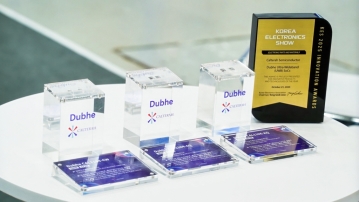
Calterra Recognized for World's First UWB SoC Technology
Calterah, a global leader in automotive millimeter-wave (mmWave) radar and ultra-wideband (UWB) chip technologies, has been selected as an award-winning product in the electronic components and materials category at the 'Korea Electronics Show (KES) 2025 Innovation Awards,' receiving recognition for both technological innovation and market impact. The award-winning product is 'Dubhe,' the world's first UWB SoC compliant with the IEEE 802.15.4ab standard, which has been highly evaluated for simultaneously achieving ultra-precise distance measurement and ultra-low power consumption.
2025.10.22by 배종인 기자
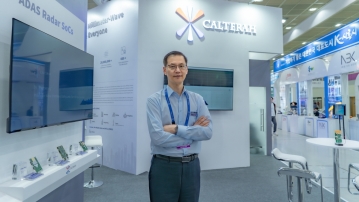
Lee Sang-min, CEO of Calterra, said, "We will create a smarter sensing future with our small, powerful single-chip radar technology."
Calterah, which has built up technical expertise by supplying radar technology to BYD's ADAS, is realizing a future that makes automobiles and smart homes safer and more intelligent through CMOS-based mmWave and UWB single-chip radar technology, and is widely disseminating the technology through global standards and ecosystem collaboration. In this context, Calterah was selected as an award winner in the electronic components and materials category at the "Korea Electronics Show (KES) 2025 Innovation Awards," gaining recognition for its UWB SoC technology capabilities. Accordingly, we met with Lee Sang-min, Branch Manager of Calterah, who participated in KES 2025, to discuss Calterah's technical capabilities and future plans.
2025.10.29by 배종인 기자
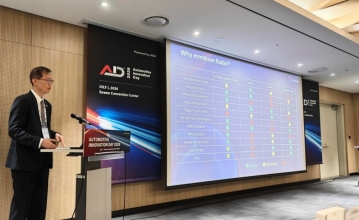
Calterra Unveils Next-Generation mmWave Radar SoC 'Kunlun-Pro' in Korea for the First Time
Caltera, a specialized automotive millimeter-wave radar company, unveiled its next-generation 5T4R mmWave radar SoC 'Kunlun-Pro' and UWB SoC 'Doube' to the domestic market for the first time at AID 2026. Kunlun-Pro improved long-range target tracking capability with signal processing performance enhanced tenfold compared to the existing version and virtual channels increased by 25%, while Kunlun-USRR for door and side radar was also on display. The UWB chip supports vehicle security functions such as digital key and smart access with distance measurement of up to 400 meters maximum.
2026.07.02by 배종인 기자
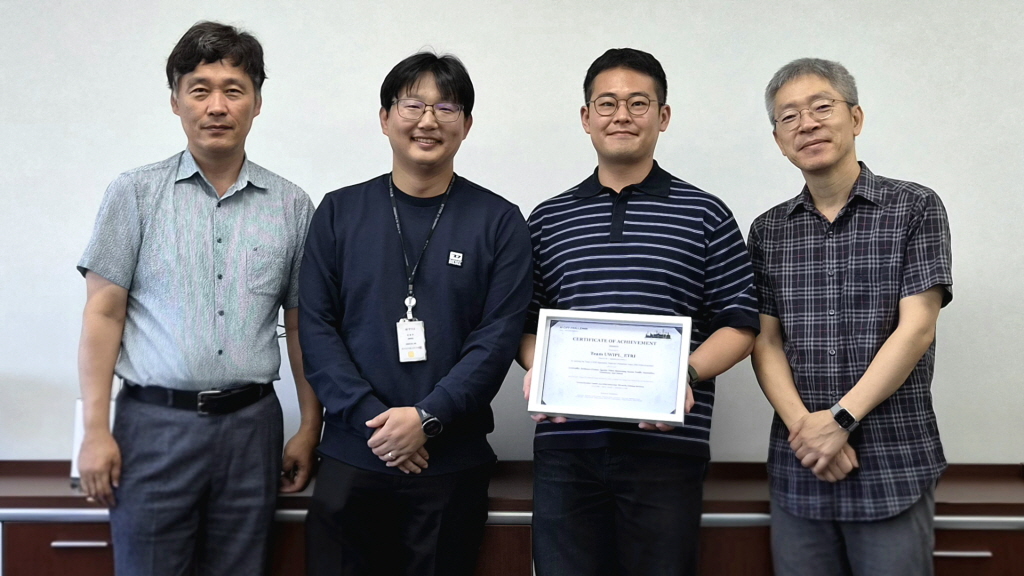
ETRI Achieves 1st and 2nd Place in Two Divisions of International AI Traffic Video Analysis Competition
The Electronics and Telecommunications Research Institute (ETRI), in collaboration with the University of Washington in the United States, participated in the ECCV 2026 AI City Challenge and achieved 1st place in the PSI-VQA division for pedestrian crossing intent analysis and 2nd place in the FETV division for intersection traffic violation analysis. By combining traffic video analysis technology accumulated over 30 years with the latest vision-language model (VLM), the integrated traffic video AI 'UniTraffic' processes diverse camera footage through a single system and enhances judgment reliability.
2026.09.22by 배종인 기자
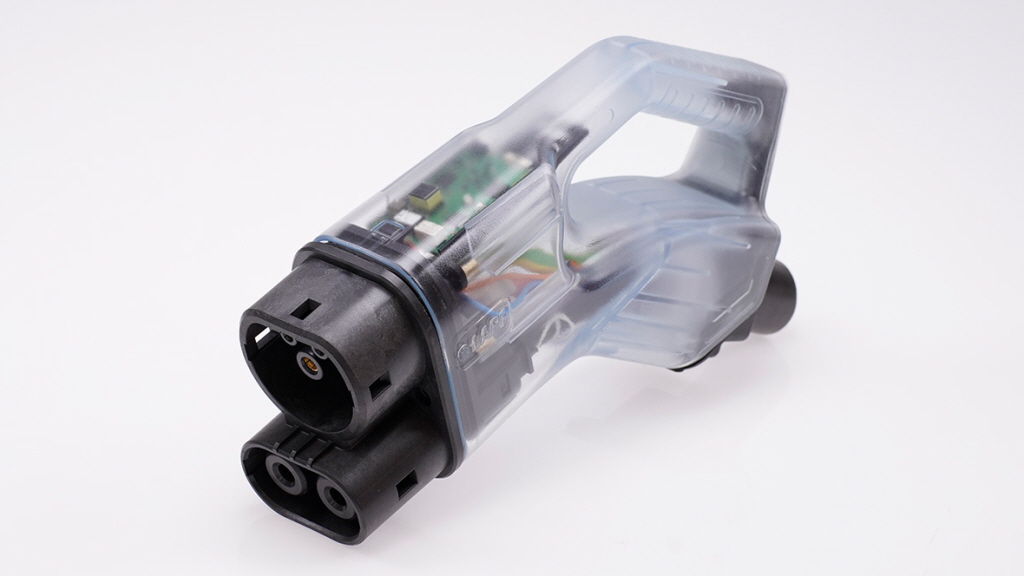
Vector Unveils 'vSECC.InPlug' Communication Controller with Built-in DC Charging Connector
Vector Korea has unveiled the communication controller 'vSECC.InPlug' with built-in DC charging connector. The charging cable, previously limited to 7.5 meters, can now be extended up to 100 meters maximum, significantly enhancing infrastructure layout flexibility at bus and truck depots. By processing power line communication directly within the connector, the central power conversion equipment and charging point can be separately positioned, and in conjunction with the depot management system 'vCharM.DMS', it provides integrated support for electric commercial vehicle charging infrastructure operations.
2026.09.22by 배종인 기자











