



Korea Institute of Machinery and Materials Develops Ultra-Miniature 3-Axis Magnetic Sensor
 Published2026.10.06 09:21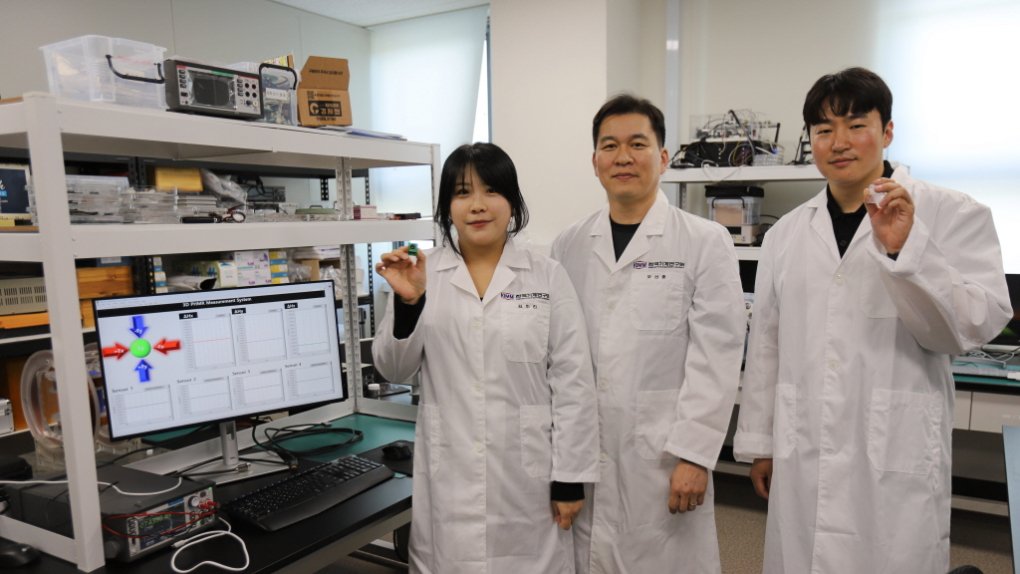
The sensor was fabricated at 500㎛×500㎛ in size, improving vertical direction magnetic field sensitivity by approximately 3 times compared to existing products and enhancing magnetic field conversion efficiency by up to 40%.
The design enables repetitive magnetic field measurement while eliminating the reset circuit that was required in existing sensors.
Achieving both ultra-miniature size and low-power operation simultaneously is also noted as a key characteristic of this technology.
Future application fields being considered include △robot hands △soft robots △wearable devices △medical devices.

Comments
Related news
.jpg)
KIMM Develops Roll-to-Roll Maskless Lithography System
The Korea Institute of Machinery and Materials has developed a roll-to-roll digital maskless lithography system that enables continuous patterning of flexible substrates. By applying real-time substrate deformation and conveyance error compensation technology, the system can continuously form high-resolution patterns of 10 μm or less, establishing a mass production foundation for flexible electronic devices such as wearable devices and flexible displays.
2026.06.29by 배종인 기자
KIMM Develops Battery Injection-Type Immersion Cooling Technology
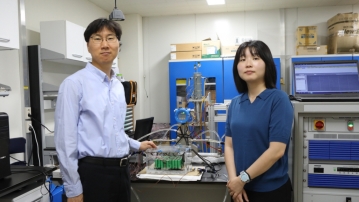
The Korea Institute of Machinery and Materials has developed a spray-type immersion cooling technology capable of addressing heat generation issues in lithium-ion batteries. By directly spraying non-conductive coolant onto the battery pack, the technology enables stable thermal control while reducing coolant consumption by 85% compared to conventional full immersion cooling. In rapid charging environments for electric vehicles and energy storage systems (ESS), the technology can suppress battery temperature rise, lower fire risk, and contribute to miniaturization and weight reduction of cooling systems.
2026.07.14by 배종인 기자
.jpg)
KIMM Expands Cooperation with Fraunhofer on AI-Driven Advanced Manufacturing and Eco-Friendly Processes
The Korea Institute of Machinery and Materials has expanded international collaborative research with major European research institutions, including the Fraunhofer Society of Germany, in the fields of AI-based advanced manufacturing and eco-friendly process technologies. Through the establishment of a medium to long-term research system, the institute plans to strengthen its research foundation in the global manufacturing technology sector.
2026.07.20by 배종인 기자
KIMM Develops Integrated Eco-friendly Heat Supply Solution for Industrial Use
Korea Mechanical Research Institute has developed an eco-friendly integrated heat supply solution for industrial thermal processes below 200℃. It is a design platform capable of converting existing fossil fuel-based equipment into high-efficiency systems, supporting carbon-neutral transition in the food, chemical, paper, and textile industries. Through technology that provides integrated support from heat source selection to piping design and operation optimization, it realizes carbon reduction in the low-temperature thermal process sector, which accounts for a substantial portion of industrial energy consumption.
2026.07.22by 배종인 기자
Korea Institute of Machinery and Materials Develops Next-Generation Heat Pump Enabling Cooling Using Low-Temperature Waste Heat
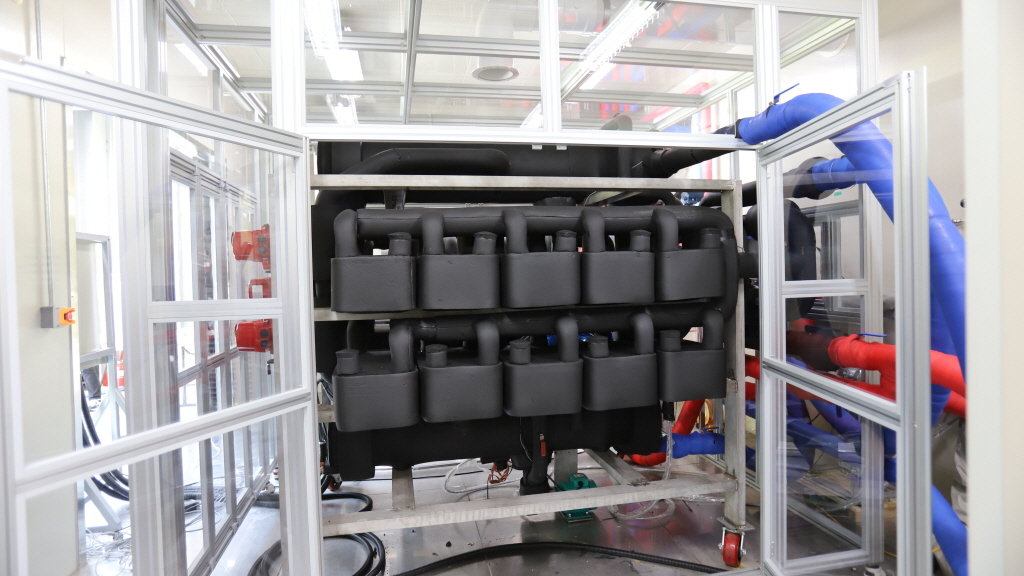
The Korea Institute of Machinery and Materials has developed a next-generation heat pump system that converts 40℃ low-temperature waste heat from factories and data centers into cooling energy. Unlike existing technology, it realizes cooling using only low-grade waste heat without a separate high-temperature heat source, and is expected to contribute to improved energy efficiency in industrial facilities and reduced cooling energy consumption.
2026.08.05by 배종인 기자











