



"Cooling is no longer just a mechanical issue"… ADI targets data centers with CDU control board
 Published2026.10.06 16:18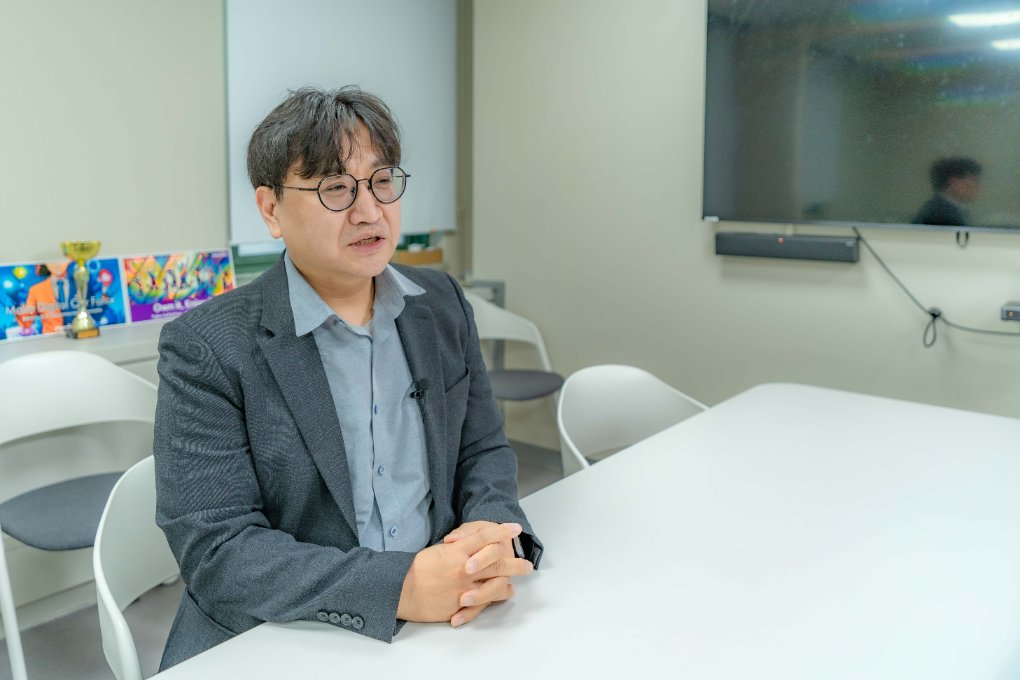
The questions that emerge when sitting down with customers have changed. Where once discussions centered on how many fans to add or how to increase heatsink size, the conversation now revolves around where and how to route the cooling fluid. Roh Byun-ho, Manager at Macnica Korea overseeing Analog Devices (ADI) in the data center and semiconductor test equipment sectors, noted that meeting topics have entirely shifted within the past year.
"Rather than simply discussing how to improve fans or heatsinks, there is a growing trend toward discussions on how to configure the CDU in a system using direct liquid cooling."
The reason questions changed is simple—the numbers changed first. With Nvidia's GB200 NVL72 rack consuming around 120kW and the subsequent GB300 reaching the 140kW range, a single rack now consumes the power that an entire row of a past-generation data center once used. Industry consensus holds that once power per rack exceeds 100kW, air cooling drops off the table as an option. There is a physical limit to the amount of heat that air can transfer, and AI servers have already crossed that threshold.
This shift became visibly apparent in Korea this year. LG Electronics received Nvidia certification for a 600kW-class CDU, and Otec Carrier also listed its products on the Nvidia marketplace. However, the movement in finished products is just the tip of the iceberg. For a single CDU to be manufactured, pumps and heat exchangers are followed by a chain of sensors, controllers, power supplies, and communication systems. Once finished product competition begins, demand at the layer below will emerge at the same pace. This is the point that Manager Roh is experiencing.
"We are receiving inquiries as well, and we are working with ADI to create solutions that can be implemented or applied in advance."
The work of circulating fluid and deciding how much to circulate
A CDU (Coolant Distribution Unit) is, as its name suggests, equipment that distributes and manages coolant to where it is needed. It contains a pump, valves, heat exchanger, flowmeter, and pressure and temperature sensors, pushing coolant through the server's cold plates to extract heat generated by GPUs and CPUs. Manager Roh summarized this as a "central control unit that manages the circulation state of cooling fluid in an AI server cooling system."
Going one layer deeper reveals why the CDU is not simply classified as mechanical equipment. The pump does the work of pushing water. However, the pump does not know how much it should push now or how far to open which valve. That determination is made by the system continuously measuring flow, pressure, and temperature. As AI workloads cause GPU load to swing instantly from zero to maximum and back down, cooling must follow those fluctuations. The larger the equipment, the more measurement points there are, and the more measurement points, the greater the burden shouldered by the controller.
"Since the cooling system is not a simple mechanical device, there is growing interest in the electronic aspects as well, to monitor the status of pumps, valves, flow, pressure, temperature, and leak sensors in real time and enable communication with the data center management system."
This is the path through which semiconductor companies have entered the data center cooling sector. If it is not a competition in transferring heat but rather a competition in reading how much heat is being transferred and moving equipment accordingly, that is the domain of analog front-end and controllers.
Why finished products were not developed
ADI built a CDU demo system directly targeting this demand. It is a configuration that incorporates actual components—tanks, pumps, valves, flowmeters, and cold plates—and operates them. While it appears at first glance to be a scaled-down CDU, its purpose lies elsewhere.
"Rather than manufacturing a finished CDU product, we prepared this to be able to inform customers in advance of what they need when developing a CDU."
This is an evaluation platform. When a component supplier brings a finished product, it enters a competitive relationship with the customer, but providing a reference benchmark at the development stage accelerates the customer's design process. For equipment like the CDU where precedents are rare, what consumes the most time in the first design is not component selection but establishing the overall architecture. The demo targets exactly that point.
Control is handled by a single 10cm x 10cm board. Sensor interfaces of different characteristics—temperature gauges, pressure gauges, flowmeters—are converged in one place, pump and fan speeds are regulated via PWM, and separate ports are dedicated to valve actuation. There is also functionality to exchange status with the upper system via Ethernet. The ADC is configured with 16 channels, and if more sensors need to be added, the range of accommodation can be expanded by adding the relevant chip. The key point is that everything is integrated onto a single board, and this significance becomes apparent in the next statement.
Prototypes use PLC, but the calculation changes once production begins
In industrial settings, such control is still mostly handled by PLCs. It is the most familiar tool for engineers versed in air conditioning and fluid systems, and CDUs are often treated as an extension of that approach. Manager Roh did not disparage PLCs. He first pointed out that they have been well validated and are easy to develop. At the early development or prototype stage, PLC is much more convenient.
The problem emerges at the next stage.
"When entering the production stage, you must add not just the PLC main unit but also analog I/O, digital I/O, communication modules, etc., and when you do, the size and BOM of the equipment increase significantly."
A PLC is not something that ends with just the main unit. If more sensors need to be received, an analog input module is attached; if more contacts increase, a digital module is attached; if connection to the upper system is needed, a communication module is attached again. As modules increase, wiring increases accordingly, and as wiring increases, assembly labor and failure points grow together. Costs that were invisible when building one or two units suddenly become apparent once crossing the threshold of hundreds of units. This is precisely the segment where dedicated control boards gain persuasive power.
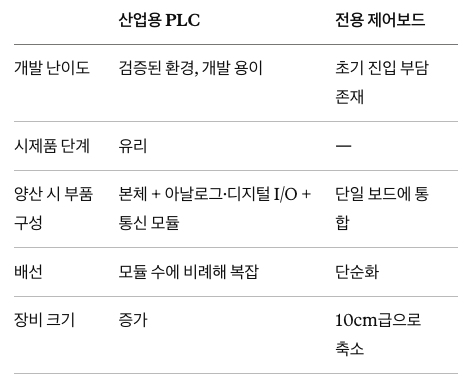
The virtue of drawing the boundary as stages lies in this response. It is easy for a component supplier to say "PLC won't work," but in actual field operations, quickly turning over a single prototype comes first. Acknowledging that segment and then pinpointing the gateway to moving into production is much more useful information for designers.
Equipment that cannot stop
A CDU is equipment that cannot stop. If cooling is cut off, the servers running on top of it stop as well, and unlike air cooling, liquid cooling has almost no thermal capacity to absorb the shock. During the air cooling era, the rack and indoor air served a buffering role, but when the cooling fluid passing through the cold plate stops, temperature rises immediately. This is why availability design becomes a prerequisite rather than a feature.
Power redundancy is the default. ADI made it possible to implement this with a single chip, and the paths can also be configured separately. When the power supply is unstable and the board does not operate, a hot-swap structure addresses the situation. Sensors attached at multiple points continuously monitor and quickly detect the moment conditions drift outside the normal range, escalating the issue to the upper system.
Leaks are detected by a leak sensor, which is not an ADI product. When an industrial leak sensor passes minute changes as analog values, the control board receives those values and sounds an alarm or controls the pump and valve according to the level to prevent damage from spreading. The component supplier did not hide the fact that it did not fill every block with its own products; rather, it clarifies the role of the control board. Sensors merely pass values; determining at what level those values warrant a warning and at what level the equipment should shut down is a judgment call made by the board.
"These are all areas of algorithm, so they will vary depending on how strongly the user applies algorithms for protection."
This sentence also reveals where a reference cannot substitute. Hardware can be established as a common denominator, but determining whether to shut down equipment over a few drops of coolant leakage must be decided by the operator of that equipment.
Beyond the data center
Application is not limited to data centers. While the data center sector attracts the most inquiries, ultra-fast chargers face the same challenge. Pushing large currents into the battery in a short time generates heat in the charging gun and cable. This is why configurations have emerged where tubes are inserted into chargers to circulate cooling fluid. Energy storage systems (ESS) also must manage heat generated during battery charging and discharging. Any equipment that pushes and pulls high power in short time intervals encounters the same control problem regardless of form.
Returning to the domestic situation, there is still ground to cover. According to one survey, the localization rate for cooling distribution system technology does not even reach 1%. News of finished product certifications continues to emerge, but the control and measurement tier below is only just beginning to see inquiries. Manager Roh's perspective on the domestic situation aligns with the same point.
"I believe applications related to data centers are at the infant stage. Whether a company or nation enters that stage can greatly influence its future."
He also added advice that those undertaking CDU development for the first time would save development time by first grasping the overall system picture before proceeding. Macnica Korea and ADI will present the operation of the CDU demo system at this webinar.

Comments
Related news
AI-Driven Transformation of Power Semiconductor Landscape: Shift of Focus from Electric Vehicles to Data Centers
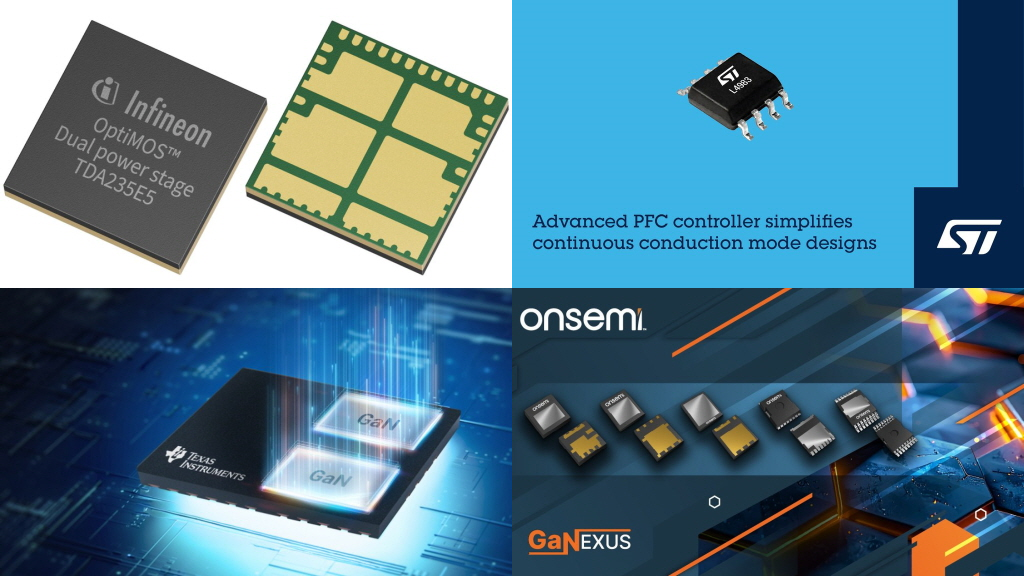
Power semiconductor demand is rapidly shifting from electric vehicle-centric applications to AI data centers and AI servers. With rising power consumption in AI servers, competition for high-efficiency GaN solutions has intensified, leading Infineon, ON Semiconductor, and TI to launch high-density and integrated products. Meanwhile, in the electric vehicle sector, SiC adoption is being strengthened through the expansion of 800V platforms. As a result, AI infrastructure expansion is becoming a key variable in future power semiconductor technology and investment.
2026.10.06by 배종인 기자
Microchip and Navitas Jointly Develop 800V DC Reference Design for AI Data Centers
Microchip Technology and Navitas Semiconductor have jointly developed a reference design for 800V DC power architecture for AI data centers. By combining GaN power devices, digital power controllers, and security ICs, it supports the OCP 800V DC standard and achieves maximum efficiency of 96% and power density of 2,100W/in³ through single-stage conversion.
2026.10.06by 배종인 기자
Gigaphoton Develops Neon Gas Recycling System for ArF Excimer Lasers...Achieves 50% Recycling Rate
Gigaphoton announced that it has developed a gas recycling system for ArF excimer lasers and achieved a 50% neon gas recycling rate.
2026.10.02by 배종인 기자
[Technical Contribution] ADI, "Extension of Portable Device Battery Life Depends on Power Management Optimization"
Frederik Dostal, Power Management Expert at Analog Devices, Inc., discusses various strategies for achieving optimal power efficiency.
2026.10.02by 편집부
Infineon Opens New Semiconductor Backend Manufacturing Facility in Thailand…Expanding Production Capacity to Meet AI and Electrification Demand
Infineon has inaugurated a new backend manufacturing facility near Bangkok, Thailand, strengthening its global semiconductor production capacity and supply chain stability.
2026.10.01by 배종인 기자











