



[Planning] MCU Company Tour ② Infineon: Will it Power Self-Driving Cars with High-Performance MCUs?
 Published2015.12.07 09:39
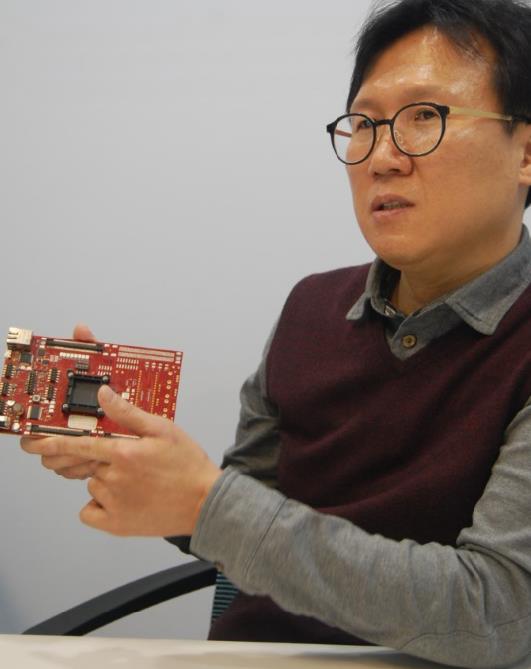
[Interview / Reporters Shin Yun-oh and Kim Su-jin] The second company in our "Going to the MCU Company" series is Infineon Semiconductor, which produces high-performance MCUs using its own cores. Recalling the words of community interviewee Choi Moo-seok, "Automotive products are highly reliable, so it's not easy to acquire the know-how," we visited the company to learn about its know-how in every single next-generation vehicle, from hybrids and electric vehicles to powertrains and autonomous vehicles. The interview was conducted with Choi Jae-hong (pictured), Managing Director in charge of the Automotive Semiconductor Business Unit at Infineon Semiconductor.
Focus on powertrain, ADAS, and connectivity based on its own triple core
- What are the main areas of Infineon's automotive MCUs?
Infineon's automotive MCU product line focuses on three areas: 'Powertrain', 'ADAS (Chassis, Safety)', and 'Advanced Connectivity', a growing market.
Infineon's solutions are renowned for their powertrain capabilities, the core of automotive technology. What is the background behind Infineon's competitive edge?
First and foremost, the powertrain is a field that demands high performance. This is especially true because engine management requires massive data processing to meet fuel and efficiency regulations. Infineon's unique strength lies in its focus on supplying high-performance MCUs. We are releasing high-performance products not only for MCUs but also for system ICs required for actual operation of engines, transmitters, and actuators.
The solution for high performance is 'multi-core'.
- Infineon's own core, 'Tricore', reflects the multi-core trend.
A notable trend between 2013 and 2015, unlike previous generations, is the trend toward multicore processors. Looking at the current market, 8-bit processors are sufficient for automotive body applications, but the market has already shifted to 32-bit MCUs. However, because body applications don't require high performance, ARM cores are generally used and flash memory capacity is limited.
However, Infineon's main areas of powertrain, ADAS, and connectivity demand high performance, so they wanted to increase performance by more than 150%. As performance increases, the product temperature also increases, so to solve this problem, 2 to 4 multi-cores were started.
Currently, Infineon has 3 cores in its 9 series (TCP29xT..), which is a high-performance 65nm process.
- So what makes Infineon's tri-core different from its competitors' multi-core?
Infineon's TriCore is suitable for powertrains such as engines, transmissions, and hybrid vehicles that require a large amount of calculations, as well as ADAS such as ESC (Electronic Stability Control), steering, radar, and sensor fusion, and advanced connectivity functions.
Infineon's Tricore processor, currently in its fifth generation, is called "AURIX." It was installed in approximately 150 million vehicles last year. While previous generations maintained single-core performance, the fifth-generation AURIX, released this year, adopts multi-core architecture. For example, a powertrain may have two ECUs, one for the engine and one for the transmission, and a single CPU can control both.
- What differentiates Infineon MCUs from other companies in ADAS, which has recently become an issue?
In the vision segment of ADAS, a DSP chip handles the front-end processing of the massive amount of signals coming from radar and cameras, while an MCU communicates the processed data with other control ECUs. In other words, there were two signal processors and two MCUs. However, now, the existing signal processing parts are integrated into the SoC chip called the hardware accelerator of the MCU, so that a single MCU can handle both signal processing and post-processing.
- Please explain 'autonomous driving,' which can be considered the next step after ADAS.
Processing signals from actual cameras, radar, and lidar still has limitations. Therefore, graphics cards are being used to develop sensor fusion solutions for other ECUs, such as EBS, ESC, and steering. The key to sensor fusion is that it must fundamentally meet ASIL-D standards. Furthermore, because communication lines are crucial, "safety and security" must be achieved simultaneously.
- What impact does Infineon's excellent sensor technology have on the MCU field?
Sensor technologies include radar, cameras, ultrasonic sensors, and lidar sensors. Infineon is a global leader in radar transmitters, receivers, and signal modulation. Therefore, its strength lies in the synergy created by combining radar and MCU technologies, enabling it to provide system solutions. To implement autonomous vehicles, Infineon plans to collaborate with other companies using its own radar technology and MCU system technology.
'Divers Calculation' differentiates itself from the existing Lockstep.
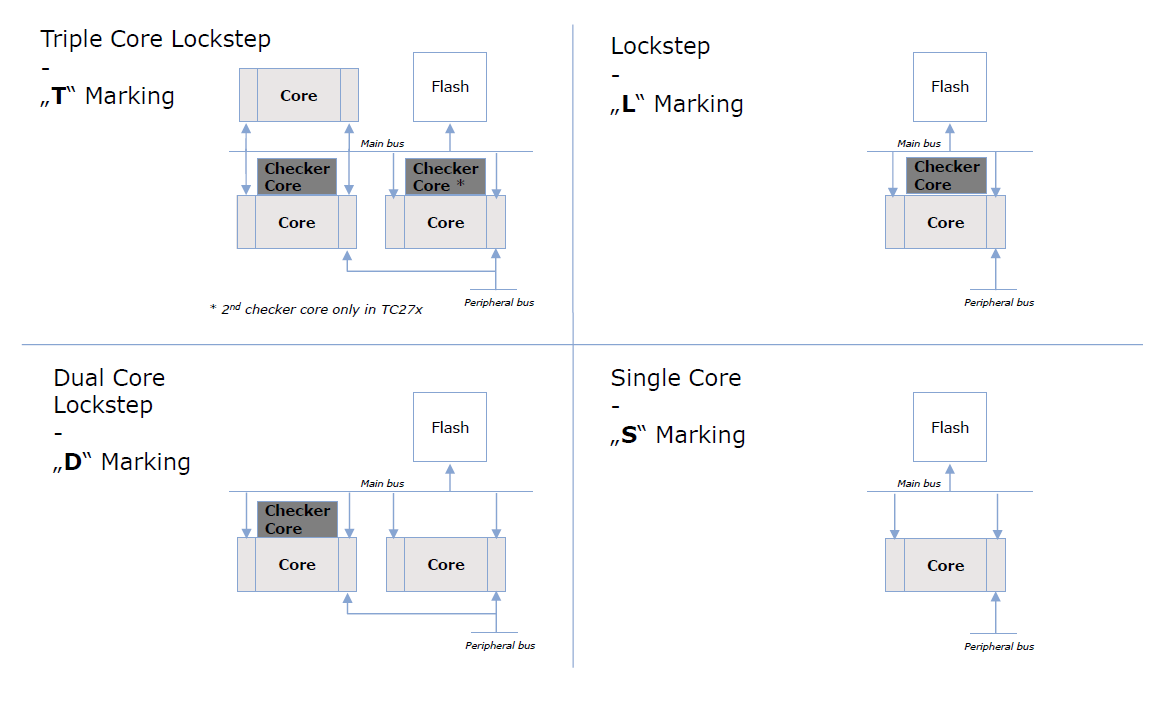
▶ Infineon's Lockstep process
- Infineon applied a unique lockstep technology to satisfy the ASIL D level. Could you please explain in detail?
To meet the ASIL-D level of ISO2626, the international automotive functional safety standard, the probability of failure must be close to zero. This is similar to using a calculator twice to minimize errors.
Previously, lockstep calculations were performed using two identical algorithms. However, this method was risky because it could not detect errors in the unlikely event of an electromagnetic interference causing both clocks to produce incorrect results. Therefore, Infineon developed a slightly different algorithm for the calculations. This involved delaying one clock and then performing divergent calculations to improve the accuracy of the calculations. In other words, instead of using two identical calculators, we perform two calculations using slightly different variants of the calculator. This feature is implemented in all Infineon cores.
- Was there a reason for developing Infineon's own lockstep technology?
We also planned to launch Lockstep Core in 2012, as competitors had already released the technology. However, we questioned the need to calculate two identical algorithms in the same way, and we felt there needed to be something more accurate, which would differentiate us from competitors.
- What is the core of Infineon MCUs in the connectivity field?
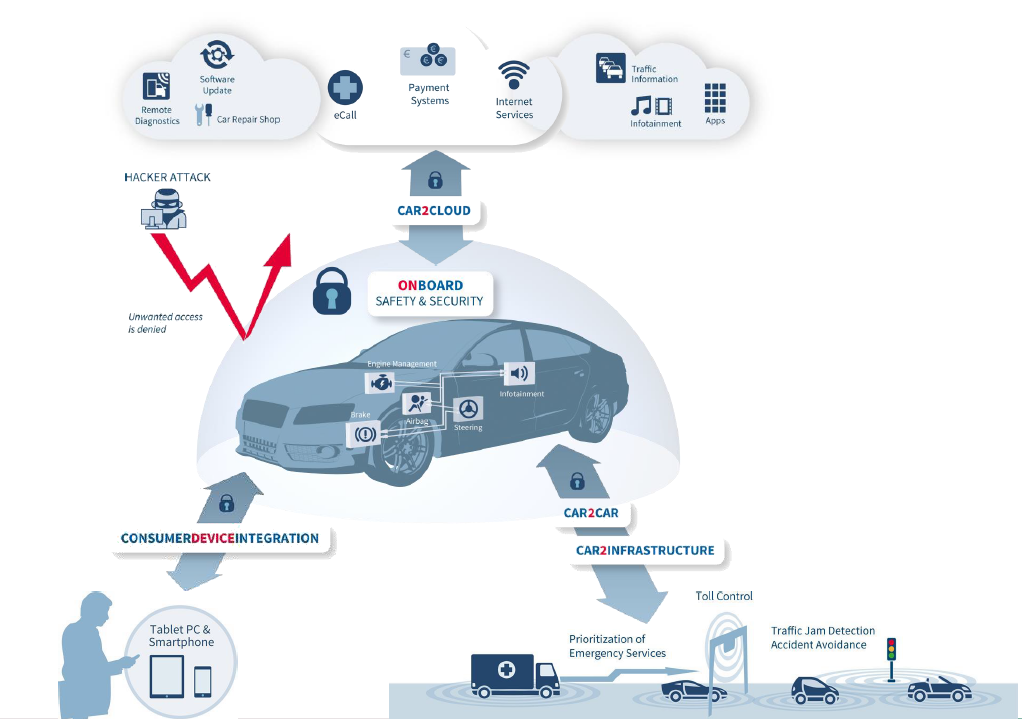
▶ Automotive Connectivity
Telematics is on the rise these days. Tesla, for example, releases software updates monthly. In addition, everything from e-call to ADAS is being built through software. Currently, software updates require a trip to a repair shop. However, with connectivity support, this need will be eliminated, significantly reducing costs for users.
So, ultimately, security is paramount. To receive data, you must enter a secret key and use a SIM card containing your personal information. Data security is essential, and to ensure this, Infineon's Oryx system is being used in telematics. 
Ethernet is attempted on the multimedia side, but
Maintaining CANFD in the control field
Data capacity is also increasing in automobiles. What communication methods does Infineon support, and what changes do you anticipate in the future?
ADAS requires massive amounts of data. Industrial Ethernet is limited to 10MB or 100MB, but next-generation Ethernet will require gigabytes. However, CAN FD will be the only option until 2020.
Ethernet is currently being tested in the multimedia sector, but expanding it to full control would be costly. This is because external Ethernet switches are more expensive than the controller itself. Automotive products, by their nature, require quality, such as a 10-year or longer inventory lifespan and thermal endurance. For Ethernet, I expect it will be used as a backbone concept for domains and domain control.
- Infineon provides FM modules and safety manuals under its own mark called 'PSO SIL'.
Yes. When using older products without this mark, customers must personally install safety cases and other components. Software-based solutions require hardware configuration, and vice versa. These tasks are daunting, so products bearing this mark can easily achieve ASIL-D with FM modules and safety manuals.
"Infineon's strength lies in not simply selling products but also providing our customers with expertise. We have approximately 16 engineers with extensive experience in the Korean market. We consider ourselves a company that provides MCU power and sensor technology."
I'm curious about Infineon's automotive MCU development direction. Could you briefly explain the development roadmap?
Currently, the Oryx is being released as a multi-core processor built on a 65nm process. In 2020, with the market expanding into eco-friendly products like hybrids, ADAS, and autonomous driving, the company plans to add more cores to accommodate this growth. While the actual Oryx features up to three cores, the next-generation product, scheduled for release in 2018, will feature six CPU cores built on a 40nm process.
Additionally, to satisfy ASIL-D of ISO 26262, four separate lockstep core pairs are included, and in the high-end class, up to 10 physical cores are included. Additionally, it has a built-in hardware security module for software updates via V2X or telematics.
The next generation of products will have hardware modules embedded in every silicon. Among hardware security, only symmetric algorithms are currently supported, but in the next generation, digital applications and hash engines will be required, so we plan to provide hardware-based security that requires these functions.
Infineon ultimately plans to further strengthen its investments and collaborations in the areas of fully autonomous driving and autonomous vehicle driving.
[Introducing Infineon MCU Products]
Infineon's automotive MCU AURIX™,
Meeting the safety and powertrain demands of next-generation automobiles 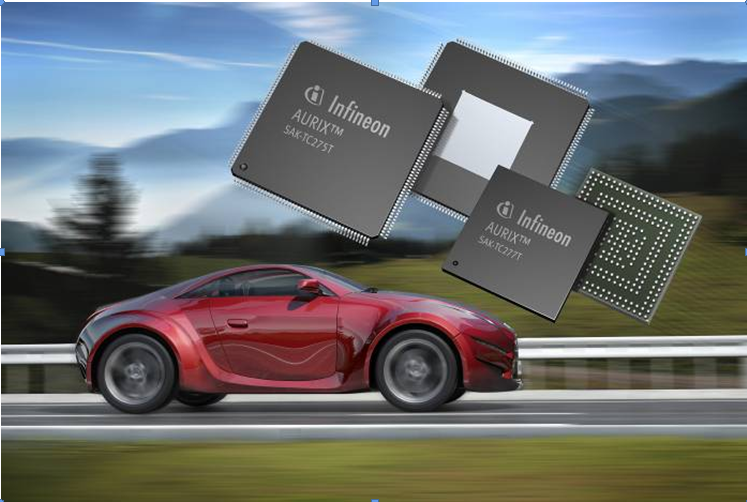
Infineon's AURIX™ microcontrollers meet high safety and security standards. It is suitable for a wide range of applications, such as internal combustion engine control, electric and hybrid vehicles, transmission control units, chassis domains, braking systems, electric power steering systems, airbags, and advanced driver assistance systems.
Designed to effectively achieve ASIL D according to the ISO26262 certification process, this architecture combines advanced safety technologies using up to two TriCore CPUs in a lockstep architecture.
The Oryx family consists of a variety of modular products, from high-end to low-end. These include 300MHz triple-core devices with 8MB of embedded flash, 200MHz triple-core devices with 4MB of embedded flash, 200MHz dual-core devices with 2.5MB of embedded flash, and 130MHz and 80MHz single-core and single-core lockstep devices with 1.5MB, 1MB, and 0.5MB of embedded flash. Package options include the BGA-516 package and the ball-compatible BGA-292 package (I/O subset), as well as compatible LQFP-176, LQFP-144, LQFP-100, and LQFP-64 packages.
All AURIX products are manufactured using 65nm embedded flash technology, which enhances reliability in harsh automotive environments. Manufacturing takes place at two production sites to ensure continuous and stable supply.
Comments
Related news
[Planning] The Brain of Electronic Devices, Visiting MCU Companies ① Freescale, Automotive MCU Security ‘We Take Responsibility’
As the first company in 'Visiting MCU Enterprises,' we introduce Freescale Semiconductor, renowned for its automotive MCUs. We present Freescale products that feature MCUs with particular emphasis on automotive security, which is directly linked to human safety. The interview was conducted with Director Lee Jin-woo, who oversees automotive MCUs at Freescale Semiconductor.
2015.11.30by 신윤오 기자
[Cafe E-People] Visiting the MCU Community ② Oroka, Reborn as a System Engineer through Robots
E4ds News meets with community operators who share information related to MCU (Micro Controller Unit). The second community in 'In Search of MCU Community' is the 'Open Robotics Community Oroca'. Robots, which are called the comprehensive art of science, require MCUs that implement various sensor detection and motion control. This community currently has 30,000 members and actively conducts practical information exchange through offline meetings based on projects. Park Hyung-il (photo), a sub-operator of this café who speaks with a smile about "sticking one's nose in," expressed, "It would be good if our café could play a more progressive role in this field," and also conveyed that "the true value of a community lies in sharing." In listening to the stories of Oroca's past and future told with laughter and sometimes complaints, it was a time where one could sense both affection and ambivalence toward the café.
2015.12.07by 명세환 기자
[Planning] Visiting MCU Companies ③ TI, If you need an MCU that is strong in low power and real-time operations…
The third company in 'Visiting MCU Enterprises' is Texas Instruments, or TI, which has begun to distinguish itself in the automotive sector. Above all, readers must have been curious about what synergy effects TI, known as a powerhouse in DSP chips, creates with MCUs. Through Director Ryu Seung-yun (photo), who oversees MCU technical support at TI, this will be an opportunity to learn everything about TI MCUs and the development kits available for developers.
2015.12.14by 신윤오 기자

Intel Unveils Next-Generation 'Core Ultra Series 3' and vPro Platform for Enterprise PCs
Intel has officially unveiled the "Intel Core Ultra Series 3" for next-generation enterprise PCs and the latest vPro platform, addressing a wide range of demands from enterprise notebooks to high-performance workstations.
2026.03.26by 배종인 기자

ROHM Launches ESD Protection Diode Compatible with High-Speed Interfaces of 10Gbps or Higher
Semiconductor specialist ROHM has developed the 'RESDxVx series' of ESD (electrostatic discharge) protection diodes capable of responding to next-generation high-speed data communication environments exceeding 10Gbps, simultaneously enhancing both signal quality maintenance required in high-speed interfaces and IC protection performance.
2026.03.26by 배종인 기자











